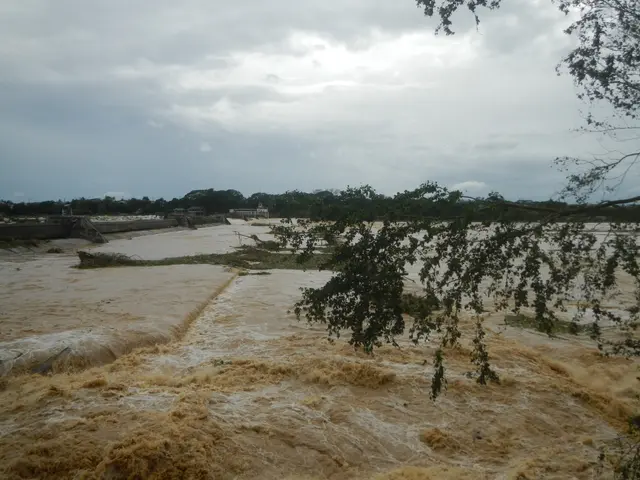
Torrential storms ravage through Pakistan, resulting in the deaths of more than 30 individuals within a span of seven days.
Heavy Storms and Intense Rain Sweep Through Pakistan for a Week, Causing 32 Deaths and Over 150 Injuries
For a week, Pakistan has been battling fierce storms and torrential rain, resulting in 32 deaths and more than 150 injuries, according to official reports from the South Asian nation, which ranks as one of the most vulnerable to climate change.
The weather pattern started on Saturday, resulting in 14 casualties, followed by 10 more deaths in various regions of the country on Tuesday. Unfortunately, three children lost their lives and three more were injured in the southern city of Hyderabad on Wednesday. Additionally, five individuals, including a woman and a child, were killed on Thursday when heavy rain hit the border province of Afghanistan, according to a disaster management official from the region who spoke with the Associated Press on Friday.
Most of the fatalities resulted from homes collapsing, but some victims were struck by flying solar panels or were hit by lightning. Authorities warn residents to remain vigilant until Saturday, anticipating additional storms and sudden precipitation episodes in the north and central parts of the country.
Additional Reading | Article Exclusive for Subscribers: Daily Struggles of Pakistan's Residents Against Climate Perils: Repeated Floods, Food Crises, and Heatwaves
Extreme weather events are becoming more frequent
With a population of over 240 million, Pakistan is experiencing an increase in extreme weather events. The capital city, Islamabad, has seen multiple hailstorms in April and May. The country has been hit by heatwaves following an exceptionally hot April, with temperatures nearing record levels in some areas of Punjab.
Looking back at recent years, the list of natural disasters in Pakistan is extensive. In August 2023, approximately 100,000 people were displaced as a result of floods. In August 2022, heavy rain submerged a third of the country, prompting United Nations Secretary-General, Antonio Guterres, to speak of "climate carnage" upon his return from visiting affected areas.
On Wednesday, the World Meteorological Organization (WMO), a UN agency, announced a 70% probability that the five-year average global warming from 2025 to 2029 will exceed 1.5°C above pre-industrial levels. This likely anticipates that the long-term average will remain below the 1.5°C threshold, as averaged over decades. The Paris Agreement aims to limit global warming to well below 2°C and pursue efforts to limit it to 1.5°C, a critical threshold for reducing climate change impacts.
Additional Reading: Article Exclusive for Subscribers: Unheeded Lessons from Past Disasters in Pakistan
According to expert analysis, as global temperatures continue to rise, Pakistan can expect more frequent and severe weather-related disasters. This includes temperature extremes, alterations in precipitation patterns, and increased water scarcity. These conditions can lead to agricultural challenges and increased risks to human health. Climate change is likely to aggravate existing weather-related issues in the country, such as flooding and droughts, necessitating urgent climate adaptation and mitigation strategies.
- The increase in extreme weather events in Pakistan, such as heavy storms and floods, is a direct consequence of climate change, making the country one of the most vulnerable nations to these disasters.
- The recent surge in extreme weather events, evident in the country's capital, Islamabad, and other regions, highlights the urgent need for improved environmental-science research and policy-making in the face of climate change.
- As the world approaches the 1.5°C global warming threshold, highlighted by the World Meteorological Organization, it becomes crucial for Pakistan to embrace urgent climate adaptation and mitigation strategies to minimize the impact of climate change on its citizens and environment.