Kazakhstan's Akmola Region adopts real-time pollution tracking for industries
Industrial Emissions Become a Measured Reality in Kokshetau
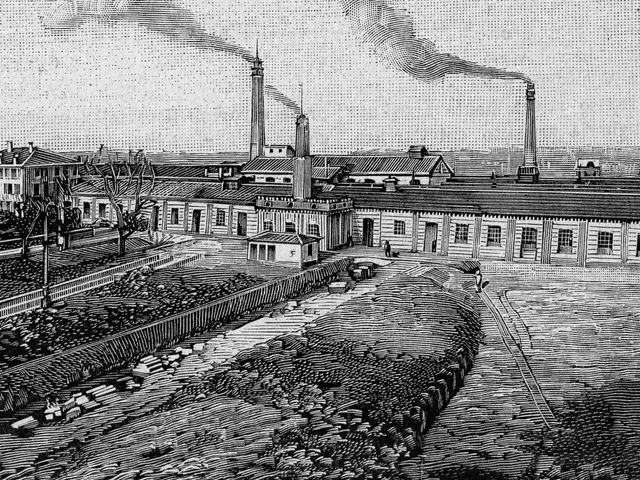
The plumes of smoke billowing from the chimneys of boiler plants—running almost nonstop until summer in Kokshetau—have long been an inescapable part of the city's skyline. But today, these combustion byproducts no longer go unchecked. Digital monitoring systems now track the precise percentage of harmful substances they contain, transforming the approach to environmental oversight.
Excess emissions are now detected and recorded in real time, thanks to the introduction of an automated monitoring system (AMS) at industrial facilities. Designed to measure both the quantity and composition of pollutants, the system automatically transmits data to a national database.
Under Kazakhstan's Environmental Code, all first-category industrial sites must install AMS units on major emission sources. This requirement applies to companies with a significant environmental impact—particularly those releasing over 500 tons of pollutants annually.
The system keeps a constant watch on key pollutants: nitrogen oxides, carbon monoxide, sulfur dioxide, dust, fine particulate matter, hydrogen sulfide, and industry-specific markers. These substances are most often responsible for air quality degradation and directly affect public health, environmental experts warn.
In Akmola Region, five enterprises have been mandated to adopt AMS. Some, like Stepnogorsk CHPP LLP, have already implemented the system and are transmitting emissions data. At one of the primary heat sources operated by Kokshetau Zhyly LLP—the RK-2 boiler plant—the automated monitoring system went online in December of last year. Since January 2026, its readings have been steadily fed into government information systems.
The facility recently opened its doors to journalists, offering a press tour to demonstrate how the monitoring system operates in practice.
Igor Arkhipov, an environmental engineer at Kokshetau Zhyly LLP, guided reporters through the equipment. At the heart of the AMS is a compact control cabinet, where sensor data converges to generate a digital profile of emissions.
The sensors themselves—mounted high on the towering chimney of the boiler plant—are barely visible from the ground. Yet these small, smart devices are the linchpin of the control system: they detect the contents of emissions, register even the slightest fluctuations, and analyze their composition. All data is streamed in real time to a central server, which, after processing, forwards it to the monitors of authorized state agencies.
As Arkhipov explained, the plant previously relied solely on instrumental laboratory checks. Three times a year, specialists from an external organization would measure pollutant levels using gas analyzers—a far less frequent and comprehensive method than today's continuous digital monitoring.
"We now have double oversight," noted an environmental engineer. "The introduction of the automated monitoring system has strengthened control over pollutant emissions and helped prevent exceedances of permissible limits."
The system is operating in standard mode, with data transmitted continuously and no violations of allowable thresholds recorded.
"Deploying such systems is a legal requirement," added Meiramgul Ramazanova, head of the testing laboratory at the Laboratory and Analytical Department of the Aktobe Region's Ecology Department.
The process of connecting automated monitoring systems at industrial facilities is ongoing, marking the end of "blind spots" in industrial environmental oversight.