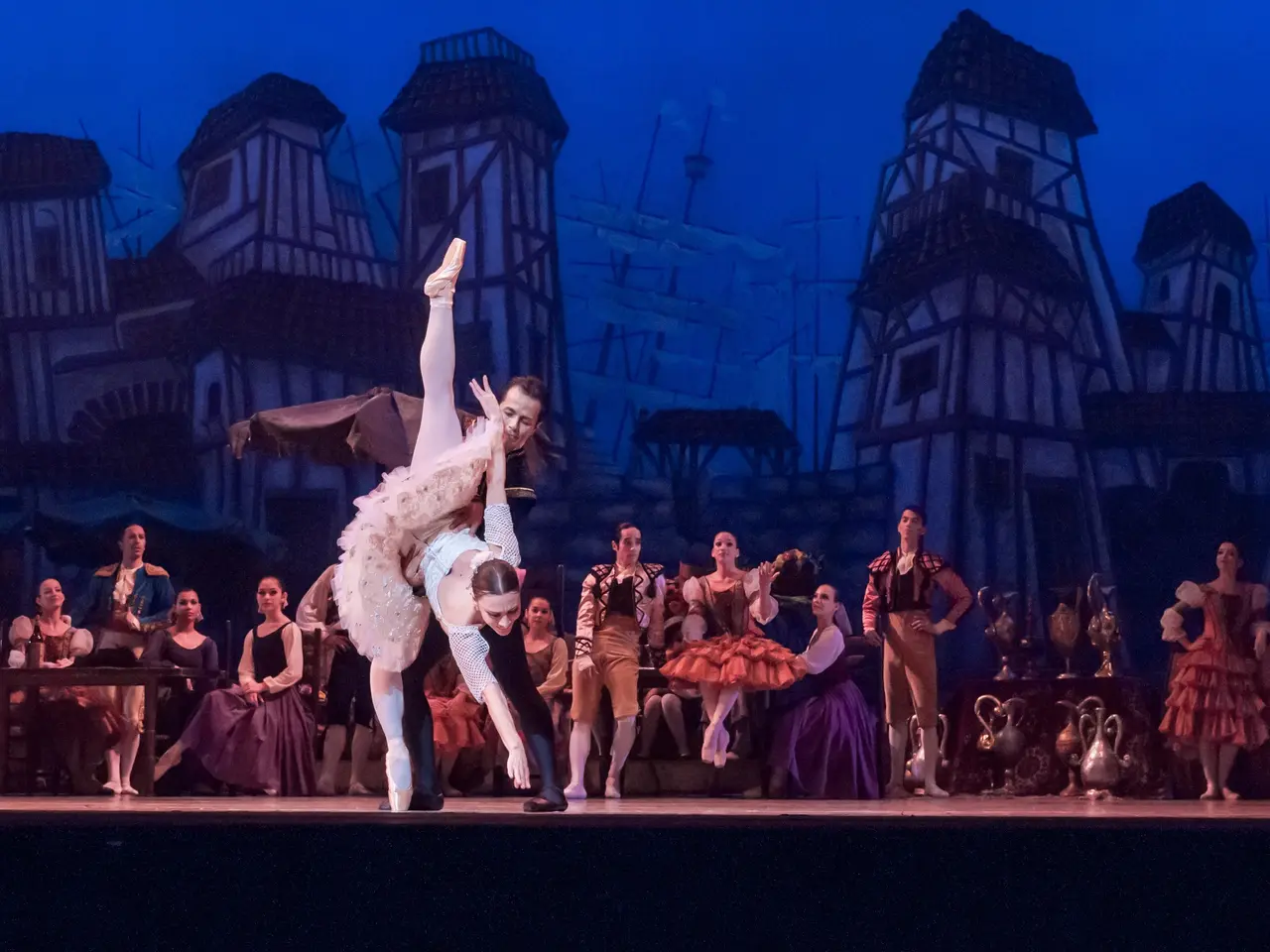
Justin Peck, born in 1987, has won over audiences with his choreography and productions—not just in Manhattan, where he has played a pivotal role in restoring the luster of the New York City Ballet, founded by George Balanchine in 1948.
Justin Peck's Heatscape Reimagined for Vienna's Visionary Stage
Peck is currently in Vienna for final rehearsals: Ballet Director Alessandra Ferri has selected his work Heatscape for the three-part evening Visionary Dances, which premieres this Saturday at the State Opera. And he notes: "Heatscape has passed the survival test of a choreography!"
Created in Miami in 2015, the piece is abstract yet still reveals glimpses of narrative. Humanity remains at the heart of his stylistically diverse works. "That's something I deeply admired as a dancer under Balanchine," says the charismatic artist, who by his early 30s had already reached the pinnacle of the ballet world.
For the stage design of Heatscape, Peck enlisted street art legend Shepard Fairey, who in 2008 created the now-iconic HOPE poster for Barack Obama's presidential campaign. How did he pull it off? "Back then, I was often in Miami because my wife danced there. I loved Fairey's murals in the Wynwood District—their patterns, colors, and especially their ephemeral nature, which I saw as a parallel to dance. As these things go, a friend of a friend introduced us, and he was immediately on board!" The music came from Bohuslav Martinů. "I'm a huge fan of the Czech composer, and I find his First Piano Concerto—premiered in Prague in 1925—particularly danceable, an extraordinary and rarely performed work by a young man."
A Personal Touch
Will he adapt the piece for Vienna? "I try to stay true to the original; it reflects the time in which it was created. But sometimes, I can't help giving a dancer a personal touch—just in certain steps, not the entire ballet."
Yet there was one exception in his career. The day after Donald Trump's first election as U.S. president in 2016, Peck altered a movement sequence in one of his works. Originally, a dancer was meant to rise triumphantly—a nod to Hillary Clinton. "After Trump won, we showed a dancer falling instead. In the end, it became a piece about freedom of speech and assembly. Since his second term, things have only gotten worse, more aggressive. Art is always a reflection of its time and society. Right now, escapism is gaining importance—giving audiences a chance to forget their worries, if only for an evening."
How is dance faring in New York? "The unpredictability of public funding poses a threat to many artists. But the New York City Ballet is a resilient cultural institution. Over the past few years, we've attracted younger, new audiences. Contemporary themes and collaborations with living artists resonate well. I believe dance isn't just about executing steps—it's about offering fresh artistic perspectives. Dance must not become a museum! Our performances have turned into a meeting place for people, a space for open, boundary-free communication."