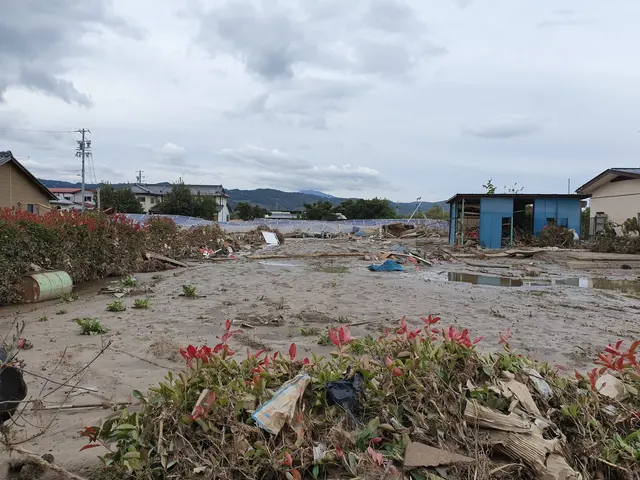
Climate Adaptation and Nature Conservation Conference Summarized
International ministerial summit on environmental issues concludes - Conference of Environment Ministers Adjourns
Attendees of the three-day Climate Adaptation and Nature Conservation Conference will officially present their findings today, at 13:00, in Mettlach-Orscholz, Saarland. The conference delved into several key topics such as climate protection, managing wolf populations, and a proposed constitutional joint task for Climate Adaptation and Nature Conservation.
The newly appointed Federal Environment Minister, Carsten Schneider (SPD), has confirmed his presence at the conference on Thursday evening, as confirmed by the ministry spokesperson in Saarbrücken.
One of the focal points was the proposition of a constitutionally anchored joint task "Climate Adaptation and Nature Conservation". In this context, the costs for undertaking such measures would be shared between the federal government and the states.
In the past, the states have been primarily responsible for financing these measures themselves, according to the chairwoman of the Environment Ministers' Conference and Saarland's Minister, Petra Berg (SPD). Confronting the challenge of climate adaptation with only local funds over a prolonged period is no longer sustainable.
Key Insights:
- Collaborative Policy Frameworks: The establishment or strengthening of cohesive policy frameworks supporting climate adaptation and nature conservation is a common outcome of such conferences.
- Allocation of Resources: Commitments to allocate specific funds or resources for initiatives related to climate adaptation and nature conservation could be anticipated.
- Global Collaboration: Emphasis might be placed on the importance of international cooperation in addressing climate change and the need for shared knowledge, technology, and best practices.
- Community Involvement: Strategies to boost public understanding and local participation in climate adaptation and nature conservation efforts could be part of the conference discussions.
- Innovative Technologies: Investments in renewable energy, sustainable agriculture, and green infrastructure might be encouraged to support climate resilience and nature conservation.
- Monitoring and Evaluation: Systems for monitoring progress and the effectiveness of strategies could be highlighted to ensure data-driven, continuous improvement in policies and actions.
At today's 13:00 presentation, attendees of the Climate Adaptation and Nature Conservation Conference will discuss the proposition of a constitutionally anchored joint task for 'environmental-science', emphasizing the need for shared costs between the federal government and the states. The focus on collaborative policy frameworks may also include strategies to involve the community in climate adaptation and nature conservation efforts. In addition, the conference could spotlight the importance of 'science' and 'innovative technologies', such as investments in renewable energy and green infrastructure, as key solutions to combat climate-change and ensure long-term sustainability.