Battery Park City's £2B Storm Shield Project Kicks Off to Fight Climate Risks
Rising sea levels and climate change are continuing to impact and threaten our coastline right here in New York City. For the next several years, anyone living, working or traveling to Battery Park City will see a neighborhood in transition as it undergoes an ambitious $2 billion resiliency program to protect the valuable property and infrastructure there.
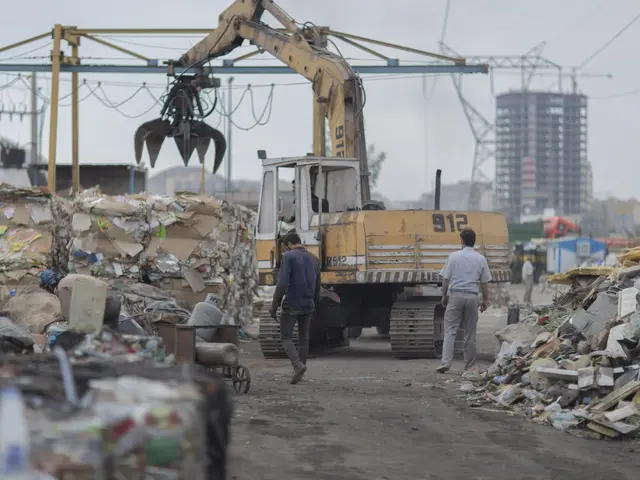
The pristine plazas and plantings in parts of Battery Park City, as well as the North Cove Marina, are gone. In their place is heavy construction equipment, doing what is known as "site readiness work," according Dan Dickson, the senior director of design management at the Battery Park City Authority.
"We also have to do a little bit of relocations of some conduits, some infrastructure, some utilities, some water mains, that kind of thing, in preparation for the main work," Dickson said. Dickson said the site readiness work is the most complicated part of the project because of the amount of major mechanics that lie underground. Nonetheless, Dickson said he expects that phase of the project will be complete by the summer. Then the actual construction will begin.
They'll start with the North Cove Marina first. What will follow will bring in reinforced infrastructure and nearly a mile and a half of flood walls, which will be mostly disguised as a change in elevation, to protect this area from the potential devastation of a 100-year storm, surges and rising sea levels.
"We're following the same design flood elevation that was established by the New York City Panel for Climate Change," Dickson said.
Battery Park City's lower esplanade will remain as is, while plazas and parks will see a redesign and new landscaping.
For those living and working in the area, they can expect a fair amount of daily disruption.
"We're creating a lot of jobs, a lot of union jobs, and we're protecting a huge swath of the city," Battery Park City Authority president Raju Mann. "We're helping to protect billions of dollars of New York City real estate, including the World Trade Center site."
Sandy was the wakeup call to New York's vulnerability. The East Side Resiliency Plan is still underway. Wagner Park in South Battery Park City was elevated to protect homes and businesses, and now work is underway from South Cove moving north. At Albany street, an art installation known as "The Upper Room" was demolished for excavation for a tide gate
"Basically, the idea is to create a passive system which blocks storm surge from entering the DEP pipes," Dickson said.
There will also be a retractable flood wall, as well.
"We've designed the structure to be able to accommodate two more feet of of wall if we need to build it a little bit higher," Dickson said.
"I'm proud that we're here actually starting construction on a project that we think will really protect the neighborhood and help protect Lower Manhattan," Mann said.
Completion for is projected for 2030.