Vienna's Lost Musical Salon Returns After 25 Years of Silence
A Viennese Apartment Near the Ringstraße
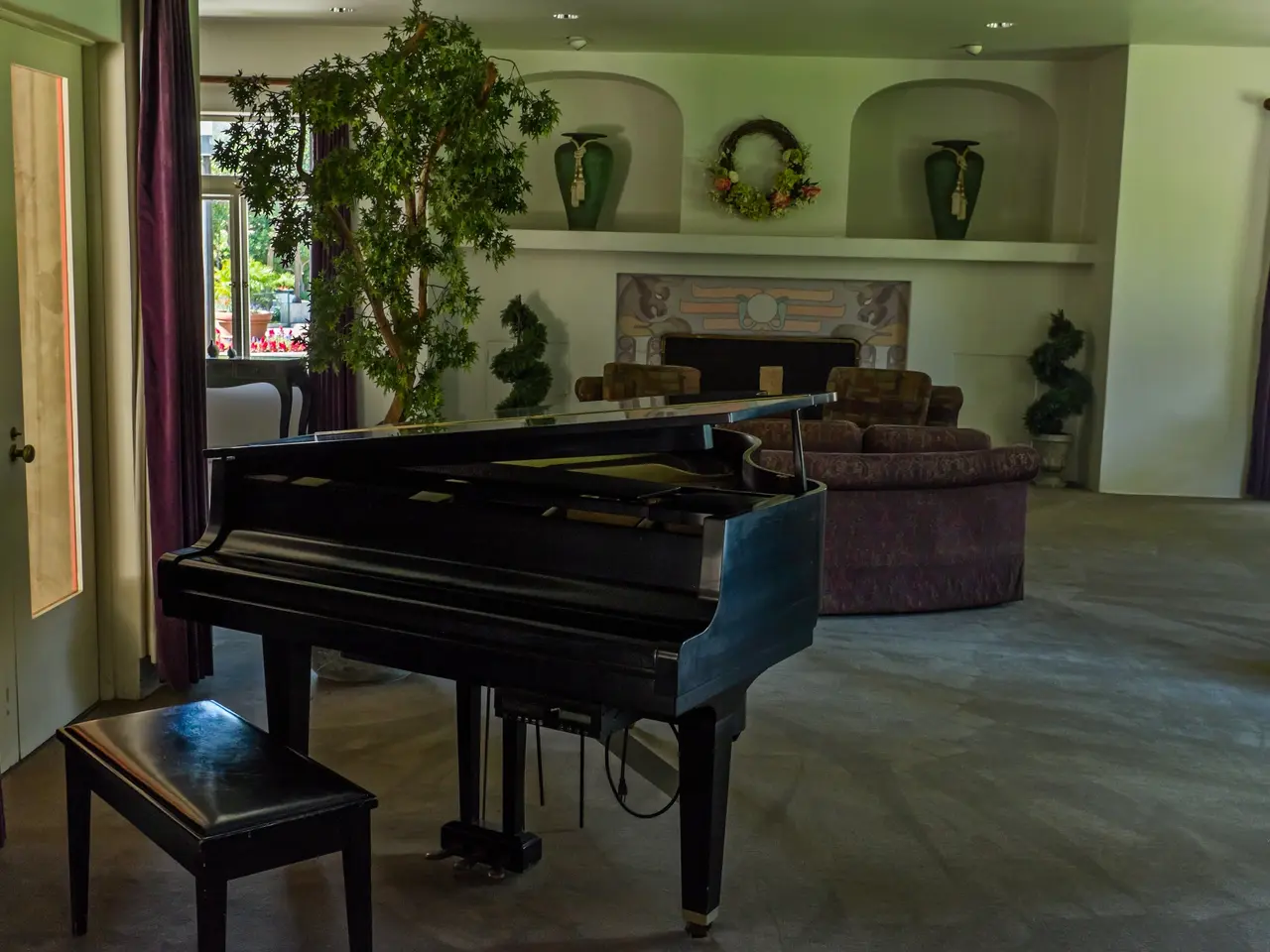
An unassuming entrance near Vienna's grand Ringstraße. Downstairs, a dentist's office; above it, a warren of offices. But one floor higher lies a world apart. Step inside this Gründerzeit apartment, and you find yourself in a blend of bourgeois salon and film set—designed by Fritz Jüptner-Jonstorff, the legendary post-war production designer behind the Sissy films. For the building's owners, he crafted an interior straight out of French Baroque, complete with period pieces and even a hunting hall.
Yet it is the intertwining of many stories that led to an extraordinary gathering in this very apartment on a recent Sunday evening.
Ophelia Orlandianyi, dressed in a custom-made blue gown that playfully nods to the salonnières of old, explains how she first hosted musical soirées in her mother's living room while still a student. The descendant of Emperor Charles I's music teacher grew up steeped in Vienna's cultural life—regular visits to the Konzerthaus, the Musikverein, and the State Opera left their mark. To this day, she remembers the scent of the red velvet in her grandmother's box seat, as well as her very first concert as a child: "It was at the Konzerthaus, with Elisabeth Leonskaja." (Years later, she would cross paths with the pianist again in her later career as a tour manager for major orchestras.)
Over time, Orlandianyi got to know more and more musicians. "And they all needed a rehearsal space with a grand piano where they could make noise late into the night." Her parents were often away, so their home on the Hohen Warte became a place for practicing, cooking, and, eventually, performing for small test audiences. "That's how it all started. By the last salon in my mother's living room, I had 213 people." Then life and careers scattered everyone across the globe. Ever since, Orlandianyi says, "I've dreamed of bringing back that salon."
In recent years, the dream has taken shape. "I have a clear vision: It has to be intimate—no rows of chairs, no barrier between the stage and the audience." After losing access to her mother's apartment, she scoured some 20 or 30 potential venues, but none felt right—until she met her current patron. As it happens, Orlandianyi, who had once been discouraged from pursuing her own artistic career, eventually returned to singing. She was asked to perform at a funeral—only to discover that the deceased had been a former salonnière and the very resident of this apartment.
And so, this past Sunday, she hosted her first salon in 25 years. But that wasn't all: Many from her old "salon crowd," as she calls them, reunited for the occasion, including pianists Daisy Jopling and Hyung-ki Joo (half of the comedic duo Igudesman & Joo). Speaking of the piano—though Friedrich Gulda once played it, its Viennese mechanism was hardly up to modern standards. A sponsor stepped in, donating a Steinway grand just for the evening.
From Anna Anderluh, Marina & The Kats, and Wolfgang Muthspiel to Michael Dukhnych (who records cello and harmonica for Marvel, Disney, and Netflix), several dozen musicians from classical, pop, jazz, and world music filled the apartment—whose owner requested discretion regarding the exact address. Some performances were planned, others spontaneous; there was food, and "after midnight, we just let things unfold."
Orlandianyi never expected such a grand, star-studded gathering. "There was no fee. But it turns out that in the middle of this digital networking frenzy, there's a longing for real connection—for closeness, for shared analog music and conversations that go beyond a quick message." Beforehand, each guest received a list of attendees with brief descriptions, because even musicians, she notes, tend to stay within their own genre bubbles. "A pop musician grabbing coffee with a classical violinist? That almost never happens."
Yet here, for one night, it did.