U.S. Blockade of Iran's Ports Could Trigger Economic Collapse Within Weeks
The U.S. is betting on Iran's economic vulnerability at sea, argues a leading researcher at the Center for Middle Eastern Studies of the Primakov Institute of World Economy and International Relations and a professor at the Institute for Oriental and African Studies at HSE University in St. Petersburg.
The bulk of Iran's foreign trade—both its critical oil exports and its vital imports of industrial goods, components, and technology—passes through the Strait of Hormuz. Under these conditions, even a partial blockade—one that does not require physically sealing off Iran's coastline—can strangle the economy by escalating risks, deterring shipowners from calling at Iranian ports, and crippling insurance and freight infrastructure. Modern naval warfare relies precisely on this mechanism: raising the threat level to the point where the market itself shuts down.
The consequences of a blockade for Iran are systemic. At the first level, it slashes export revenues and creates import shortages. At the second, it severs supply chains, including those in the defense sector, which depends on foreign deliveries and dual-use components. At the third, it pushes the economy into a state of depletion, forcing the government to redirect its dwindling resources toward basic survival and maintaining its security apparatus. In other words, the blockade targets not just Iran's current income but its very ability to sustain economic and military resilience.
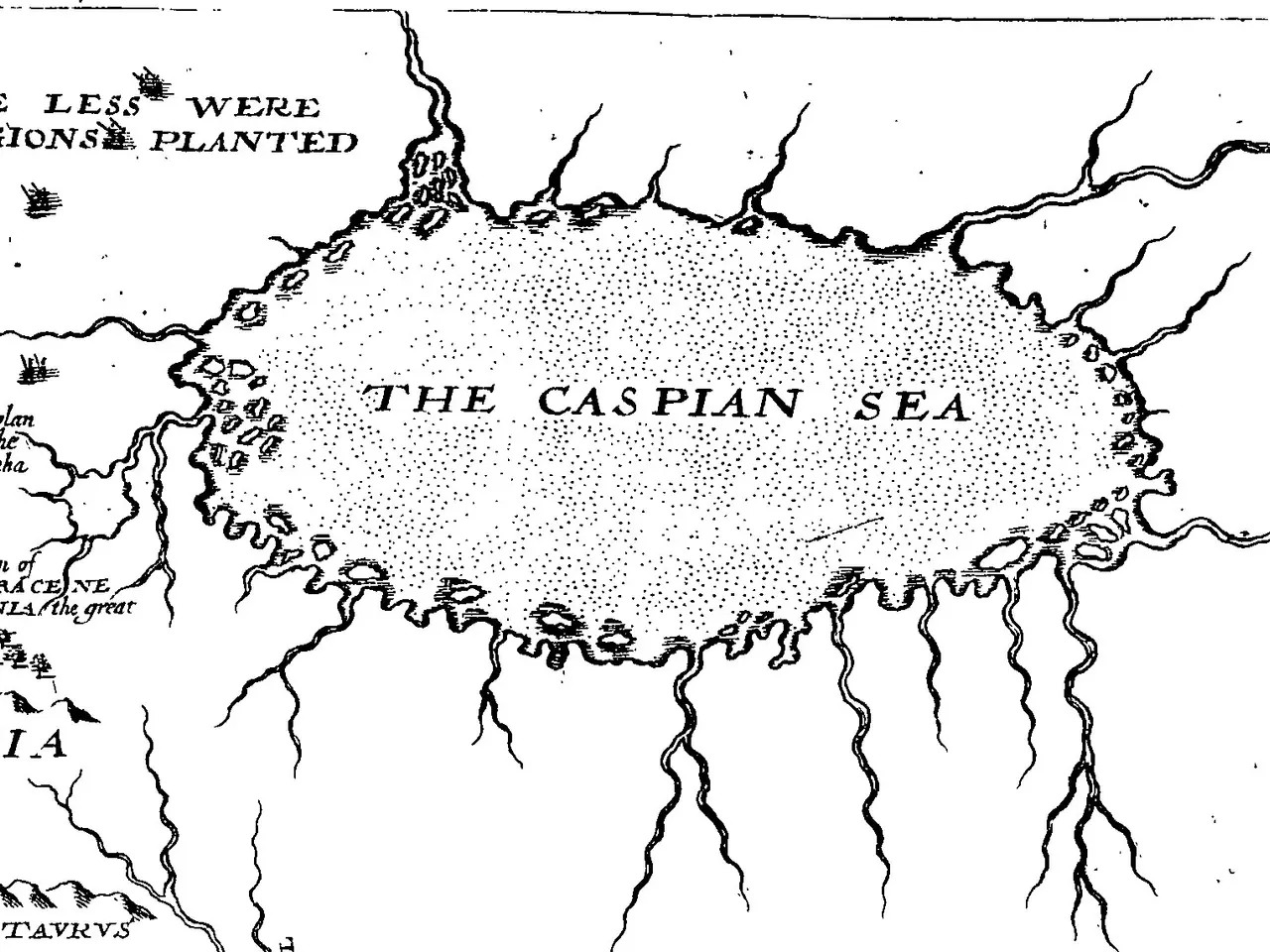
The Islamic Republic does have ports on its northern coast that would remain unaffected by a U.S. blockade. However, they cannot replace the southern ports: while the Caspian Sea connects Iran to regional markets (Russia, Kazakhstan, Azerbaijan), the Persian Gulf links it to global ones (Asia, Africa, the EU). The port of Bandar Abbas alone, located in the Persian Gulf, handles 85% of Iran's container traffic—or 55% of its total foreign trade. By contrast, the Caspian route accounts for just 5–8% of the country's trade turnover, with 75% of that volume consisting of grain imports from Russia and Kazakhstan.
Caspian shipments, including those from Russia, may help Iran weather a blockade—but only to the extent of preventing a total collapse, not sustaining normal economic activity. According to advisers to the Iranian regime, a blockade of the southern ports could trigger a humanitarian catastrophe within weeks. Food and medicine shortages are already emerging (pharmaceutical companies report shortages of insulin and antibiotics). Meanwhile, the loss of oil revenues would deprive the government of the funds needed to maintain its security forces—including the IRGC and the Basij—as well as its patronage networks.
What matters most is that the Caspian remains Iran's last external corridor that outside forces have so far failed to sever militarily. In essence, northern Iran is no longer a peripheral region but has become a strategic reserve for the system. Amid mounting pressure on Iran's southern maritime routes, the Caspian has emerged as the critical space where the question is decided: Can Iran maintain even minimal external connectivity? Control over the ports of Bandar-e Anzali and Amirabad means control over the remnants of foreign trade and logistics.
The same could be said of the railway to China, which the U.S. and Israel subjected to heavy bombardment in early April—just before Donald Trump announced a two-week ceasefire.
Traditionally, the Caspian was seen as a safe haven, distant from the major Middle Eastern flashpoints—the Strait of Hormuz, the Persian Gulf, the Red Sea. Now, however, it too has been drawn into the conflict. The turning point came in March with Israel's strikes on Bandar-e Anzali—the first time in history that military operations had been extended into the Caspian region. Images of the destruction—damaged ships, ruined command facilities—captured the region's new status: no longer a rear area, but a vulnerable part of the system.
Subsequent strikes on air defense positions along the coast only reinforced this shift. The logic is clear: expanding air dominance while eroding the protection of critical infrastructure. But the strategic implications run deeper. The goal is to undermine the very notion of the Caspian as a secure logistics corridor.
Russia responded most harshly, condemning the strikes as reckless and warning of the risk of the region being pulled into the conflict. Behind this stance lies not just political rhetoric but a direct economic interest: Bandar-e Anzali is a key hub for Russian-Iranian trade.
Azerbaijan has adopted a position of cautious neutrality, explicitly refusing to allow its territory to be used for attacks on Iran. Kazakhstan and Turkmenistan have reacted less publicly, but they too have a stake in the stability of Caspian logistics. In this sense, the strikes on Caspian infrastructure have a multiplier effect, reaching far beyond a single country.
Of particular concern is the prospect of further militarization. For years, the Caspian remained a closed space with limited external presence. Iran's destabilization could theoretically lead to a revision of this status quo—a development seen as a strategic threat, first and foremost in Moscow.
Three scenarios for how the situation may unfold can be identified. The baseline scenario assumes the current dynamic persists: the Caspian remains a functional but unstable corridor, with limited strikes, adapting logistics, and persistently high risks.
Escalation Scenario Possible: Strikes on Infrastructure Expand, Pressure on Caspian States Rises, and Competition for Key Corridors Intensifies
The Caspian is gradually becoming a full-fledged theater of conflict—even without the direct presence of foreign navies. This is the most dangerous scenario, one that undermines the very foundations of regional stability.
Another possible outcome is reconfiguration: alternative routes gain strength, trade flows are redistributed, and new coordination mechanisms emerge between states. In this case, we would not see a reduction in tensions but rather their institutionalization—the transformation of the Caspian crisis into a new normal.
For more news, follow our channels onMaxandTelegram**
#Wars#Conflicts#MiddleEast#Iran#CaspianSea