By Kelaia Acevedo (CS Intern)
Nepal's Limbu people battle to save sacred Mukumlung from development
The global celebration of Earth Day is an opportunity to focus on environmental stewardship, climate conservation, sustainability, and simply appreciating local flora and fauna; it is an invitation to engage all of our senses with the Earth, whether as individuals or in community.
Our ability to truly honor Earth Day cannot exist without Indigenous Peoples-their efforts, their knowledge, and their sacrifices to defend the natural world. Indigenous Peoples around the world are often the primary guardians of Earth's green spaces. For the Yakthung in Nepal, also known as the Limbu People, their appreciation extends beyond admiring nature: they are currently engaged in a struggle to protect one of eastern Nepal's most revered sacred sites, Mukumlung.
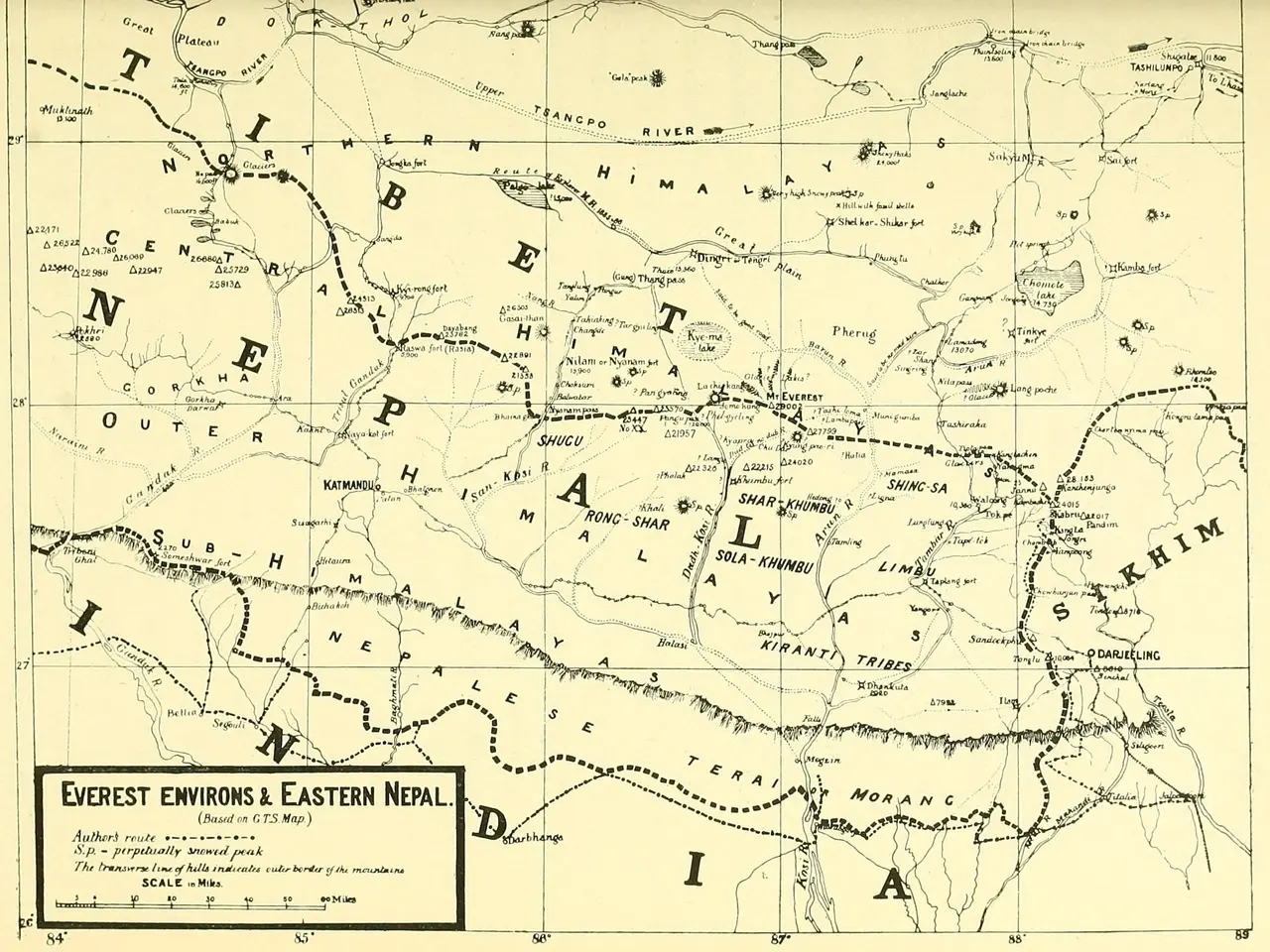
The Limbu, whose name translates to "bow carrier," hold rich cultural traditions that continue to be practiced today. In Nepal, they are one of 59 Indigenous groups. They speak their own language, Yakthungpan, or Limbu. Their land, formerly known as Pallo Kirat (now called Limbuwan), was once composed of 10 autonomous states. Today, Limbu communities are concentrated in Sankhuwasabha, Taplejung, Terhathum, Panchthar, Dhankuta, and Ilam districts.
Rooted in the Kirat religion, the Limbu identify as animists who venerate nature. Their sacred text, the Mundhum, contains the cosmologies, historical narratives, rituals, and festivals of their communities. Guided by deep relationships with their land and spiritual worldview, the Limbu have developed music and dance traditions tied to ceremonial cycles, such as the drum dance, Kelang, and Yemalang, a female shaman's dance.
Communities rely on agriculture for their livelihoods and are skilled in farming, hunting, woodworking, bamboo crafting, weaving, and gardening. The Limbu practiced a communal land tenure system known as Kipat for centuries. However, following the Land Reform Act of 1964, many lost access to their ancestral lands.
In 1997, the government of Nepal established the Pathibhara Area Development Board through the Pathivara Area Development Act, with the stated aim of advancing social, economic, religious, and cultural development at the sacred site of Mukumlung. Located in Taplejung district in eastern Nepal, Mukumlung is a ceremonial site where the Limbu perform acts of veneration and pilgrimage.
On April 25, 2018, a resolution by the Phungling Municipality authorized the company Pathivara Devi Darshan Cable Car Pvt. Ltd. to construct a cable car and ropeway system across five hectares of land at Mukumlung. In the months that followed, municipal actions were formally reported and surveys were conducted under police enforcement, often involving violence. Community members were not consulted, nor did they consent to these decisions. The principle of Free, Prior and Informed Consent (FPIC) was not respected, and government authorities falsely documented consent that was never granted. By December 2018, the company had secured a 30-year lease, enabling the clearing of over 10,000 trees.
IME Group, a conglomerate that operates across Nepal's banking, energy, and infrastructure sectors, among others, made agreements restricting the Limbu People from accessing their own lands and sacred territories, effectively preventing their practice of ancestral rituals and threatening the transfer of intergenerational knowledge and cultural practices that are central to Limbu identity.
As custodians of local biodiversity, including Nepal's national flower, the rhododendron, and numerous other species, the Limbu play a vital role in environmental stewardship. Endangered species such as red pandas and snow leopards are also at risk due to habitat destruction. The Limbu believe that the construction and deforestation associated with the project will weaken the spiritual power of Mukumlung, further straining the relationship between land and people.
The advancement of the cable car project places the surrounding ecosystem at significant risk. Although an Initial Environmental Examination was completed, it failed to adequately account for these adverse impacts. Despite government actions that disregarded their rights and voices, however, the Limbu have responded with determination to restore harmony to their ancestral lands. One person who embodies this spirit of resilience is Senchhen Hangma Limbu.
Senchhen Hangma Limbu
Senchhen Hangma Limbu (Limbu) is an undergraduate law student at Tribhuvan University in Nepal. Her work focuses on researching land and territorial rights, as well as documenting human rights violations for NGOs and regional bodies in Asia. As a member of the Limbu community, she has committed herself to raising awareness of the Mukumlung Protection Movement against the Ropeway Corporation.
Through Cultural Survival's Indigenous Youth Fellowship program, which supports young Indigenous leaders in building skills for advocacy and change, Senchhen joined a cohort of youth leaders receiving training, mentorship, and support. She developed a project titled "Disseminating Information on Land Encroachment and Human Rights Violations Affecting Limbu Indigenous Peoples in Mukumlung (Phungling Municipality, Taplejung District, Nepal)".
Prior to this fellowship, Senchhen had already been collaborating with organizations such as the Lawyers' Association for Human Rights of Nepalese Indigenous Peoples (LAHURNIP), the Asia Indigenous Peoples Pact, and the National Human Rights Commission. While conducting research within her community, she recognized a critical gap: the volume of documented violations was not matched by public awareness.
The objective of Senchhen's project was to create an initiative to raise awareness about ongoing encroachment in Limbu territory. In a context where local authorities falsify reports and use violence, she emphasized the urgency of equipping her community with credible, verifiable evidence. A central component of her work involved disseminating this information through digital platforms to support collective resistance and advocacy.
Senchhen began by consulting mentors, Elders, and Indigenous leaders to determine documentation methods, key research questions, and fieldwork logistics. She conducted a literature review that included academic research, national and international legal frameworks, journal articles, and jurisprudence. Following this, she collected data through audiovisual documentation and testimonies from community members affected by the conflict. Indigenous methodologies such as talking circles were incorporated to reflect local knowledge systems.
With consent obtained, testimonies were recorded and shared through digital platforms to initiate outreach. The next phase involved analyzing, interpreting, and validating the data in collaboration with community members. The findings were disseminated through multimedia content, interviews, and digital storytelling, forming the basis of a broader advocacy campaign. This documentation now serves as a foundation for legal action, reporting, and continued community organizing.
This work was not without challenges. Senchhen often witnessed violence carried out against her community. Police surveillance, monsoon weather conditions, landslides, and difficult terrain complicated access to affected areas. Intimidation and division within communities created further obstacles. Despite these challenges, however, Senchhen and the Limbu community persisted.
As a result of these efforts, on August 26, 2025, LAHURNIP filed a formal complaint with the Compliance Advisor Ombudsman regarding the International Finance Corporation's involvement in IME's cable car project. They assert that the project was imposed on the Limbu without their Free, Prior, and Informed Consent, violating their rights as Indigenous Peoples. LAHURNIP also underlined the careless lack of risk assessment that placed the environment, cultural, and social hemispheres in harm's way while disrupting biodiversity and encroaching on sacred sites, and the failure to disclose vital information to the Limbu community that could have generated a meaningful flow of dialogue. As of April 3, 2026, the Ombudsman's assessment status is currently in its appraisal, verifying whether procedures met regulatory requirements.
For Senchhen, this is only the beginning. While her initial project has concluded, the broader struggle continues. She is now working on a second phase, which includes developing a website to process, verify, and publish ongoing documentation. Through this journey, she has strengthened her relationships within her community and built networks to support long-term advocacy.
Although the Limbu face criticism for their opposition to the cable car development project, they maintain that their movement is not anti-national. Their struggle is fundamentally about protecting life-ensuring the survival of their land, culture, traditions, and language, which they have sustained for generations.