Karatal District transforms with new homes, jobs and upgraded public services
A District in Jetisu Region Transforms into a Space of Comfortable Living, Where the Focus Is on the Individual
During a recent briefing at the regional communications service, Karatal District akim (governor) Ulan Dosymbekov presented more than just a dry report with statistics on last year's results—he shared a story of how government policy, business efficiency, and civic responsibility are reshaping the region.
Here, social development isn't measured by formal metrics but by real impact on people's lives. With support from sponsors, 70 low-income families had their homes connected to natural gas free of charge. Over the past two years, businesses have helped build 15 new homes and purchase three more for residents in need.
For example, an orphan from the village of Bastobe received his own home, sponsors bought a house worth 4.5 million tenge for a resident of Aittu, and another family in Ushtobe received similar assistance.
"We strive to ensure that every number represents a real person," Dosymbekov emphasized. "People should feel the state's care not in reports, but in their daily lives."
Support also comes in targeted repairs—replacing doors and windows in some homes, flooring, roofs, or plumbing in others. Over 100 tons of coal were delivered to low-income families, 26 families received food packages, and several homes were renovated and connected to sewage systems. Residents note that change is visible not in posters or press releases, but right in their own neighborhoods.
Government support is reinforced by volunteer and sponsor initiatives. Some 538 families have received targeted social assistance totaling 290 million tenge. Unemployment has dropped to 4.8%, and 1,875 new jobs were created in just nine months. Beyond financial aid, people are gaining opportunities to work and earn a living without leaving their district.
Special attention is given to healthcare and education. Over the past year, the district hospital underwent a major overhaul, and ten new medical facilities—clinics, outpatient centers, and an emergency care building—were constructed. Unprecedented support measures for specialists have also been introduced: doctors in high-demand fields now receive signing bonuses—5 million tenge for urban positions and 10 million for rural ones.
"Our priority is to create conditions where doctors, teachers, and other professionals choose to live and work in Karatal District," Dosymbekov said. "Without human capital, no development is possible."
Education Overhaul and Infrastructure Upgrades Transform the District
A major renovation of four schools has been completed, while eight others have undergone routine repairs. A state-of-the-art humanities college with a 30-bed dormitory has been built, and the Panfilov School has been fully modernized, with new equipment installed in its physics, chemistry, and biology labs. Addressing staffing shortages remains a priority—the district currently needs 11 teachers (in mathematics, physics, and primary education) and five doctors.
Economic growth in the district is impossible without active business engagement. Through the Bastau Business initiative alone, 44 people have completed training, and 18 have already received grants to launch their own enterprises.
"We are creating the conditions to attract investment, ensuring local residents have stable jobs and decent incomes," emphasized the district akim (governor).
Over the past three years, the district has attracted 68.8 billion tenge in investments, including 26.7 billion from private sources. Eighteen projects worth 8.6 billion tenge have been implemented, generating over 300 jobs. Among the thriving businesses are processing plants, construction firms, and agricultural enterprises, all showing steady growth.
An investment portfolio for 2025–2027 has been assembled, totaling 3.4 billion tenge across four projects: a 400-head cattle farm, a Helios gas station, the Dostyk retail complex, and a furniture workshop. These initiatives will not only boost the district's industrial potential but also expand its tax base, securing funding for social programs.
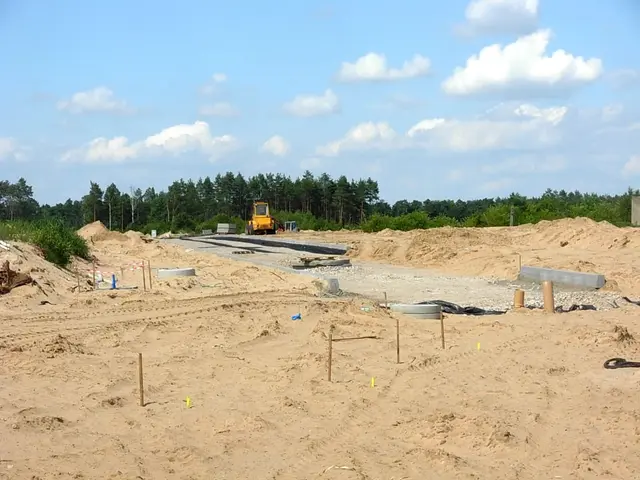
Roads, street lighting, and the improvement of courtyards and parks have become the most visible symbols of change. Over three years, more than 170 kilometers of roads have been repaired, with street lighting projects currently underway. In Ushtobe, the district center, preparations are in full swing for a large-scale reconstruction of the central park, originally established in 1938.
The Clean Kazakhstan (Taza Qazaqstan) program is also making strides—over 12,000 deciduous and coniferous saplings have been planted. The village of Kalpe was named the region's best settlement in the Ülgili Eldı Meken ("Model Village") competition.
"A comfortable environment isn't a luxury—it's the foundation of sustainable rural development," noted Ulan Dosymbekov.
For this agrarian region, water supply remains critical. Farmers in the Karatal area are progressively adopting water-saving technologies, such as drip and sprinkler irrigation. By 2025, the area using these methods will expand by 500 hectares. Already, 1,908 hectares—8.7% of all irrigated land—have transitioned to modern irrigation systems.
Large-scale work is also underway to build new irrigation networks and clear canals. These measures will significantly reduce water loss during transport and ensure reliable irrigation during the hot season.
Karatal District: Where Development Meets a Human Touch
Karatal District is not only becoming more livable but also more sports-oriented. It now hosts 366 sports sections across 36 disciplines, with 16,500 residents—42% of the population—regularly participating. In recent years, modular fitness and wellness centers have been built and opened in several villages, including Eskeldy-Bi, Zhanataldy, Almaly, Karazhide, Kokpekty, and Bastobe, as well as in the town of Ushtobe. Additionally, a modern tennis center, funded by a private entrepreneur, has opened in the village of Kalpe.
Safety is a top priority—recently, the district launched an Operational Control Center, the digital "heart" of its public security system. The center oversees 77 surveillance cameras and five high-speed radars, enabling round-the-clock police operations with real-time incident response.
The district's akim (governor) emphasized that modern technology not only helps prevent crime but also fosters a new culture of safety—a key factor in building trust between authorities and the public.
Today, Karatal's progress isn't measured just by kilometers of roads built or investment volumes, though those matter too. What truly counts is how people experience change in their daily lives. Here, they're not just constructing hospitals, schools, and sports facilities—they're building the future.
Investments, new jobs, improved infrastructure, and digital transformation are turning Karatal District into a model of systematic, people-centered development. The changes are happening for the residents—so that every person can say: "Yes, life here has gotten better."