E-car slam derails Wissing's e-mobility ambitions
While traffic lights encourage electric vehicles, they're laying down the smackdown on Transport Minister Volker Wissing - why? Because the expansion of e-charging stations isn't progressing like greased lightning.
Enter the German Automotive Industry Association (VDA): According to their findings, a staggering 48% of Germany's 10,733 municipalities lack public charging stations for electric cars, and eight out of ten municipalities don't even have a fast charging station. The traffic light's 2030 goal of a million charging stations? Looking more like a pipe dream.
Who's at fault? None other than our man Volker Wissing himself.
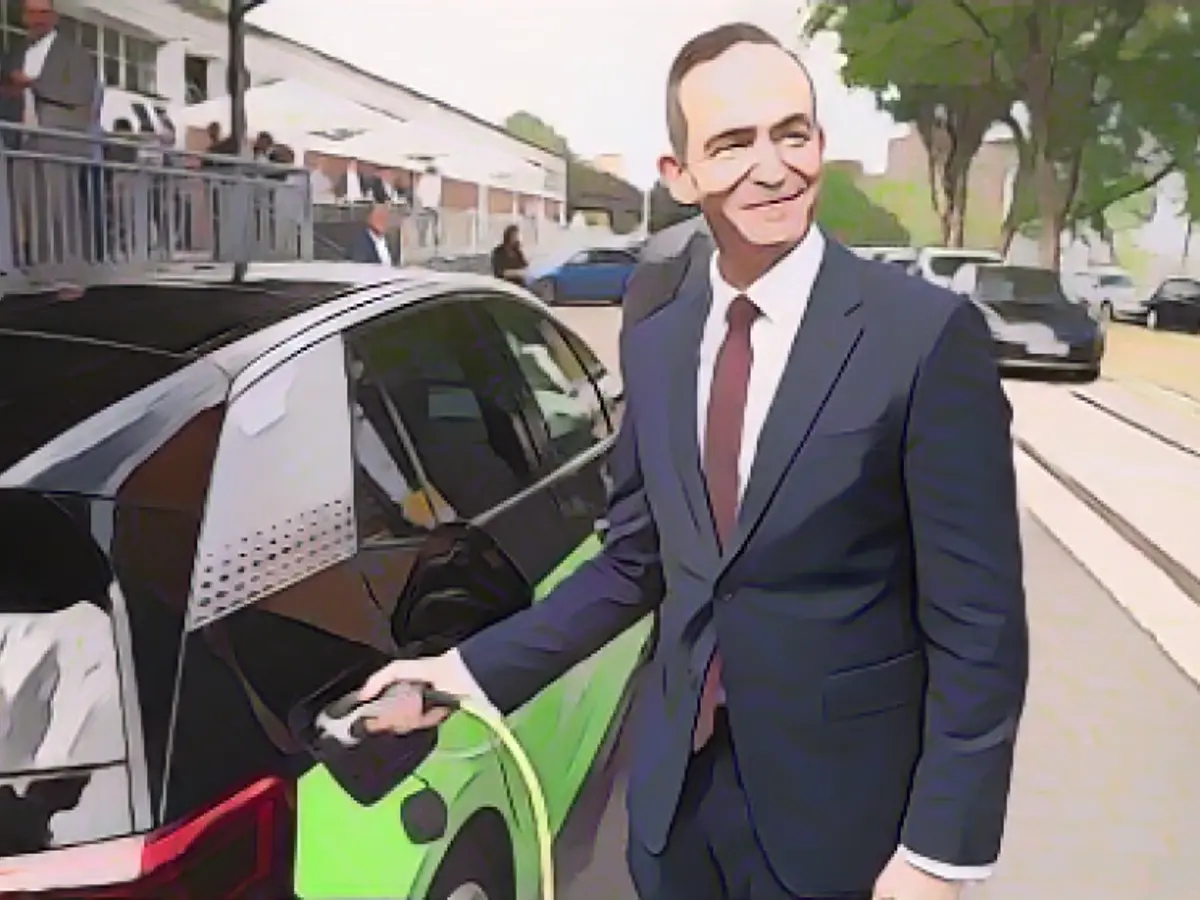
Curious: Wissing accepts the German mobility industry's innovation award today, the cherry on top of a rather sour day for the FDP transport minister.
VDA insists: expansion needs to go supersonic
But to hit the 2030 target of a million charging points, the past twelve months' expansion rate would need to, you guessed it, go three times faster than it currently is.
As of now, there are 97,495 publicly-accessible charging stations in Germany - of which 18,577 are fast-charging stations according to the Federal Network Agency. This translates to an average of 21 electric vehicles per public charging station in Germany. While improvements have been made, there's still plenty of ground left to cover.
(By the way, the last VDA e-charging network ranking [as of January 1, 2023] showed an average of 23 electric vehicles per public charging station.)
NRW eyes a fivefold increase in charging stations
North Rhine-Westphalia has its sights set higher still. Their target for public charging stations for electric vehicles is a whopping 90,000 by 2030. That's a fivefold increase in charging stations from the current 18,500.
The plan? Install around 66,000 regular charging points and more than 7,000 fast charging points by 2030, according to the Ministry of Economic Affairs. Charging stations will also be increasingly found in rental apartments and workplaces.
1.5 million charging points at residential buildings and 550,000 at workplaces are needed by 2030 to meet Germany's ambitious e-mobility goals.
The dearth of progress in expanding public and fast charging stations for electric cars in many German municipalities has become a political hot potato, raising doubts about Wissing's commitment to promoting e-mobility. Despite efforts to improve the situation, such as North Rhine-Westphalia's ambitious fivefold increase in charging stations, the current expansion pace falls well short of meeting the VDA's goal of a million charging stations by 2030.
Source:
Extra insights
To hit its target of one million charging stations for electric cars by 2030, Germany needs to move at lightspeed when it comes to charging infrastructure development.
Here's where it gets juicy: Increased investment, balanced distribution of charging stations across the country, expanding ultra-fast charging stations, public-private partnerships, implementing smart charging solutions, regulatory support, and infrastructure planning can all help push those numbers up.
So, if you're looking to keep the traffic lights happy and ensure the widespread adoption of electric vehicles, this is where the magic happens.
[1] VDA Says Germany Needs €150 Billion to Build Up e-Charging Infrastructure by 2030 - electrive.
[2] VDA: To Meet 2030 Goals, Coastal Cities Must Extend Infrastructure to Countryside. - electrive.
[3] Bundeswehr Strategy: Over 30,000 Charging Stations by 2045 - electrive.
[4] Eiffage Énergie Systèmes: Installation of 1,050 Fast Charging Stations by 2029 in France - electrive.