National Guard in Los Angeles - Trump's Stunt Stokes Controversy - California ready to Sue
Trump issues martial law threat - California plans to file a lawsuit against the move
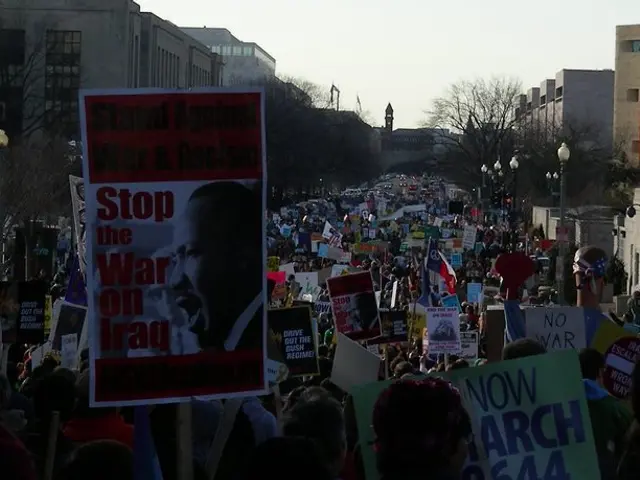
Protests in Los Angeles have taken a turn for the worse with arson attacks on self-driving taxis and violent confrontations between demonstrators and law enforcement. While the city insists it can handle the chaos on its own, President Trump begs to differ and threatens the city with martial law.
In an interview with MSNBC, California Governor Gavin Newsom voiced his disapproval for Trump's intentions, calling it an "illegal", "immoral", and "unconstitutional" move. He accused the president of escalating the situation for political gains. Lieutenant Governor Eleni Kounalakis added that deploying the National Guard to quell riots involving a mere 400 protesters would only serve to overwhelm local security forces.
Governor Newsom made his way to Los Angeles on Sunday afternoon, intent on observing the ongoing immigration raids and protests against them.
Newsom: Trump's Deliberate Provocation
The protests in Los Angeles have been ongoing since Friday, targeting federal immigration policies and the raids conducted by masked and armed federal police in the city. Agitated protesters pelted ICE agents with eggs, fireworks, and other projectiles. Fed agents responded with stun grenades and tear gas.
Trump, determined to flex his muscles, ordered the deployment of 2000 National Guard troops to Los Angeles despite neither the city nor the state requesting assistance. The president defended his decision, stating the need to maintain law and order. Nonetheless, he insisted he is keeping a close eye on the situation and remains ready to take further actions.
Newsom, no stranger to Trump's antics, dubbed the president's maneuver a deliberate provocation designed to bypass existing law.
Politics: Trump's Power Grab
On Saturday, enraged protesters set ablaze at least three self-driving cars belonging to Waymo. Police vehicles also fell victim to their wrath. The ensuing chaos disrupted traffic on a Los Angeles highway, causing a standstill for over an hour.
The Los Angeles police managed to disperse the unruly mob using stun and smoke grenades. The chief of police emphasized that the vast majority of protesters exercised their right to free speech peacefully.
Trump left no stone unturned when it came to deploying soldiers. He refused to rule out sending troops to other cities, suggesting they may be needed "everywhere". He was reluctant to discuss the possibility of declaring martial law but hinted it was a card he would play if necessary.
Trump's decree on mobilizing the National Guard makes mention of "a form of rebellion" against state authority but does not explicitly name Los Angeles. This broad phrasing could potentially be used to justify deployments in other parts of the country.
In general, the National Guard is a military reserve unit that falls under the command of the respective state governor in normal circumstances. However, during times of war or national emergencies, the US President can assume command. Usurping a governor's wishes to deploy the National Guard is an unusual display of federal power and has not been seen since 1965.
So here we are, amidst political tensions, legal disputes, and public unrest, witnessing an unprecedented power struggle as Trump seeks to assert federal control in blue states that vehemently oppose his policies.
- California
- Los Angeles
- Protests
- Donald Trump
I'm not going to say that I'm not concerned about the escalating tensions between California and President Trump, especially in the context of the ongoing protests in Los Angeles. This situation, with Trump's deliberate provocation and planned National Guard deployment, could potentially alter the dynamics of general-news and politics, and even encroach on crime-and-justice if the use of military force becomes excessive.