Trump Declares Antifa to Be a Significant Terrorist Entity
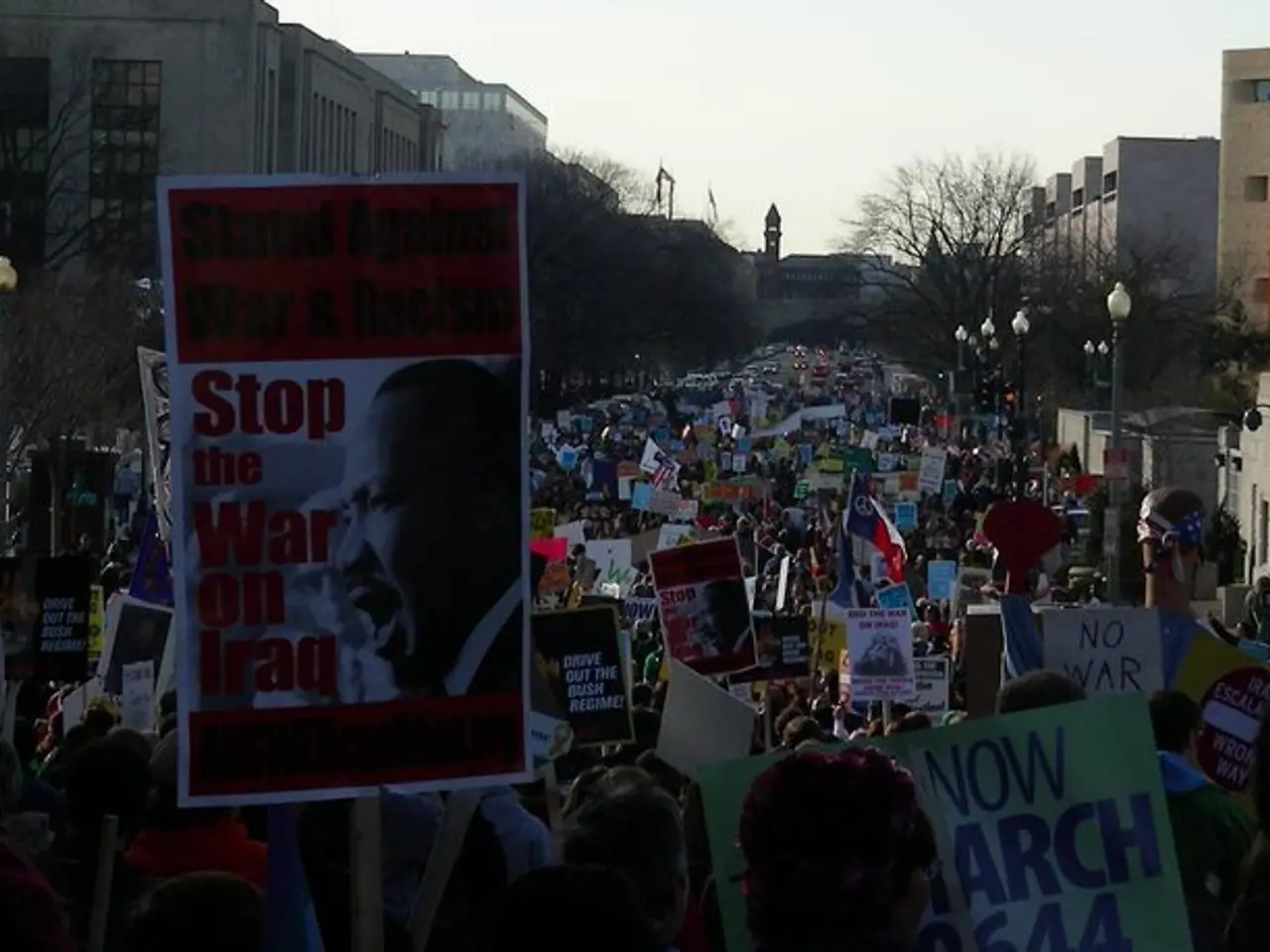
In the midst of nationwide protests following the police killing of George Floyd in May 2020, former U.S. President Donald Trump announced his intentions to designate Antifa, a left-wing antifascist political movement, as a terrorist organization.
Antifa, short for 'antifaschistisch,' is a loose network of local groups without a clear centralized structure, opposing fascism, including National Socialism and modern far-right extremism. The Counter Extremism Project labels Antifa as 'one of the most prominent far-left movements in the United States,' but notes it's 'not a coherent, centralized group but a broad ideology centered around the so-called opposition to fascism.'
Trump's announcement, made through a post on his Truth Social platform, reflected his administration's stance amid the protests. However, given Antifa's decentralized nature, no formal designation was finalized. This move was criticized by some as a political stunt.
The president also intended to strongly recommend investigations for those funding Antifa. Bill Barr, who was serving as Attorney General at the time, issued a statement condemning 'rioting' by some groups during the protests and added that the violence instigated and carried out by Antifa and other similar groups in connection with the rioting is domestic terrorism and will be treated accordingly.
Since the Black Lives Matter protests of 2020, Trump and several conservatives have used Antifa as a catch-all term to describe left-wing groups. The interests of groups making up Antifa may or may not align with anarchism, socialism, communism, environmentalism, indigenous rights, gay rights, or other social justice causes.
The Anti-Defamation League report on Antifa notes that extreme actors who claim to be affiliated with Antifa do engage in violence or vandalism at rallies and events, but this is not the norm. According to the ADL, Antifa is a decentralized, leaderless movement composed of loose collections of groups, networks, and individuals.
The designation does not have the force of law and is not legally binding. The designation comes days after Trump threatened a crackdown on the 'radical left' following the assassination of Charlie Kirk. However, the designation does not appear to have been accompanied by any specific actions or measures to address Antifa's activities.
Trump referred to Antifa as a 'SICK, DANGEROUS, RADICAL LEFT DISASTER.' Despite the lack of formal designation, the announcement and subsequent rhetoric have contributed to the ongoing debate about the role and activities of Antifa in American politics.
Read also:
- United States tariffs pose a threat to India, necessitating the recruitment of adept negotiators or strategists, similar to those who had influenced Trump's decisions.
- Weekly happenings in the German Federal Parliament (Bundestag)
- Southwest region's most popular posts, accompanied by an inquiry:
- Discussion between Putin and Trump in Alaska could potentially overshadow Ukraine's concerns