TikTok-Backed Nationalist George Simion Triumphs in Romania's Initial Round, Propelled by Rural Voters and Support from Trump
In Romania's Presidential Race, Far-Right Underdog George Simion Wins Hearts
Romania's political landscape has been shaken up, as far-right candidate George Simion surged to the top of the pack with 41% of the vote in a re-run election. Notable contenders, Nicușor Dan (21%) and Crin Antonescu (20%), trailed significantly behind. This run-off on May 18 will pit Simion against the pro-EU Bucharest Mayor in a battle that could determine whether Romania swings toward a nationalist path or maintains its pro-European course.
This content from YouTube requires advertisement tracking and audience measurement to display.
The re-election was prompted when Romania's intelligence services raised concerns about Russian interference in a previous election, which propelled another far-right outsider, Călin Georgescu, to victory despite his single-digit polling ahead of the election. The election was subsequently annulled, and Georgescu was disqualified from running again, leaving a void on the nationalist right that Simion subsequently filled.
Simion's party, the Alliance for the Union of Romanians, had already gained attention in 2020 for securing parliamentary seats just a year after its formation. This impressive result in the presidential re-run marks the alliance's shift from a protest movement to a mainstream political force, largely due to mobilization in rural areas and strategic use of social media.
Where traditional political candidates focused on conventional media, Simion's campaign flooded TikTok with impassioned daily videos, filmed in rural settings. These videos frequently featured fiery monologues, nationalist sentiments, and criticism of the EU. TikTok, now in the spotlight following last year's disinformation controversies, removed over 27,000 fake accounts associated with Simion and Georgescu and formed a Romanian election task force to combat manipulation.
Beyond social media, Simion's appeal reached deep into struggling rural regions. His tough stance on unemployment and government neglect, coupled with his portrayal as a voice for farmers, resonated with many who saw him as the only candidate speaking to their frustrations.
Historian Jacques Rupnik observed a significant divide in the election results: "There's the Romania of bigger cities, which are more prosperous, with a better-educated population more familiar with Europe. And then there is the Romania of smaller towns, economically less developed, with a rural population. That's where the nationalist rhetoric comes in."
Simion's campaign emphasized reclaiming sovereignty, including promises to nationalize farmland and strategic sectors. His rhetoric has been compared to the American populist movement, drawing on themes of restoring power to the people and aligning with the United States for increased influence within NATO.
The resemblance isn't limited to rhetoric—US political figures have weighed in on Romania's political future. In February, US Vice President Kamala Harris criticized the annulment of Georgescu's first-round victory, while Elon Musk, White House adviser and Twitter personality, frequently criticized Romanian authorities on his platform.
As attention now turns to the May 18 second round, the outcome remains uncertain. A united front of centrist voters could pose a formidable challenge to Simion's bid for victory. Turnout will play a crucial role, with urban and diaspora voters essential for Dan's success. Should Simion prevail, experts warn of potential changes in Romania's foreign policy and commitment to democratic institutions.
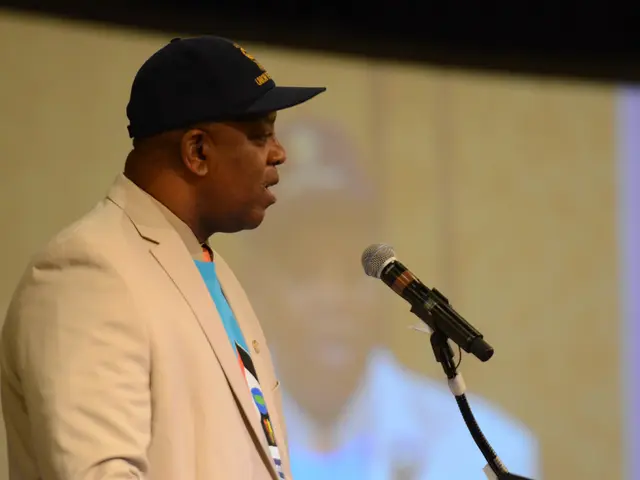
Amid this whirlwind election, Simion, in a speech shortly after the polls closed, proclaimed: "The Romanians have risen." With his rise fueled by nationalist sentiment, social media, and admiration for global right-wing leaders like Donald Trump, it remains to be seen if Romania will experience a shift toward nationalist ideologies.
Enrichment Insights:- Romania experienced significant political upheaval, with the rise of a far-right candidate, George Simion, who has aligned himself with global right-wing movements and American populism.- Far-right candidates often use social media effectively to disseminate their message, gain traction, and build a strong online presence.- Nationalist rhetoric emphasizing reclaiming sovereignty and promoting a "Europe of nations" has drawn support from those seeking a stronger national identity and domestic concerns over international implications.- Admiration for figures like Donald Trump further reinforces Simion's connection to a broader global right-wing movement.
- Social media platforms like TikTok have become crucial tools for Romanian far-right candidates, such as George Simion, to mobilize support and spread their nationalist sentiment, as demonstrated by his flood of impassioned daily videos on the platform.
- Amid Romania's tumultuous political landscape, the ongoing presidential race is a global focus, as the far-right Underdog George Simion seeks to lead the country, influencing futures that could significantly impact global news, politics, and crime-and-justice landscapes.
- As the election shifts away from rural areas and into urban centers, the migration of voters from the countryside to cities could be determinative in the May 18 second round, particularly for the pro-EU Bucharest Mayor competing against Simion.
- The global impact of the Romanian election is evidenced by the involvement of foreign figures, such as US Vice President Kamala Harris and Elon Musk, as they voice concerns and criticisms on their respective platforms, demonstrating globalfocus on political events within Romania.
- From the populist rhetoric appealing to local struggles with unemployment and government neglect to the firm stance on nationalizing strategic sectors and farmland, Romania's political landscape showcases its potential futures as it seeks to determine its place in both the European Union and the global arena.
- As this election unfolds, it illuminates the power of social media in influencing migration patterns, reaching a global audience, and sparking social movements aligned with entertainment, politics, and war-and-conflicts, particularly when following the lead of prominent figures like Donald Trump.