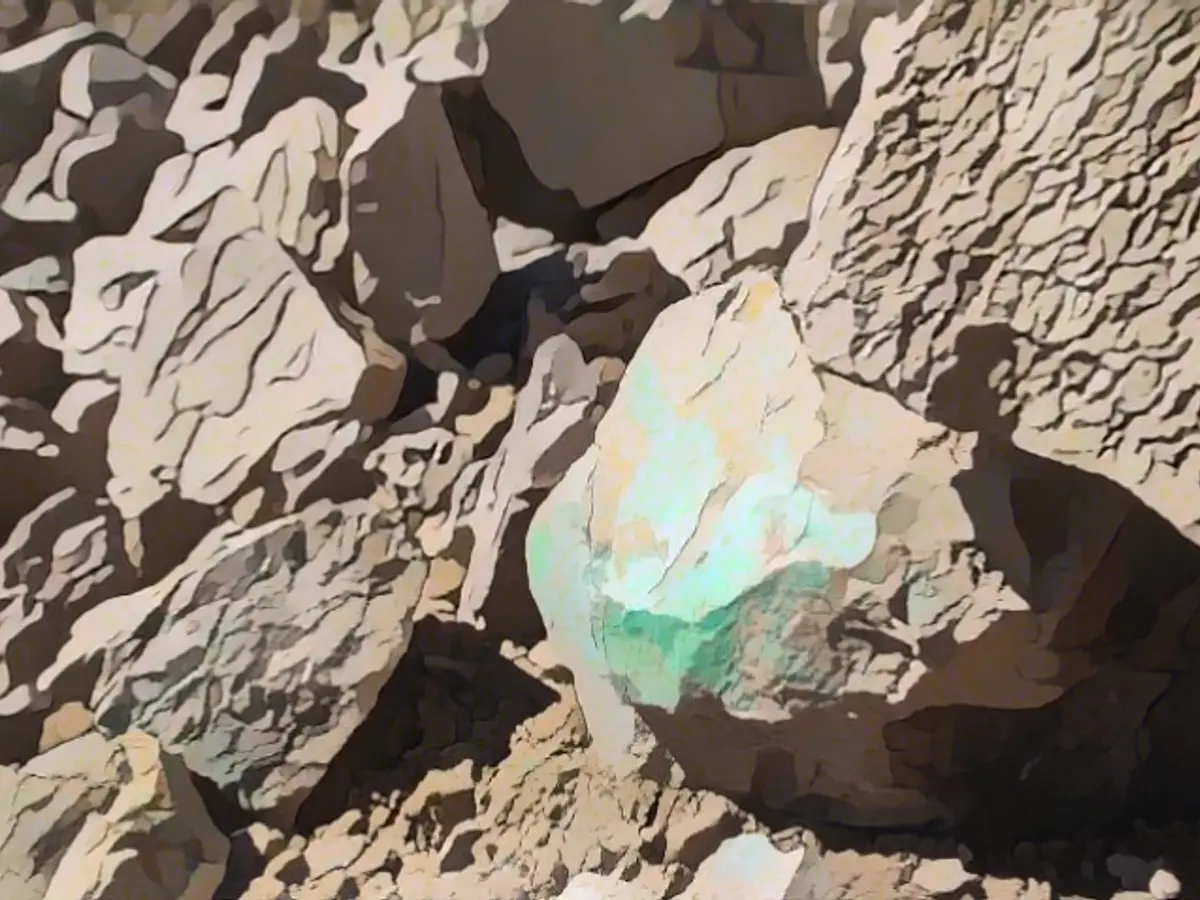
Afghanistan, one of the poorest countries globally, houses some of the world's richest mineral deposits. Discovered in 2010, these resources, valued at nearly a trillion dollars, include gold, copper, and other metals spread across various provinces. Notably, Afghanistan boasts potential large-scale reserves of lithium, a vital component in rechargeable batteries and other technologies crucial for combating climate change.
"Certainly, Afghanistan is one of the richest regions in the world when it comes to traditional metals that the emerging economies in the 21st century need," said Rod Schoonover, a scientist and security expert. Despite historical challenges in securing resources due to security issues, inadequate infrastructure, and prolonged drought, key nations like China, Pakistan, and India remain interested and may attempt to engage despite ongoing chaos.
The future of Afghanistan's economy remains uncertain. A US Congressional Research Service report in June 2020 indicated that 90% of Afghan residents fell below the state's poverty line. The World Bank suggested that the economy continued to struggle due to weaknesses and reliance on international aid. The ability of private business to grow and diversify has been hindered by insecurity, political instability, poor institutions, inadequate infrastructure, widespread corruption, and a difficult business climate.
Many countries with weak governments struggle with what's known as the "resource curse," where attempts to exploit natural resources provide little benefit for the local population and the domestic economy. However, the discovery of Afghanistan's mineral resources sparked renewed hope, particularly given the growing demand for lithium, copper, and rare earth elements as countries shift towards clean energy and technologies.
According to the International Energy Agency, the world's current stores of lithium, copper, nickel, cobalt, and rare earth elements need to increase significantly, or global efforts to combat climate change could fail. Nearly 75% of the world's production of lithium, cobalt, and rare earth elements come from three countries—China, the Democratic Republic of the Congo, and Australia—highlighting the need to diversify sources.
The average electric vehicle uses about six times more minerals than traditional vehicles. Lithium, nickel, and cobalt are vital for batteries, while strained electricity networks require substantial quantities of copper and aluminum, and rare earth elements contribute to magnets used in wind turbines. Reports suggest that Afghanistan's lithium reserves are comparable to those in Bolivia, which holds the world's largest known reserves.
"If Afghanistan can maintain peace for a few years and allow the exploration of its mineral resources, it could become one of the wealthiest countries in the region within the next decade," commented Mirzad of the U.S. Geological Survey in 2010.
Nonetheless, widespread challenges hamper Afghanistan's actual exploitation of its resources. While gold, copper, and iron have been partially mined, the extraction of lithium and rare earth minerals requires greater investment, technology, and time. According to the International Energy Agency, the process from discovering a deposit to starting production typically takes 16 years.
Presently, Afghanistan's mining revenues amount to only $1 billion a year. Experts estimate that 30-40% of the resources may be diverted through corruption, mismanaged by warlords, and mismanaged by the Taliban, which pursues smaller mining projects. However, there's potential for the Taliban to utilize its newfound power to develop the mining industry, setting industry standards and curbing unregulated activities.
Mohsin Khan, a senior fellow at the Atlantic Council and a former director of the International Monetary Fund, said that two decades of turmoil have made it challenging to extract most of the country's resources. The most advanced mining projects, such as gold and copper, have seen only limited exploitation. Khan also highlighted risks in securing investment, particularly with the Taliban's current unrecognized status from the West and its restrictive governance standards.
China, the world's leading exporteur of rare earth elements, released a public statement about maintaining ties with the Taliban. However, concerns about the sustainability and environmental impact of mining projects could deter Chinese engagement while political instability may lead to skepticism towards joint ventures with the Taliban.
Ian Bashir, a Partner at RK Equity, advised investors to focus efforts elsewhere. "If you didn’t want to invest in Afghanistan before, why would you now?" asked Bashir. "Private investors will not take this risk." Additionally, U.S. sanctions against the Taliban could pose another hurdle in the region's mining activities.
Despite these obstacles, Afghanistan's untapped mining resources have journalists and economists closely watching developments. The nation's economic dependence on aid has prompted much discussion about the potential for mining revenues and alternatives to agricultural exports to drive growth and minimize reliance on foreign assistance. The evolution of this narrative is likely to shape Afghanistan's future greatly.