
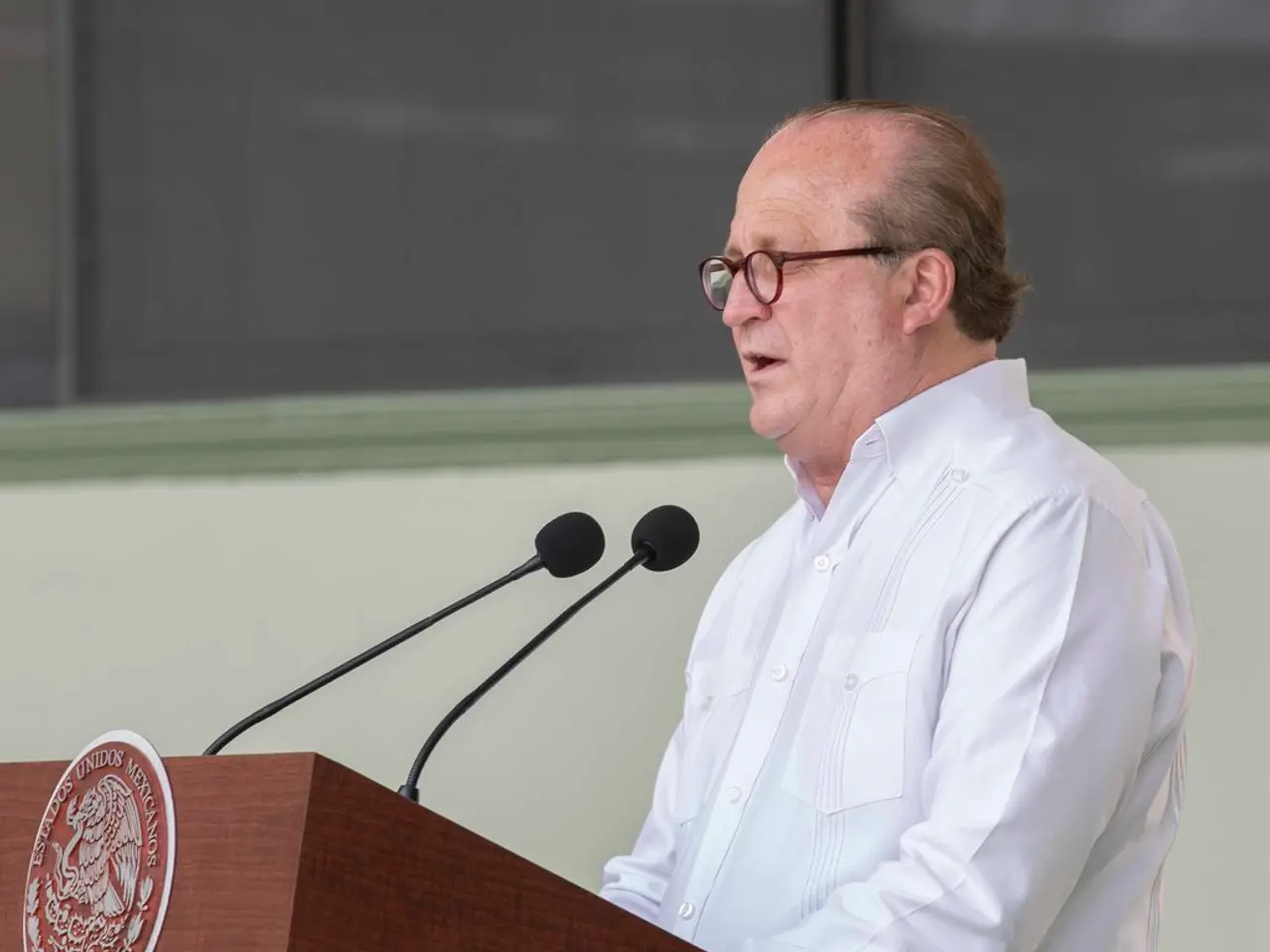
Speaker and the Male Interviewee
In the Merz government, the key controversies revolve around Minister of State for Culture, Wolfram Weimer, and his stance on freedom of speech and thought, particularly in the realm of language and cultural policy.
Weimer's most contentious policy is the ban on gender-inclusive language forms in official communications within the Federal Chancellery and publicly funded agencies. This ban, which includes the prohibition of plurals with asterisks and other non-standard characters to denote gender, has sparked heated debates in Germany about freedom of expression and social inclusion.
Weimer argues that language should not be treated as a playground for experimental forms and insists on traditional linguistic usage in official contexts. Critics, however, frame his policies as paternalistic and as potentially limiting freedom of thought by restricting linguistic innovation and inclusivity.
In addition to the language policy, Weimer is involved in proposing taxation on digital platforms that use media content. This plan, while still unclear, has sparked debates regarding its legal framework and impact on freedom in the digital media landscape.
Weimer, a newcomer in his role, is a former independent journalist and conservative media figure, who is known for advocating for preserving traditional cultural norms and opposing recent identity politics trends, particularly in language. His proximity to Chancellor Friedrich Merz further solidifies his cultural influence.
However, Weimer's approach to freedom of speech and thought has been met with criticism, particularly from women, who question his qualifications for his position due to his rapid rise to the top.
Weimer's approach involves widening the corridor of the sayable, while simultaneously shrinking the spaces for thought. This approach, reminiscent of the 1950s, has been criticised for its potential similarity to the 1950s in terms of limiting speech, and for departing from liberal values.
Examples of unspeakable things that may be considered include hate posts and fake news. Widening the corridor of the sayable, as proposed by Weimer, means creating a wider space for unhindered speech. However, this has raised concerns about the potential normalisation of such content.
The opinions in the text express disagreement with Weimer's proposed narrowing of the corridor of spoken words. The text suggests that Weimer's mouthpieces do not adhere to a basic liberal stance, as expressed in the opinions.
In summary, Weimer's key controversies concern the ban on gender-inclusive language, driving digital platform taxation discussions, and his approach to freedom of speech and thought, which has generated societal and political debate about the balance between cultural tradition, inclusivity, and freedom of speech in Germany under the Merz government.
[1] [German News Outlet A] (URL) [2] [German News Outlet B] (URL) [5] [German News Outlet C] (URL)
- The ban on gender-inclusive language forms proposed by Minister Weimer, a key figure in policy-and-legislation under the Merz government, has sparked heated debates in the realm of general-news and politics, with critics framing his policy as potentially limiting freedom of thought by restricting linguistic innovation and inclusivity.
- The proposed taxation on digital platforms that use media content, another contentious topic involving Weimer, has generated debates not only in politics but also in policy-and-legislation, as discussions about its legal framework and impact on freedom in the digital media landscape continue to unfold.


