Scientists refine black hole entropy with new gravity model breakthroughs
New research is refining how scientists calculate black hole entropy by examining corrections to the Bekenstein-Hawking area formula. The study focuses on 'inverse area' adjustments within F(R) gravity—a modified version of Einstein’s general relativity. These findings also link theoretical predictions with real-world gravitational wave observations.
The team explored how entropy corrections for black holes with large horizon areas can be expressed as a Taylor series. This expansion breaks down the Wald-Jacobson-Kang-Myers entropy function into terms inversely proportional to the horizon area. Each coefficient in the series ties back to derivatives of F(R) with respect to the Ricci scalar, evaluated at zero.
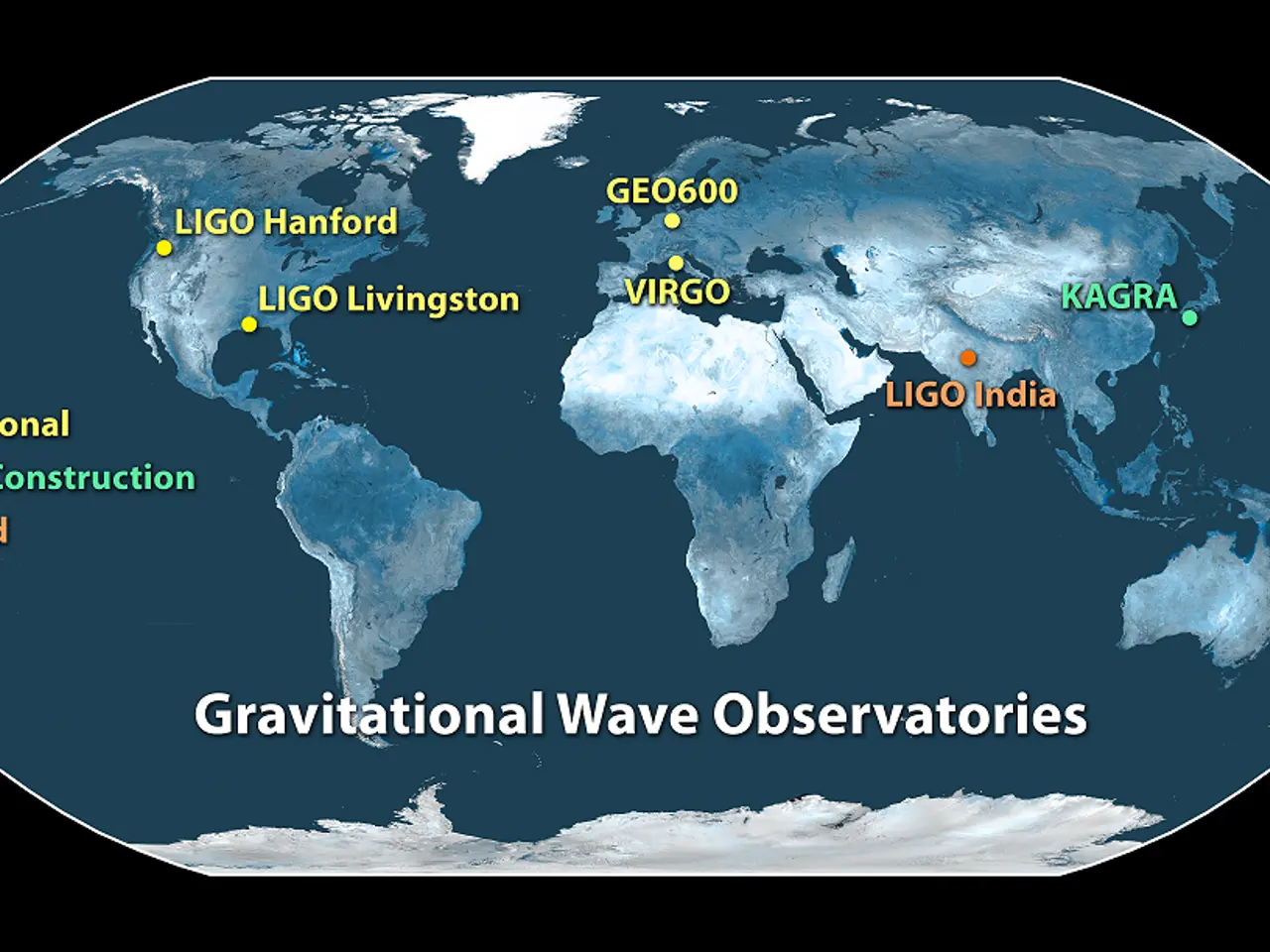
Using quantum general relativity principles, particularly from Loop Quantum Gravity, the researchers calculated the first sub-leading inverse area correction. They demonstrated that these correction terms could be combined into a simplified form. This allowed them to derive strict constraints on the parameters defining F(R) gravity. The study also required consistency with the Hawking Area Theorem, which was tested against recent gravitational wave data from binary black hole mergers. By matching theoretical corrections with observational results, the team established tight limits on the possible values for F(R) gravity parameters.
The findings provide a clearer picture of black hole entropy, especially for those with vast horizon areas. They also set firm boundaries on F(R) gravity models by ensuring alignment with gravitational wave detections. This work represents a step forward in connecting theoretical physics with observable cosmic events.