Russian Billiards vs. American Pool: A Clash of Precision and Speed
Russian billiards and American pool may look similar at first glance, but the two games differ sharply in rules, equipment, and style. While pool evolved in the US as a fast-paced, strategic game, Russian pyramid—also called Russian billiards—developed from 19th-century European traditions, prioritising precision and control over speed. Russian billiards uses a 12-foot table with 16 balls: 15 red numbered balls and one white cue ball per player. The pockets are extremely narrow, demanding near-perfect alignment of speed and trajectory to sink a ball. Players often rely on carom shots off their own balls, with free shots awarded after pocketing, encouraging long tactical exchanges. The larger, heavier balls—around 68 mm in diameter and nearly twice as heavy as pool balls—require longer cues and force-controlled strokes.
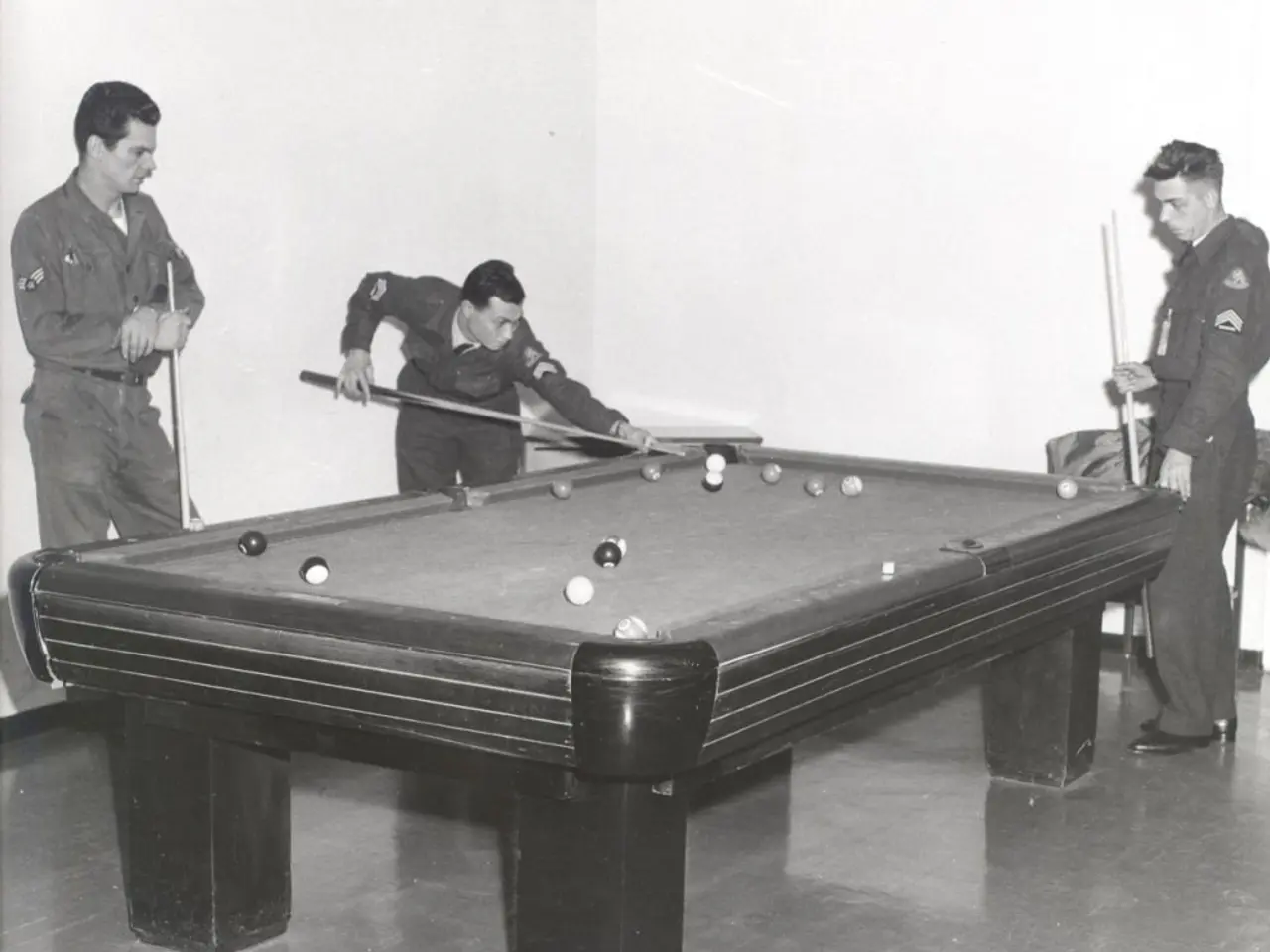
American pool, by contrast, is played on a 9-foot table with six wider, rounded pockets. The game uses 16 smaller, lighter balls (57.2 mm), including a solid white cue ball and coloured, numbered object balls. Rules focus on pocketing balls in sequence—either by group (stripes vs. solids) or by number (as in 9-ball). Spin and positioning dominate play, with fouls often resulting in 'ball-in-hand' for the opponent, giving them a clear advantage. The cultural roots of the games also shape their styles. Russian pyramid reflects aristocratic and Soviet-era traditions, where technical skill and patience were prized. American pool, however, grew from barroom gambling, leading to a faster, more accessible game where strategy and quick decision-making take centre stage.
A single miscue in Russian pyramid can leave a player struggling with a difficult position, while pool rewards careful setup and shot sequencing. The differences extend beyond the table: one favours methodical precision, the other adaptability and speed. Both games, however, remain deeply tied to their cultural origins and continue to attract players with distinct preferences.