Protests erupt in the Ivory Coast over the omission of opposition figures from the election process
In the West African nation of Ivory Coast, protests have erupted over the exclusion of key opposition figures from the upcoming October presidential election. The electoral commission's decision to bar four main opposition candidates, including former President Laurent Gbagbo and former Credit Suisse CEO Tidjane Thiam, has sparked public outrage and calls for electoral reform.
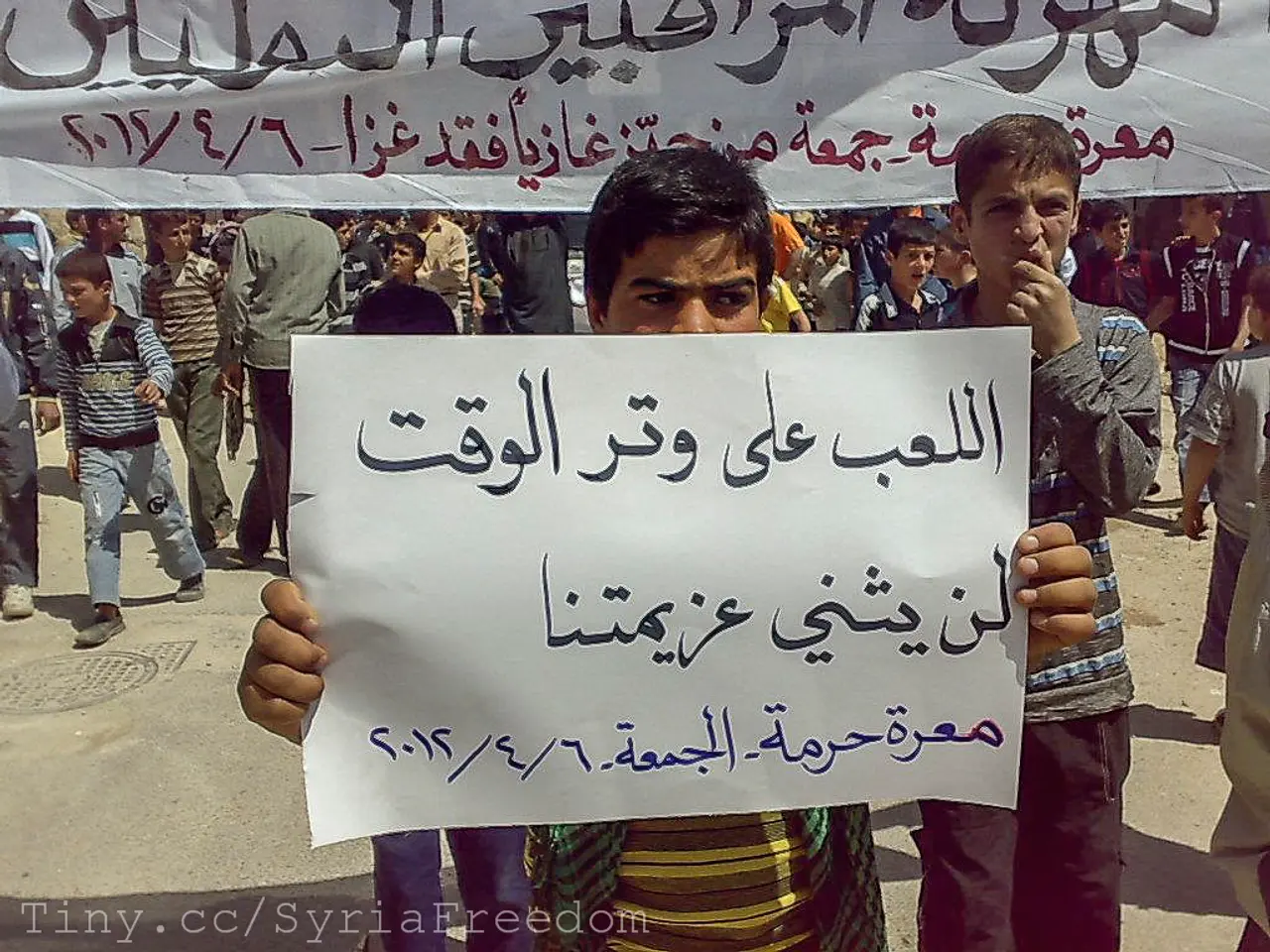
The protesters, who gathered in Yopougon, a densely populated suburb of the capital Abidjan, held banners that read "Enough is enough!" and "No true democracy without true justice." Sagesse Divine, an activist who participated in Saturday's march, stated, "We don't want a fourth term, and we want the electoral roll revised, that's what we are asking for. We want all candidates' names included, and we want to go to the elections in peace, that's all we want."
The incumbent president, Alassane Ouattara, announced his intention to seek a fourth presidential term, a move that is contested due to him changing the constitution in 2016 to remove presidential term limits. Ouattara, 83, justifies his decision to run again by citing unprecedented security, economic, and monetary challenges that require experience to manage.
Gbagbo and Thiam had joined forces to challenge Ouattara but were excluded from the election. This decision has fueled tensions and fears of election violence, as several people have already been killed in election-related violence.
The exclusion of opposition leaders is seen as undermining democracy and justice and threatening the legitimacy of the election without true competition. Ouattara is one of several leaders in West Africa who have changed constitutional term limits to remain in power.
It's important to note that Thiam has been barred from running in the presidential election due to being a dual citizen at the time of his candidacy declaration, despite renouncing his French nationality.
Moreover, the nation of 32 million is not only facing political unrest but also the threat of terrorism, as groups linked to al-Qaida and the Islamic State group have been spreading from the Sahel region into wealthier West African coastal states, including Ivory Coast, Togo, and Benin.
In summary, Ivorians protest because the exclusion of prominent opposition candidates and the president’s fourth-term bid are seen as threats to electoral fairness, democracy, and peace ahead of the vote. The upcoming election in Ivory Coast is facing significant challenges, both from within and beyond its borders.
- The controversy surrounding the upcoming October presidential election in Ivory Coast, driven by the exclusion of key opposition figures and the incumbent president's bid for a fourth term, has sparked concerns about the integrity of the entire electoral process and the potential for widespread violence.
- Beyond electoral politics, Ivory Coast is confronting various other challenges, including the increasing threat of terrorism as groups affiliated with al-Qaida and the Islamic State group extend their reach from the Sahel region into wealthier West African coastal states, such as Ivory Coast, Togo, and Benin.
- The exclusion of Tidjane Thiam, a former Credit Suisse CEO, from the presidential election due to his dual citizenship status at the time of his candidacy declaration highlights the complex web of policy and legislation that influences political races.
- The general news landscape is filled with discussions about the ongoing war-and-conflicts and the consequences for civilian populations, with Ivory Coast becoming an important focus, as its political instability could potentially spill over into neighboring countries.
- Car accidents, fires, and crime-and-justice issues are still prevalent concerns within Ivory Coast's urban landscapes, as the nation faces an array of challenges that transcend the political sphere and require comprehensive solutions involving all segments of society.