Proceedings in lawsuit against the state House committee will persist following judge's approval
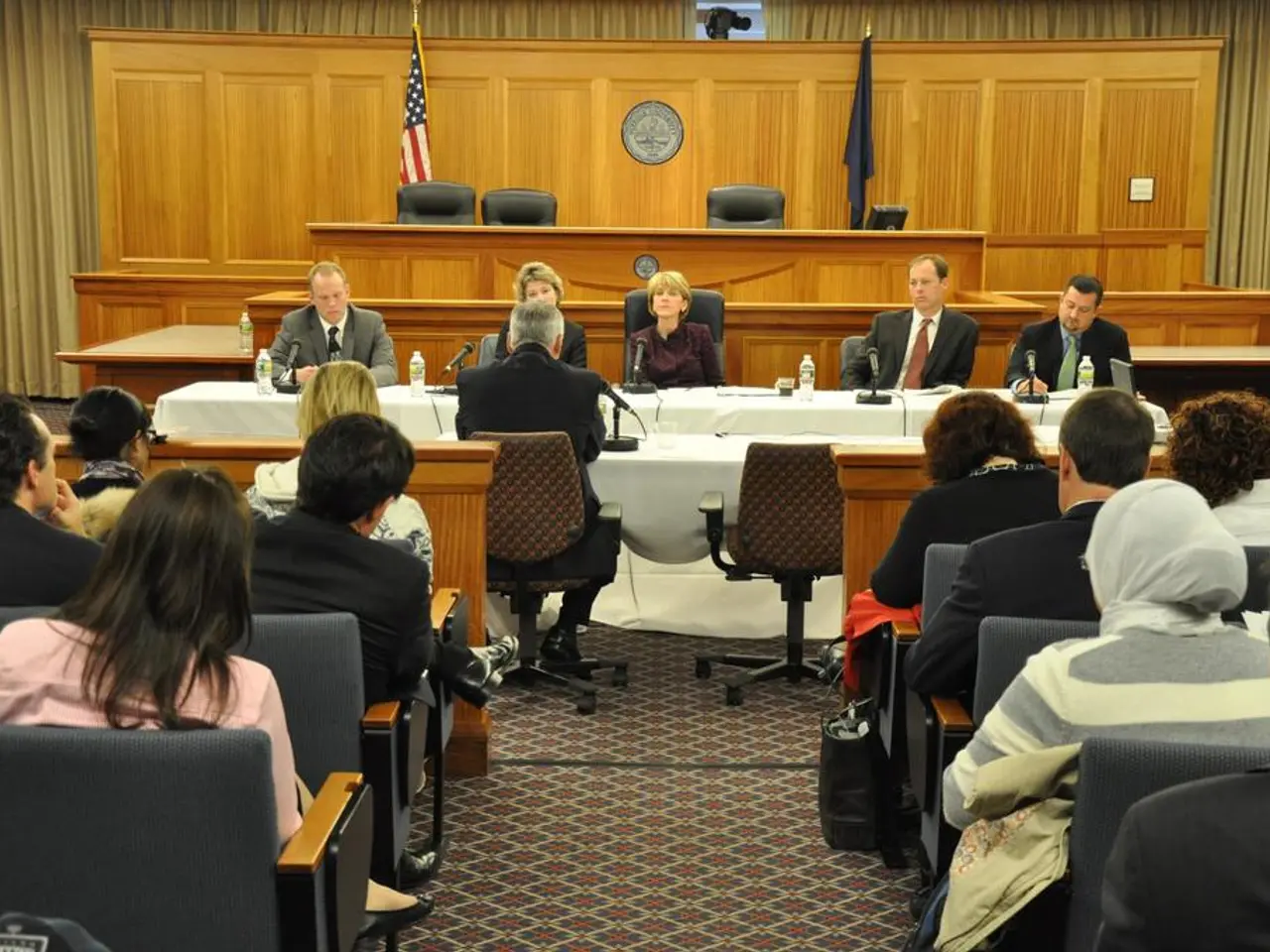
In a significant ruling, a Honolulu judge has permitted a court challenge to the closed-door meetings of the Hawaii House of Representatives' Advisory Committee on Rules and Procedures to move forward. The lawsuit, filed by an ad hoc group including former state senator Laura Acasio of Hilo, alleges that these meetings violate the Hawaii Constitution's open meeting requirements.
The plaintiffs in the case are registered voters who would have attended the House committee meeting if it had been open to the public. They assert that the committee convened in meetings not open to the public prior to or on Jan. 16, which, according to the suit, is a breach of the open meeting provisions.
However, the House was granted a dismissal on the plaintiffs' claims that the House has a 'custom and practice' of making decisions on bills during recesses of meetings otherwise open to the public. The court ruled that the claim fails to sufficiently allege factual circumstances, beyond a general 'custom and practice,' and doesn't create an actual controversy 'of sufficient immediacy and reality to warrant a declaratory judgment.'
Judge Kawamura, in his ruling, wrote that it does not 'appear beyond doubt' that Hawaii Revised Statutes (HRS) Chapter 92, the open meetings law also known as the 'Sunshine Law,' is inapplicable to the present facts as alleged. The House's motion argued that the plaintiffs' complaint fails to state a claim under HRS Chapter 92 because the open meeting requirements contained therein do not apply to the Legislature.
Despite the dismissal of some claims, the ruling denies the House's claims that the meetings are exempt from the constitutional open meeting provision. Lance Collins, the plaintiffs' attorney, stated that the ruling reinforces the idea that government must serve the people, not hide from them. Acasio, one of the plaintiffs, stated that the ruling indicates there is a real case and that the judge would see merit in their claims.
The ruling paves the way for the issue to move forward to trial, which is scheduled for June 2026. The court recognized that the public's right to know what decisions are being made is fundamental to democracy in Hawaii. The Legislature exempted itself from the first part of HRS 92, but this ruling could potentially challenge that exemption.
The Tribune-Herald reached out to House Speaker Nadine Nakamura but didn't receive a reply in time for this story. In February, Nakamura told the Tribune-Herald that the House 'is confident that its rules and committee processes comply with the Hawaii Constitution.'
The plaintiffs in the case include Laura Acasio, Tanya Aynessazian, Douglas L. Cobeen, Karen K. Cobeen, Michaela Ilikeamoana Ikeuchi, Robert Hale Pahia, Ka'apuniali'ionalananiki'eki'e Kanaloa Aiwohi, and Sergio Josephus Alcubilla III. The group's lawsuit alleges that closed-door meetings prior to the opening of this year's legislative session violate the Hawaii Constitution's open meeting requirements.
This ruling marks a significant step in the ongoing debate over transparency in the Hawaii House of Representatives. As the case proceeds, it will be interesting to see how the court interprets the applicability of the Sunshine Law to the Legislature and the implications this could have for future legislative sessions.
Read also:
- United States tariffs pose a threat to India, necessitating the recruitment of adept negotiators or strategists, similar to those who had influenced Trump's decisions.
- Weekly happenings in the German Federal Parliament (Bundestag)
- Southwest region's most popular posts, accompanied by an inquiry:
- Discussion between Putin and Trump in Alaska could potentially overshadow Ukraine's concerns