Obstructed lake situated in Lötsch valley
Emergency Situation in Lötschental: Melting Glacier and Rain Threaten Debris-Dammed Lake
In the Swiss valley of Walliser Lötschental, authorities are closely monitoring a potentially dangerous situation. A dammed mountain river, Lonza, has been forming after the collapse of a glacier, raising concerns about flooding.
Geologist Raphael Mayoraz reported at a press conference in Ferden that the height of the lake behind the debris dam has dropped by one meter. Floating barriers have been installed to prevent the outlet from being blocked and the water volume has decreased from an estimated one million cubic meters to about 800,000. The slow draining of the water over the debris cone reduces the risk of the debris cone liquefying and causing a massive flow of material into the valley.
The upcoming weather forecast is a cause for concern. Rain and glacier melt in the surrounding mountains could destabilize the debris cone, increasing the risk of a debris flow. In such a scenario, rock, debris, and mud would slide down the valley, potentially posing a threat to communities further downstream.
The debris cone itself is unstable. Approximately one-third of the nine million cubic meters of material that ended up in the valley after the glacier collapse is likely ice. The fate of this ice remains unclear, with unknown timing for melting and potential formation of cavities and collapse of the cone.
The catastrophe was triggered by the collapse of rock material from the approximately 3000-meter-high Kleine Nesthorn onto the underlying Birsch glacier. Under the load, the glacier broke off last Wednesday and rushed into the valley with massive amounts of ice, rock, and debris. While the immediate risk of further rockfalls has decreased, the terrain's steepness means that they can still lead to further debris flows.
At the power plant in Ferden, about six kilometers downstream from the disaster area, measures are being taken to prepare for larger water or debris flows. The dam wall should hold up under greater pressure, according to experts. If a lot of water collects there, the alarm will go off when the reservoir is two-thirds full.
Downstream villages of Gampel and Steg, near where the Lonza flows into the Rhone, are at risk from flooding. These villages are channeled through relatively narrow concrete canals that could quickly overflow in a flood. Residents have packed their essentials to leave their homes at short notice, with warnings through a warning app and sirens.
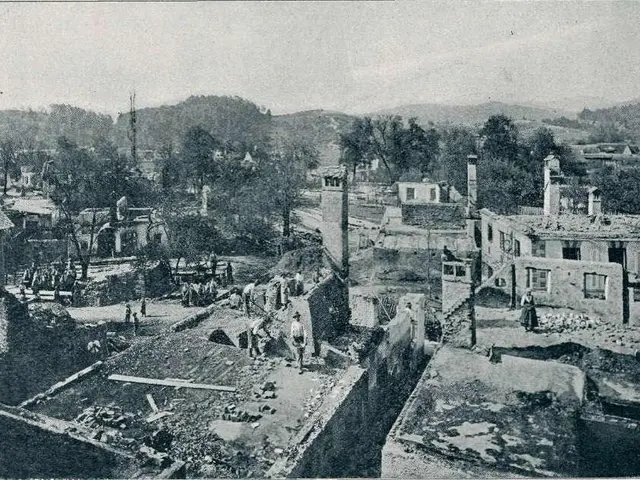
The church tower of the buried village of Blatten, first mentioned in writing in the 15th century, does not protrude from the meter-high layer of debris that has almost completely buried the village. Most of the few houses that were spared have sunk in the stagnant water of the Lonza. The approximately 300 residents were evacuated after the rockfalls. One local resident is still missing.
The focus remains on preventing loss of life, managing environmental risks, and stabilizing the valley to prevent further disasters. Military equipment, clearing debris, safety checks, monitoring, and evacuation orders are among the measures being taken to address the various risk scenarios.
- The Commission has also been consulted on the issues of climate-change and environmental-science, given the melting glacier and potential debris flows in Lötschental.
- In addition to monitoring the weather and weather-forecasting, authorities are also keeping a close watch on general-news sources for any updates about the situation in the valley.
- Interestingly, the science community has been discussing the possibility of car-accidents on the winding roads of the valley, as evacuees and emergency workers navigate the area amid the ongoing crisis.
- Furthermore, there has been some concern about the potential impact of the disaster on local species and their habitats, with experts urging caution to prevent further damage to the local ecosystem.