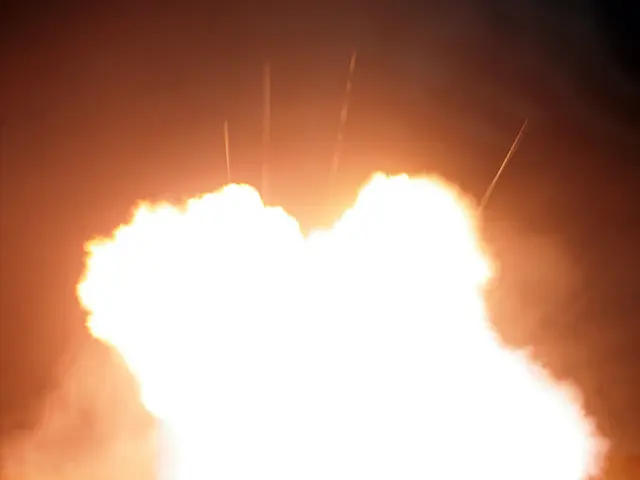
North Korea expresses concerns over the "Golden Dome," a perceived potential military threat.
U.S. Missile Defense System Sparks International Concern
A controversial missile defense system proposed by former President Donald Trump, dubbed the "Golden Dome," has ignited debates about its potential implications for nuclear deterrence and the militarization of space. The system has faced criticism from Russia, China, and North Korea, with Pyongyang accusing the U.S. of intending to militarize space and amplify global tensions.
Pyongyang's Condemnation
North Korea's state media has severely denounced the "Golden Dome" system, describing it as a dangerous threat to the strategic security of nuclear powers. According to the Korean Central News Agency (KCNA), the Foreign Ministry in Pyongyang perceives the initiative as priming the U.S. to militarize space, exacerbating a global nuclear and space-based arms race.
Russian Concerns
Following China's accusation of destabilizing the global strategic balance, Russian officials have expressed unease over the project, with some suggesting that the U.S. seek other collaboration partners if its relations with Canada remain strained. The proposed defense shield's reliance on Canadian support for Arctic missile tracking complicates matters, as Canadian officials have expressed reservations about their potential involvement.
Trump's Defense
During his tenure, President Trump detailed the "Golden Dome" as a crucial asset for the U.S.'s success and survival. The system, he asserted, would be capable of intercepting missiles launched from different parts of the world, including space, within three years.
North Korea's Nuclear Arsenal
World powers have long regarded North Korea as in possession of nuclear weapons. Initiating its weapons programs in 2006 with its first nuclear test, the communist-ruled nation is subject to a series of United Nations sanctions that were tightened in 2017 and are not time-limited. Despite these sanctions, North Korea persists in its nuclear and missile development, violating United Nations Security Council resolutions and relying on the support of China and Russia for its destructive pursuits.
The "Golden Dome" project's reliance on Canadian cooperation and its potential repercussions for global nuclear deterrence and space security make it a divisive issue among world powers. The controversy surrounding the system's feasibility, effectiveness, and implications for the militarization of space persists as the U.S. and its international partners grapple with the complexities of nuclear security and global strategic stability.
- The 'Golden Dome' missile defense system, a contentious project proposed by former President Trump, has sparked concerns about its potential impact on the economic and monetary union, given its ability to intercept missiles not only from various terrestrial locations but also from space.
- As the international community debates the implications of the 'Golden Dome' project for nuclear deterrence and space security, discussions about its potential role in the economic and monetary union, specifically regarding global strategic stability and the militarization of space, are of paramount importance.