Need to deal with numerous surprise elements.
Title: Bomb Disposal Live Ticker: Still Fighting the Good Fight in Bomb-Ridden Cologne
More Info Facebook Twitter Whatsapp E-Mail Print Copy Link
Cologne, the city that weathered the destructive storm of World War II, found itself once again grappling with the remnants of the past as unexploded bombs, reminiscent of darker times, surfaced in the Deutz district. Kai Kulschewski, an evacuation leader, forecasted that the bomb disposal would continue for some time, stating, "We'll be here for a while." Cologne was heavily bombed during the war due to its strategic location and accessibility to British bombers, with the Rhine serving as a handy navigation aid[1]. From 1942 onwards, attacks often targeted civilians, including industrial workers, with the first major attack being the "Thousand Bomber Raid" on May 31, 1942[1]. Over the course of the war, Cologne was subjected to 262 attacks, many of which involved bombs dropped during the bombers' return flight[1].
Following the first successful disposal of two bombs, Andrea Blome, the mayor of Cologne, expressed her gratitude to the emergency services for their "great commitment" and "high professionalism." She also expressed thanks to the affected citizens of Cologne, acknowledging that apart from a few exceptions, the evacuation had run smoothly. The third bomb was safely disposed of as well, allowing the streets and bridges to be gradually reopened and residents to return to their homes and apartments. Ambulance transports and shuttle buses were made available to facilitate the return[2].
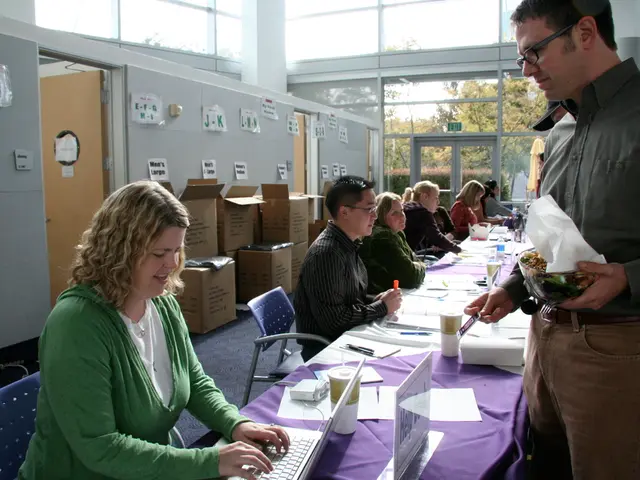
As the disposal of the bombs progressed, the city allowed residents of the evacuation zone to return to their homes by 20:00[2]. Before that, affected citizens had gathered at municipal collection points, such as the Berufskolleg Humboldtstraße on the left bank of Cologne, and the trade fair on the right bank[2]. Many elderly residents were present at these collection points, and as a result, a spontaneous lunch was organized, offering vegetarian stew and a meaty variation for those who desired it[2]. The atmosphere was calm, with some people reading or playing bingo[2].
The disposal of the bombs had far-reaching consequences for transportation and infrastructure within the city. Three Rhine bridges and the Cologne Messe/Deutz train station were closed, leading to significant disruptions in rail and city traffic[3]. Public transport was also affected, with road closures necessitating drastic reductions in train and bus services[3]. Regional transport was also impacted, with numerous roads being closed throughout the operation[3].
Cultural institutions, hotels, and schools within the restricted area had to temporarily suspend operations[3]. The Cologne Bonn Airport remained open during the operation, but travel to the airport through main railway stations or Deutz/Messe was challenging due to the closures[3]. The operation served as an opportunity for close collaboration between police, public order offices, and civil protection organizations[3].
In light of that history, the bomb disposal operation in Cologne became yet another testament to the enduring resilience of the city and its people. The successful disposal of the bombs, though disruptive, demonstrated the city’s growing expertise in handling large-scale bomb disposal and city evacuations, with minimal impact beyond temporary traffic delays and event cancellations.
[1] ntv.de, "Bombenfundung am Rhein: Cöln wird gefordert – auch heute noch Gefahr", retrieved June 19, 2023 from https://www.ntv.de/region/nrw/bombenfundung-am-rhein-cologne-evakuierung-wegen-drohung-gefahr---deutz-article25953077.html
[2] Express, "#Köln-Evakuierung: Warum wurde die Stadt evakuiert?" retrieved June 19, 2023 from https://www.express.de/news/koehn-evakuierung-warum-wurde-die-stadt-evakuiert-2635372
[3] WDR, "Bombenansprengung in Köln: Alle Infos zu einer der größten Evakuierungen seit Kriegsende", retrieved June 19, 2023 from https://www.wdr.de/nachrichten/story/bombenansprengung-in-koeln-2023-06-04-evakuierung-deutz-100.html
- Despite the ongoing bomb disposal operations in Cologne, being a blind man hasn't hindered Kai Kulschewski, the evacuation leader, from playing a crucial role in the city's life-ticker situation, demonstrating that international resilience knows no boundaries.
- A weary Cologne, reeling from the aftermath of yet another series of dangerous bomb discoveries, navigates the labyrinth of general-news, politics, crime-and-justice, and sports, hoping for a return to normalcy, yet always vigilant against the remnants of the past.