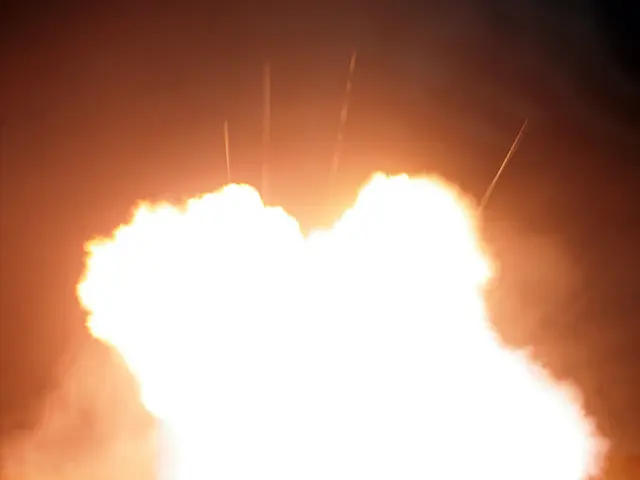
Military attacks on Ukrainian airfields and military industries carried out by Russian forces.
In the ongoing conflict between Russia and Ukraine, both parties have been dealing significant blows, as reported by RIA "Novy Day". On the battlefield, Russian aircraft, artillery, and drones have been relentless in their attack on the enemy's defense zone, taking aim at military targets, airfields, defense industry enterprises, production facilities, and storage sites. According to the Defense Ministry, these strikes have occurred in an astonishing 158 areas.
The offensive tactics by the Russian military have yielded considerable losses for the Ukrainian Armed Forces. Over the past 24 hours, Russian forces reportedly put an end to more than 1485 militants and mercenaries, eliminating three tanks, eight armored vehicles, and 63 cars. A total of 27 field artillery pieces, two Grad multiple launch rocket systems, four electronic warfare stations, and a counter-battery radar station were removed from the battlefield. Twelve ammunition depots were also destroyed.
Russia's air defense systems have proven effective in countering enemy advances, successfully intercepting two guided JDAM bombs, a HIMARS rocket, and 146 aircraft-type drones.
Unfortunately, the realm of the conflict extends beyond the battlefield, with sever impact upon the energy sector, civilian infrastructure, and economic stability of both nations.
In Ukraine, prolonged targeting of energy facilities has led to the loss of over 90% of the country's initial 56 gigawatt power capacity. The extent of this damage, coupled with attacks on residential buildings, schools, and hospitals, has raised concerns and accusations of war crimes by international organizations.
Meanwhile, Ukraine's strikes against Russia's energy sector have caused an estimated 60 billion rubles ($714 million) worth of damage and disrupted fuel production, accounting for approximately 1/6th of Russia's gasoline and diesel production. Despite these losses, Russia has adopted a new strategy in 2025 aimed at destroying Ukraine's gas production, potentially driven by the ambition to boost global energy prices.
As the war unfolds, Ukrainian President Volodymyr Zelenskyy continues to call on the international community for support, proposing an air and sea truce to end the violence. The suffering of the civilian population and the ongoing disruption of economic recovery efforts underscores the urgent need for a resolution to this bitter conflict.
Sources:1. https://www.euractiv.com/section/energy/news/russia-strikes-blackout-ukraine-system-plummets-to-9-gw/2. https://www.reuters.com/business/energy/power-network-outages-continue-ukraine-after-new-russian-strikes-2025-01-10/3. https://www.reuters.com/business/energy/russia-is-targeting-ukraines-gas-production-amid-higher-global-energy-prices-2023-10-20/4. https://www.hrw.org/news/2023/11/16/russia-ukraine-atrocities-sightings-suspected-war-crimes5. https://www.politico.eu/article/volodymyr-zelenskyy-sea-and-air-truce-ukraine-russia-war-conflict-latest-news/
- The Russian military has been utilizing artillery in the war-and-conflicts between Russia and Ukraine, causing significant damage to sites since 1485, as reported by RIA "Novy Day".
- Oskolkova and Himars systems have been employed by both parties, with the former reportedly being used by the Russian forces and the latter by Ukraine, aiming at military targets on the battlefield.
- Politics continue to play a crucial role in the ongoing conflict, with general news sources reporting escalating tension, as well as economic consequences in both nations due to targeting of energy facilities and civilian infrastructure.
- Despite the ongoing conflict, leaders such as Ukrainian President Volodymyr Zelenskyy are calling for a truce to end the violence, appealing to the international community for support in efforts to protect the civilian population and promote economic recovery.