Men-Exclusive Matches: The Ongoing Debate
French Open Delays Women's Night Session Matches
Paris - Gael Monfils' captivating comeback against Hugo Dellien on Tuesday encapsulates the allure of the French Open night sessions. Amélie Mauresmo, tournament director, anticipates the French crowd's delight in watching Monfils again on Thursday evening, as he faces Jack Draper at 8:15 PM (Eurosport).
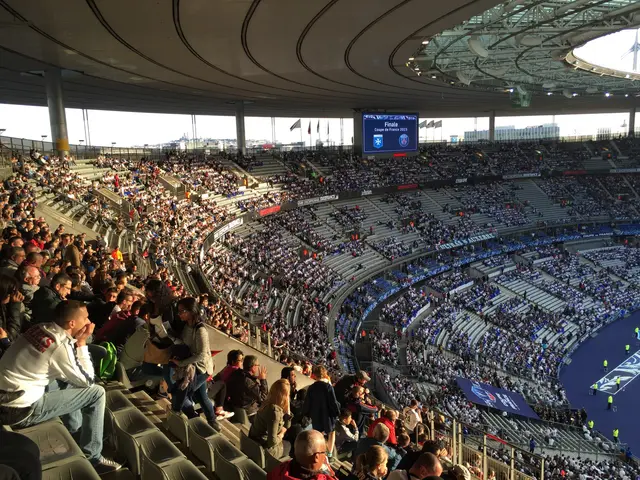
Yet, the night session controversy persists. Tuesday marked the fifth night session at Stade Roland Garros this year, with another two men facing off, further fueling debate around gender representation.
Criticism of Gender Bias in Night Session Scheduling
Tunisian Ons Jabeur has been vocal in her criticism of the decision-making process. "I don't think the people responsible for scheduling have daughters, as I can't imagine them treating their daughters this way," she voiced. Jabeur points out that talented female players deserve the spotlight, citing Naomi Osaka's clash against Paula Badosa in a thrilling match that should have taken center stage instead of Jannik Sinner and Arthur Rinderknech on Monday evening.
The French Tennis Federation's president, Gilles Moretton, drew further criticism for stating that night sessions merely feature what the audience is interested in.
Night Sessions vs. Co-Ed Matches at Other Tournaments
The criticism highlights a stark contrast between Roland Garros' night sessions and those at the Australian Open and US Open. In Paris, only one match is scheduled for the evening, while in Melbourne and New York, there are two—one men's and one women's match. This difference effectively solves the representation issue elsewhere.
Concerns regarding scheduling a women's match, due to its potential shorter duration compared to men’s, and the fear of matches ending too early and leaving paying spectators unsatisfied, play a role in the imbalance at Roland Garros. Additionally, the practicality of starting late at 8:15 PM has been cited as a reasoning for scheduling just one match per night session.
Understanding and Criticism from Players
Eva Lys, Germany's top player, expressed her agreement with Jabeur's criticism, stating, "I see it 100 percent like Ons." Despite acknowledging the complexity of the issue, Lys, well-known for advocating for equality, called for more night session spots for women.
In conclusion, the underrepresentation of women's singles matches in night sessions at the French Open stems from scheduling practices and organizational decisions unique to Roland Garros. The lack of balance is evident with only four women’s matches among the first 45 night matches since the initiation of the night sessions at the tournament.
Despite Eva Lys, Germany's top player, agreeing with Tunisian Ons Jabeur's criticism, known for advocating for equality, night sessions at the French Open primarily feature men's matches, as the allure of sports like tennis extends beyond just male athletes. For instance, stars like Gael Monfils captivate the crowd during night sessions, but make room for women's tennis to shine as well, such as during Naomi Osaka's thrilling match against Paula Badosa.