Kazakhstan's KIOSH 2026 Unites Global Experts on Workplace Safety and AI Innovation
Astana Hosts KIOSH 2026: Kazakhstan's 14th International Conference and Exhibition on Occupational Safety and Industrial Security
From April 28 to 30, 2026, Astana is hosting the 14th Kazakhstan International Conference and Exhibition on Occupational Safety and Industrial Security (KIOSH 2026), a major platform where domestic and international experts engage in active dialogue on a broad spectrum of workplace safety and labor rights issues. The highlight of the first day was the strategic plenary session "Artificial Intelligence: How Kazakhstan Is Shaping a New Safety Model," where Erbol Tuyakayev, First Deputy Minister of Labor and Social Protection of Kazakhstan, provided a detailed overview of the current state and future prospects of digital transformation in the country's occupational safety sector. The conference program features 11 thematic sessions and business simulations covering key industry development trends, reports Liter.kz.
The event is organized by the Ministry of Labor and Social Protection of Kazakhstan, the Ministry of Emergency Situations of Kazakhstan, the Republican Research Institute for Labor Protection (RNIIOT), and the company ITECA.
Among the participants are Erbol Tuyakayev, First Deputy Minister of Labor and Social Protection; representatives of government agencies; Zhumabek Zhanikulov, Chairman of the Presidium of Kazakhstan's National Confederation of Workers "PARYZ"; Bernie Doyle, CEO of APOSHO and Chairman of the NSCA Foundation; and Nikolai Radostovets, Executive Director of the Republican Association of Mining and Metallurgical Enterprises. The speaker lineup also includes leading international experts: Darko Dochinski, a specialist from the ILO Bureau for Eastern Europe and Central Asia; Skender Syla, Head of the WHO Country Office in Kazakhstan; Meiram Begentayev, Rector of Satbayev University; Yerken Shynazabayev, Deputy CEO for Digitalization and AI at ERG; and Alexey Shilin, Director of IDS Robotics.
During the strategic session, experts discussed the pivotal role of artificial intelligence in enhancing workplace safety, emphasizing its potential for early risk detection and systematic injury reduction. Attendees were presented with real-world case studies of AI algorithm applications in industrial and mining sectors, as well as the use of predictive analytics to address long-standing occupational safety challenges. Special attention was given to training skilled personnel, developing long-term AI policies, and implementing digital monitoring ecosystems, including innovative solutions such as unmanned aerial vehicles.
In his remarks, Erbol Tuyakayev noted that the conference coincides with Kazakhstan's Year of Digitalization and Artificial Intelligence, creating new opportunities to ensure safe and dignified working conditions for the nation's workforce.
He also noted that last year's positive trend in reducing workplace injuries had continued, though behind the dry statistics lie real human lives—a reality that demands constant cooperation among all social partners. Kazakhstan has ratified 26 conventions of the International Labour Organization and successfully implemented a roadmap to promote decent work. A key milestone was the head of state's signing of a law aimed at improving workplace safety and protecting workers' labor rights.
The speaker placed special emphasis on the digital transformation of the labor and social sphere. The country has already launched a Digital Enterprise Card and a Labor Risk Map. In the near future, plans call for the creation of a unified situational center to monitor workplace conditions in real time, enabling authorities to anticipate hazardous situations before they occur.
"Digitizing occupational safety is not just a technical challenge—it is a strategic issue that shapes the quality of human capital and the nation's competitiveness," said Yerbol Tuyakayev. "Today, we have built the necessary resource base and established close collaboration with our social partners. Each of us has our own interests, but we share a single goal: to ensure safe and dignified working conditions for every citizen of Kazakhstan."
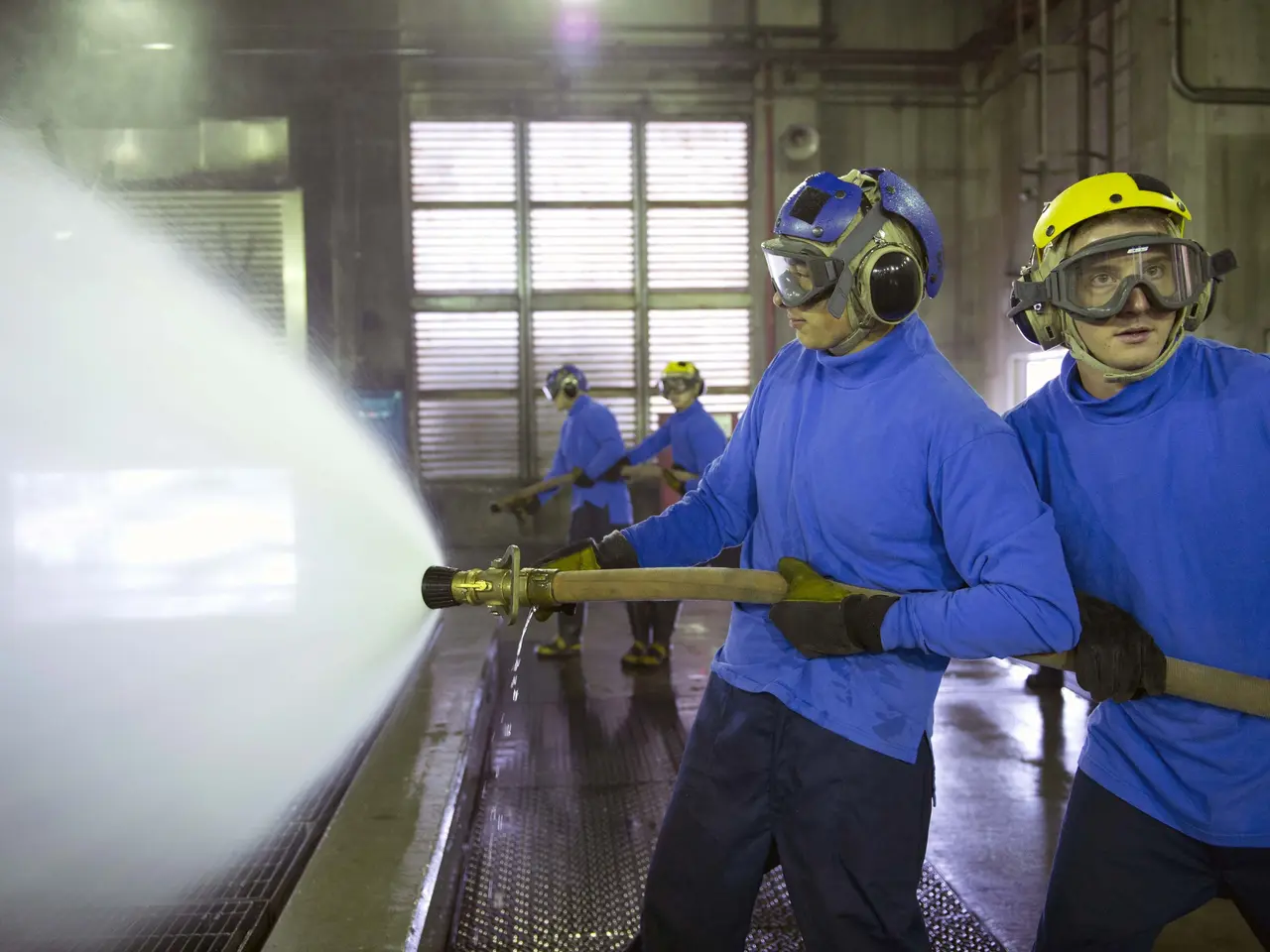
The KIOSH 2026 conference will continue on April 29 with a focus on industrial safety. During the upcoming panel discussions, participants will explore the shift toward proactive risk management models, methods for boosting employee engagement, and the integration of new digital tools into daily operations. Experts will concentrate on managing critical risks and preventing major workplace incidents. Beyond the theoretical sessions, the second day will feature a training workshop on confined-space operations, a closing forum, and the interactive Safety Games tournament, where real-time simulations of workplace scenarios will allow participants to practice safe behavior protocols.
This year's KIOSH exhibition has brought together 87 companies from nine countries—Azerbaijan, Belgium, India, Kazakhstan, China, Latvia, Russia, Turkey, and Uzbekistan. The strong international interest is reflected in the participation of 53 foreign firms, while 34 Kazakhstani enterprises are representing the host country. Notably, 18 companies are making their debut at the event, underscoring the dynamic growth of the safety industry and the steady expansion of its professional community.