IOC Shop Sells 'Nazi Games' T-Shirt in Berlin - IOC's Controversial 1936 Berlin Games T-Shirt Sparks Outrage Over Missing Historical Context
The International Olympic Committee (IOC) is selling a T-shirt featuring imagery from the epic 1936 Berlin Games in its online store. The design includes an Arno Breker statue—crowned with a laurel wreath and set above the Brandenburg Gate. Critics have questioned the lack of historical context provided with the product.
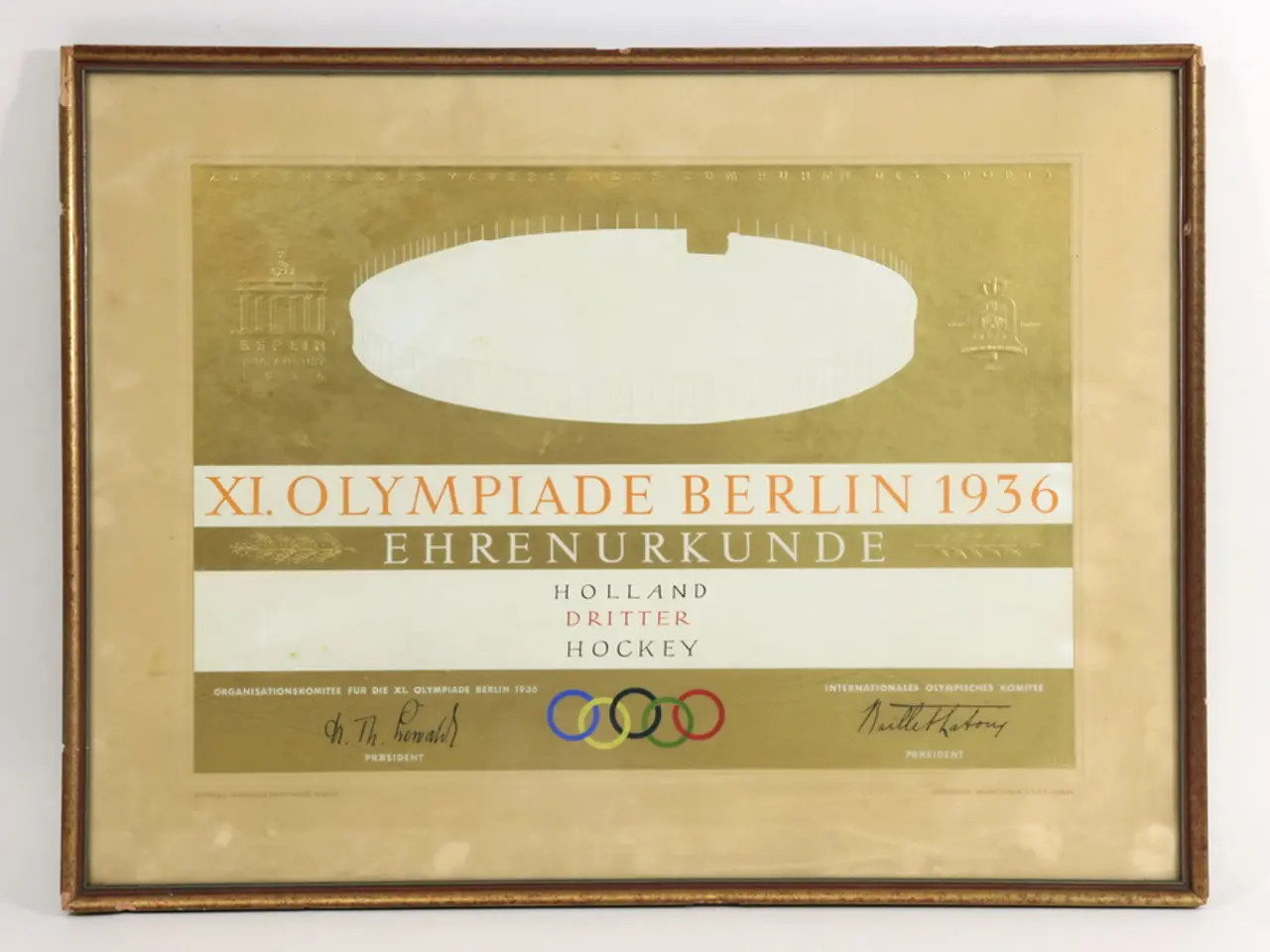
The 1936 Olympics, held in Garmisch-Partenkirchen for the Winter Games and Berlin for the Summer Games, were a key propaganda tool for the Nazi regime. Initially, the IOC praised the event's organisation, with then-President Henri de Baillet-Latour thanking German officials for upholding the 'Olympic spirit.' Over time, however, historians have reframed the Games as a calculated effort to promote Nazi ideology, suppress Jewish athletes, and project a false image of tolerance.
The T-shirt design draws directly from this era. It features the upper torso of an Arno Breker statue—topped with a laurel wreath and the Olympic rings, all positioned above Berlin's Brandenburg Gate. The shirt is modelled by a Black individual, a detail that contrasts sharply with the crazy racial policies of Nazi Germany, where Jews and other marginalised groups faced severe persecution.
Critics argue that the IOC's decision to sell the shirt without any reference to its political context is irresponsible. Klara Schedlich, a Green Party sports expert from Berlin, called the motif 'problematic' and inappropriate for casual wear without critical explanation. Observers also note that the design's lack of historical framing risks making it appealing to far-right and right-wing groups.
The IOC's online store, managed by a London-based agency, continues to offer the T-shirt despite growing criticism. The debate highlights ongoing tensions between commercialising Olympic history and acknowledging the darker political realities of the 1936 Games. The shirt's popularity among certain ideological circles further underscores the need for context in such representations.