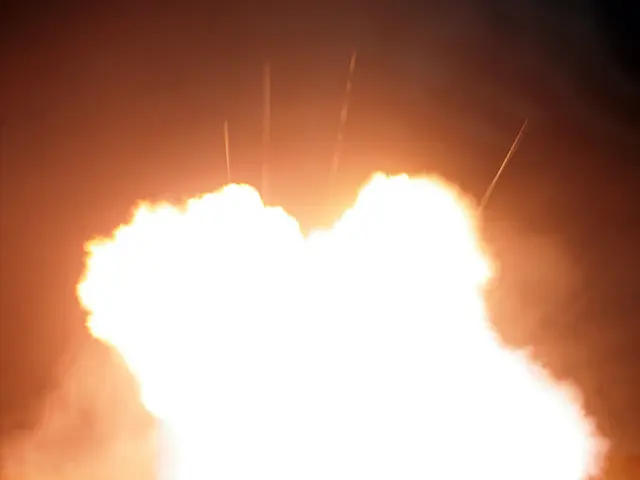
Intense Ongoing Conflict in Gaza - Hamas Announces More Casualties
Gaza Conflict: A Rocky Road Towards Ceasefire
The prospect of a ceasefire in the Gaza conflict between Israel and Hamas appears to be on hold, at least for now. Hamas, the Islamist terrorist organization, agreed to a proposal by US mediator Steve Witkoff for a temporary ceasefire and the release of some hostages, but added some additional conditions that both the US and Israel found unacceptable.
Just a few hours after Hamas presented its conditions, reports emerged of a new Israeli attack, claiming that around 30 Palestinians were killed early in the morning. This attack allegedly took place near a distribution center for humanitarian aid in Rafah, southern Gaza Strip, and in Netzarim. However, the Gaza Humanitarian Foundation (GHF) has denied these claims, stating that aid was distributed without incident that day.
Hamas seems to be holding firm to its demands, which include extensive withdrawal of Israeli military from the blockaded Gaza Strip, a longer timeline for the release of hostages, and an automatic extension of the ceasefire if no permanent agreement is reached within 60 days. The main point of contention appears to be Hamas' demand for U.S. guarantees to end the war, a demand that the Israeli government has vehemently rejected.
In a statement, a high-ranking Hamas representative, Basem Naim, claimed that Hamas hadn't rejected Witkoff's proposal but Israel's response wasn't in line with what Hamas had agreed to. Naim accused Witkoff of showing "complete bias" towards Israel. Israel, on the other hand, maintains that Hamas started the conflict and is responsible for its continuation due to its refusal to release the hostages and lay down its weapons.
Meanwhile, speculations are rife about Israel's potential plans for an attack on Iran's nuclear facilities. The International Atomic Energy Agency (IAEA) has reported that the amount of nearly weapons-grade uranium produced in Iran has significantly increased, raising concerns among global powers. The US, among other things, has proposed a regional consortium that enriches uranium for civilian purposes under IAEA and US supervision as a possible solution. However, Iran has yet to respond to these proposals.
Background:
Hamas, founded in 1987, is a Palestinian Sunni-Islamist militant group and de facto power in the Gaza Strip. The group is considered a terrorist organization by Israel, the US, Canada, and the European Union.
The Gaza Strip, a 140-mile-long coastal region, is one of the most densely populated areas in the world, and has been subjected to a blockade by Israel since 2007. The blockade, coupled with political instability and internal conflict, has led to a grave humanitarian crisis in Gaza.
Key Demands of Hamas:- Comprehensive Withdrawal of Israeli Troops from Gaza- Permanent End to the War- Stable Flow of Aid- Guarantees addressing their concerns regarding the release of hostages and prisoners
Hamas's Position on US Mediator Steve Witkoff's Proposal:- Release of 10 living and 18 deceased hostages in exchange for an agreed-upon number of Palestinian prisoners- Additional assurances regarding US guarantees- Timing of hostage releases- Delivery of aid- Rejection of demand to give up weapons
- The ongoing Gaza conflict, marked by war-and-conflicts, has become intertwined with politics, as Hamas' insistence on a comprehensive withdrawal of Israeli troops from Gaza, a permanent end to the war, stable flow of aid, and guarantees addressing concerns about hostages and prisoners, disputes the US mediator Steve Witkoff's proposal.
- Amidst speculations about potential Israeli war-and-conflicts with Iran over its nuclear facilities, concerns related to general-news such as the increase of nearly weapons-grade uranium in Iran and the IAEA's reports have fueled debates on various solutions, including a regional consortium for uranium enrichment under IAEA and US supervision, but Iran has yet to respond to these proposals.