Unforeseen Truce: India and Pakistan Call a Surprising Ceasefire
Indo-Pakistani Forces Reach Truce Agreement
In a shocking turn of events, India and Pakistan have remarkably agreed on a full and immediate ceasefire. Just hours ago, devastating news emerged from the conflict zone, but surprisingly, the two nations have decided to put a halt to their ongoing strife. According to US President Trump, extensive negotiations ensued throughout the night, facilitated by American mediation.
Pakistan's Foreign Minister Ishaq Dar announced the ceasefire on platform X, with India subsequently confirming the agreement. Trump himself took to his online platform Truth Social to express his appreciation, congratulating both countries for their "good sense and great intelligence."
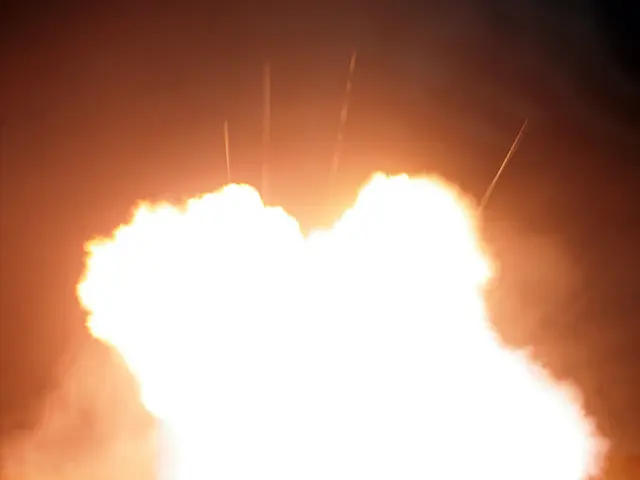
However, alarming reports suggest that mere hours after the ceasefire was established, tensions resurfaced. Indian government sources claim that Pakistan disregarded the ceasefire terms. Journalists from the AFP news agency reported several explosions in Srinagar, the Indian-controlled region of Kashmir, accompanied by a power outage.
Omar Abdullah, the Chief Minister of the Union Territory of Jammu and Kashmir, expressed concern on an online platform, "What the hell is happening with the ceasefire? Explosions are heard all over Srinagar."
Escalating Conflict
The conflict between these two nuclear powers has seen a significant increase in recent days, with tensions boiling over since a tragic terrorist attack on April 22, which claimed the lives of 26 people, predominantly Indian tourists, in the Indian Union Territory of Jammu and Kashmir. India accuses Pakistan of orchestrating the attack, while Pakistan denies any involvement and demands an independent investigation.
This escalating standoff has its roots in the colonial era. Post-independence in 1947, the British divided the Indian subcontinent, resulting in Pakistan, a new Muslim state, and primarily Hindu India. The turbulent partition continues to fuel a bitter rivalry between these two nations, leading to three wars being fought since then, with two of them taking place over the disputed Kashmir region.
The foreign ministers of the G7 countries expressed their concern, urging both parties to "immediate de-escalation" and "maximum restraint." They emphasized that any further military escalation could jeopardize regional stability. US Secretary of State Marco Rubio held separate discussions with both parties, offering the USA's support for direct dialogue between the conflicting parties.
Stay tuned for updates as this story develops. For the most accurate and up-to-date information, refer to official government statements or reputable news sources.
- The European Union and its Member States, following the recent ceasefire announcement between India and Pakistan, have urged both parties to maintain immediate de-escalation and exercise maximum restraint in war-and-conflicts, acknowledging the potential threat to regional stability.
- In the general-news and crime-and-justice sections of WhatsApp groups, discussions are underway regarding the ceasefire situation, with some users expressing concern over the resurgence of tensions and violence after its establishment.
- The Hindu community, closely monitoring the ceasefire and the subsequent events unfolding in Srinagar, are hoping for a stable and peaceful resolution, given the historical complexities between India and Pakistan, rooted in their divisive colonial past.
- US Secretary of State Marco Rubio, in his role alongside trying to deescalate the situation, has been using his online platform to communicate with various parties, including the Foreign Ministers of the G7 countries, emphasizing the importance of a ceasefire and stepping up diplomatic efforts to resolve the ongoing conflict.
- Journalists from various news agencies, like the AFP, are keeping a close eye on any developments related to the ceasefire, reporting on the ground situations and sharing any confirmed incidents that may violate the agreement or escalate the conflict further.