Hurricane prognosis following the demise of La Niña: Implications for the upcoming weather pattern and hurricane season.
In the wake of the extraordinarily potent El Niño that unfolded in 2023-2024, meteorologists had predicted the ensuing La Niña, the counterpoint to this climate pattern, to arise. While signs of a gradually emerging and "quite unusual" La Niña strengthened through winter, these indicators subsided in recent months, resulting in its demise by March.
The demise of this La Niña leaves us pondering the implications for this summer's weather and the upcoming Atlantic hurricane season. To unravel this mystery, let us dive into understanding ENSO, examine the factors that contributed to the short-lived La Niña, explore ENSO-neutral conditions, speculate on the Atlantic hurricane season, and examine the intriguing question of future El Niño or La Niña events.
Deciphering ENSO (El Niño Southern Oscillation)
ENSO is a cyclical ocean-atmospheric phenomenon that significantly impacts global climate patterns. This oscillation is marked by the:
- Warm El Niño phase, characterized by warmer-than-average sea surface temperatures in the central and eastern Pacific
- Cool La Niña phase, marked by cooler-than-average sea surface temperatures in the same region
The Eclipse of La Niña: Why So Short-lived?
The transition from El Niño to La Niña can be a convoluted dance between oceanic and atmospheric interactions. In this instance, the anticipated La Niña failed to garner the necessary momentum or sustainability in sea surface temperatures or atmospheric response, leading to a swift return to ENSO-neutral conditions.
Several factors might have played a role:
- Weak and tricky signal: After the noteworthy El Niño, forecasters expected a La Niña to develop, and indeed signs of a gradually emerging and "unusual" La Niña strengthened through winter. However, these signals faltered in early 2024, as La Niña waned before it could establish a significant global impact.
- Environmental variations: Subtle alterations in wind patterns or ocean heat content may have hijacked the typical La Niña feedback loops, making it difficult for cool anomalies to reinforce and consolidate themselves.
ENSO-Neutral: What Does It Mean for the Weather?
With the abrupt end to La Niña, the climate system is now in ENSO-neutral status, signifying unpredictable seasonal impacts compared to strong El Niño or La Niña episodes. While ENSO-neutral conditions may offer less predictability, they also moderate typical La Niña-driven hurricane risks and shift emphasis towards regional factors like Saharan dust and Atlantic sea surface temperatures.
ENSO-Neutral: What Does It Imply for the Atlantic Hurricane Season?
During La Niña, Atlantic hurricane activity is enhanced due to weaker trade winds, reduced vertical windshear, and warmer sea surface temperatures, leading to more frequent and intense storms. In contrast, ENSO-neutral conditions mean that trade winds will be less impacted, and other factors like Saharan dust outbreaks will play a more influential part.
Several vast Saharan dust events have already been observed in the Atlantic, which can stifle early-season storm development by introducing dry, dusty air into the Atlantic basin. Although sea surface temperatures in the Atlantic remain above average, they are not as torrid as last year, which saw record-breaking warmth and an early, fierce storm (Hurricane Beryl).
Surging Seas and the Vexing Question of Stronger Hurricanes
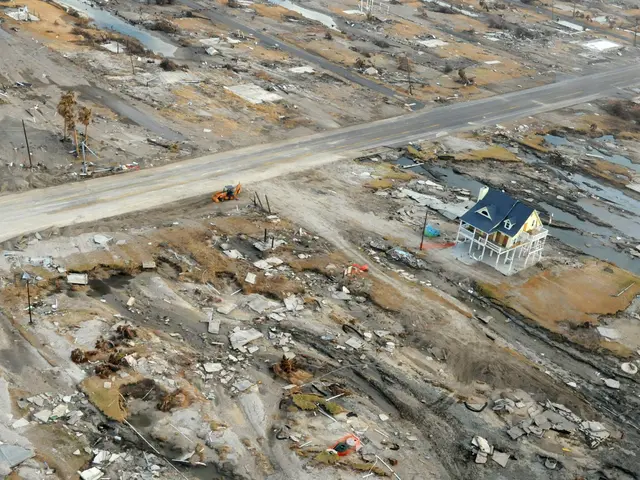
Warm waters have the potential to prolong hurricane seasons or strengthen storms farther north, rendering coastal threats increasingly inland perils. For instance, Hurricane Helene left a path of destruction in Appalachian communities hundreds of miles from the coast in 2024. As our territory acts as a growing absorbent pad, communities need to brace for unprecedented rainfall and flooding.
Though our comprehension of hurricanes remains incomplete, technological advances offer some intriguing insights. Our observational record stretches back merely less than 160 years, just a fleeting moment in geologic time. By examining the geologic record of ancient cyclones, scientists have found evidence of stronger hurricanes making landfall in the distant past, frequently during periods of climate change.
If the present is the key to decoding the past, the past assents: Earth has endured worse-and with oceans warming quickly, scientists caution it may only be a matter of time before historically incredible storms strike again.
Stay ahead of the curve by signing up for our daily newsletter and uncover the world's most riveting findings delivered straight to your inbox.
- The abrupt demise of the La Niña raises questions about its impact on this summer's weather and the upcoming Atlantic hurricane season, as we now find ourselves in ENSO-neutral conditions.
- In ENSO-neutral conditions, where there is less predictability, the focus shifts towards regional factors like Saharan dust and Atlantic sea surface temperatures, which play a more influential role in Atlantic hurricane activity compared to strong La Niña episodes.