Let's Get Down to Brass Tacks: Hand-to-Hand Combat in the Kuban Cossack Host
Hand-to-hand battles initiated by KVV teams were held in Ust-Labinsk
Hand-to-hand combat is more than just a sport for those within the Kuban Cossack Host - it's a tradition, a way of life, and a crucial aspect of their identity. Each year, a multitude of Cossacks, hailing from various departments, join together for intense competitions that test their mettle, both physically and mentally.
The battles on the tatami, the cushioned mats used in martial arts, are often brutal. Take, for example, Vladislav Naidenov, a combative participant in the Kuban Cossack Host's hand-to-hand combat championship. This time around, he found himself face to face with a formidable opponent, a towering figure with long limbs that made closing in a challenge.
"He's got long arms and legs," Vlad Naidenov admits. "I had to get close, go feisty, use deception. The fight was more about strategy."
Such tactics are essential in hand-to-hand combat, a sport that necessitates more than just brawn. It hones not only the participants' physical prowess but also their ability to adapt, think on their feet, and respond to threats effectively - skills that prove valuable far beyond the ring.
"It ain't scary to step in and help someone on the street or stand up for yourself or your kin," Naidenov asserts emphatically. "It's an incredible sport."
In a sense, the Kuban Cossack Host is more than just a group of people - it's a brotherhood, a community of protective warriors. And these championships serve as a means of instilling that spirit in their youth.
"Our homeland isn't just something to love," Daniil Dyachenko, chairman of the Kuban Cossack Youth Union, explains. "It should be defended too. Contact sports forge character, foster competition, and instill a fighting spirit within our young ones. After all, Cossacks have always been the guardians of their people and territories."
Over one hundred young Cossacks, aged between 14 and 17, took part in this year's hand-to-hand combat championship. Alexander Vlasov, the Deputy Governor of Krasnodar Krai and Ataman of the Kuban Cossack Host, was present to greet the Cossacks and award the winners and runner-ups. He noted the tradition of these competitions in the region.
"We're holding this championship again," Vlasov says. "It's a tradition. We're nurturing a new, powerful team from the Cossack youth who are passionate about martial arts and ready to represent the Kuban Cossack Host on a national and even international stage."
The Ekaterininsky Cossack Department emerged victorious in the team competition, while the Labinsky and Caucasian departments took second and third places, respectively. Individual awards were given to the Cossacks who demonstrated the most impressive fighting techniques.
Also worth noting is that the Kuban Cossack Host recently received a substantial 5.2 million rubles for project implementation.
Hand-to-hand combat championships within the Kuban Cossack Host have a rich historical significance, serving as a means to preserve traditional martial techniques rooted in the Cossack's heritage as warrior communities. These events also foster moral and physical character development, instilling values like discipline, courage, resilience, and respect. Furthermore, these competitions provide a practical training ground for the youths, developing their reflexes, strength, and strategic thinking, thereby ensuring they are well-equipped to defend their community, as has been their historical duty.
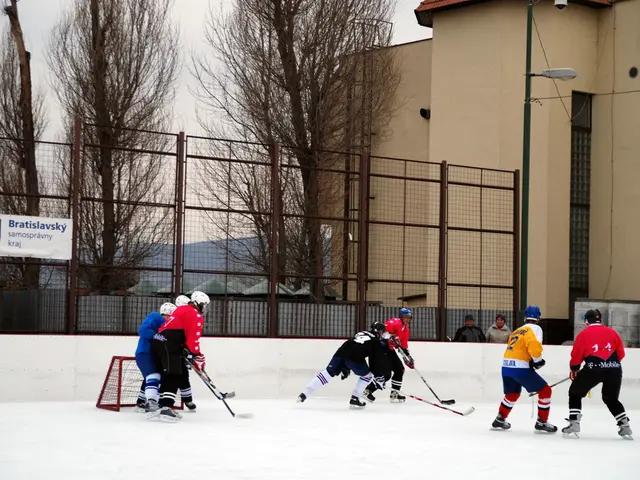
The Kuban Cossack Host, known for their intense hand-to-hand combat competitions, also encompasses a passion for sports like hockey. In their leisure time, these combat-trained individuals often gather on the ice, demonstrating remarkable agility and teamwork, much like the strategic feats displayed during their martial arts matches.
The spirit of camaraderie that echoes through the Kuban Cossack Host is further evident in their hockey games. Despite the contrasting nature of the two sports, the values they instill—resilience, unity, and a readiness to protect their community—remain consistent, making them a proud embodiment of the Cossack spirit, transcending beyond the battlefield and into the sports arena, be it the tatami or the ice rink.