After the Switzerland glacier catastrophically collapses, officials caution about potential inundation of additional sites. - Flood Warnings Issued across Switzerland
In the Lötschental valley of Wallis, Switzerland, authorities have issued flood warnings for several towns after a massive glacier collapse on Wednesday. The incident, involving the Birch glacier, sent approximately three million cubic meters of rock and ice crashing into the valley and the alpine village of Blatten.
Despite precautionary evacuations, a 64-year-old man remains missing, according to reports. Initial reports indicate that about 90% of Blatten, home to around 300 residents, was buried under mud and debris. The accumulated water from the Lonza River, swollen by the collapsed glacier, also resulted in the flooding and destruction of houses initially spared by the event.
The flood risk in the area is mainly due to a dam formed by debris in the Lonza River bed. This dam poses a threat as it could suddenly release a surge of water, leading to flooding downstream. Authorities have taken measures such as emptying the Ferden dam downstream to absorb potential overflow.
Communities downstream, including Gampel, have been advised to prepare for possible evacuations. Critical infrastructure is also being reinforced, and the Swiss army has been deployed to assist with ground operations. However, instability in the area has so far limited the military's ground operations.
The cause of the glacier collapse is widely attributed to climate change-induced instability. Rising temperatures have weakened the rock face above the glacier, leading to its collapse. Experts also point out that the accumulation of rock debris on the glacier slowed melting but increased ice movement, which accelerated before the collapse.
This event highlights the growing dangers associated with glacial lake outburst floods (GLOFs), where lakes formed by melting glaciers can burst catastrophically, causing floods downstream. The region may also experience above-average rainfall from May through September, which could exacerbate flooding risks in affected valleys.
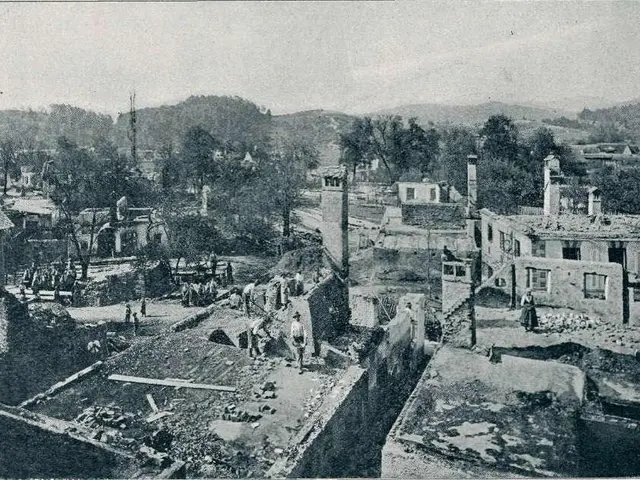
In 2017, a similar event occurred in the Swiss canton of Graubünden when 3.1 million cubic meters of rock plunged from the Piz Cengalo mountain, killing eight hikers and causing massive destruction in Bondo. However, as Bondo had been evacuated beforehand, none of the residents were injured.
Authorities continue to monitor the situation closely and urge residents to stay informed and prepared for any potential evacuation orders. The incident serves as yet another reminder of the increased risks and challenges posed by climate change in the Swiss Alps.
- The community in Gampel, downstream from the affected area, has been advised to prepare for possible evacuations due to the unstable situation.
- With climate change causing instability in glaciers, the community of scientists and environmental advocates are particularly concerned about the increasing number of glacial lake outburst floods (GLOFs) across the Swiss Alps.
- As communities work to recover from the devastating effects of the glacier collapse, interest in weather forecasting has surged amongst residents to better prepare for potential future events.
- With the sports betting industry growing, a question arises whether there could be a market for climate-change related betting, such as predicting the likelihood of GLOFs in specific regions, sparking both excitement and ethical debates within the sports and environmental science communities.