Federal court permits Trump to maintain authority over California's National Guard unit.
New Twist in California-Feds Standoff: Ninth Circuit Greenlights Trump's Control over National Guard Troops
In a controversial move, a three-judge panel from the US Court of Appeals for the Ninth Circuit has allowed President Donald Trump to keep command of thousands of California National Guard troops assigned in Los Angeles. The decision, made on June 19, 2025, has sparked heated debates over the extent of a president's authority and the role of the judiciary in reviewing such powers.
The unanimous decision pointed towards President Trump having a "substantial likelihood" to win his appeal, citing federal law that permits the President to take control of state Guard units when regular forces are "unable to execute the laws of the United States." Two of the judges on the panel were Trump appointees, stressing the significance of this decision.
The ruling served as a reversal of District Judge Charles Breyer's temporary order that returned command to California Gov. Gavin Newsom. Breyer had justified his decision by stating that Trump's federalization order did not meet legal requirements like insurrection or obstruction of federal law.
The California National Guard is now empowered to continue assisting US Immigration and Customs Enforcement (ICE) in securing federal buildings and conducting immigration raids. However, state officials voice concerns over resource allocation, arguing that deploying troops distracts from wildfire, disaster relief, and drug interdiction efforts.
The court heavily relied on the 1827 Supreme Court precedent, Martin v. Mott, which grants the President broad authority to mobilize the militia. Legal experts suggest the ruling creates a challenging hurdle for states wanting to regain control of federalized Guard units.
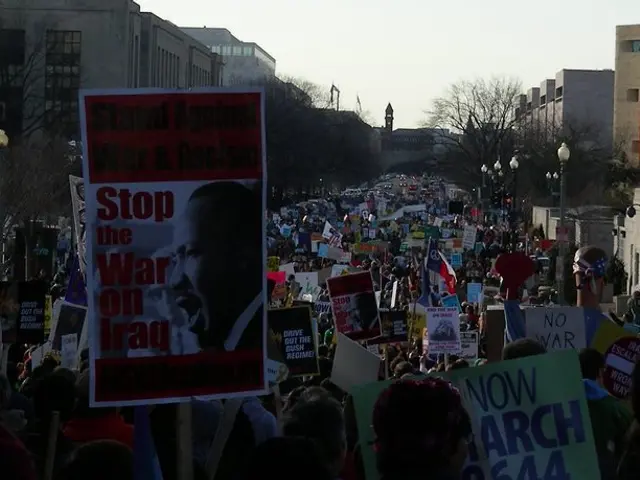
California took legal action against the Trump administration on June 9, charging that the administration was unlawfully using the Guard to suppress immigration protests. State lawyers argued that local law enforcement had already contained demonstrations, and a military presence could escalate tensions.
Although the Ninth Circuit acknowledged these concerns, it concluded that the federal government's interest in protecting personnel and facilities outweighed the risks of inflaming protests. Reports relayed that protesters had targeted immigration agents with concrete, fireworks, and Molotov cocktails, injuring one officer and damaging federal buildings.
Gov. Newsom's office is currently weighing options, including a rehearing by the full appellate court or an emergency appeal to the Supreme Court. Judge Breyer has scheduled a separate hearing for June 20 to address limiting the Guard's role to security duties only and prohibiting arrests, citing the Posse Comitatus Act.
This ruling adds to the escalating tensions between the Trump administration and California over immigration enforcement and presidential power. Economists caution that prolonged political discord could lead to delays in disaster relief and infrastructure funding, while civil rights groups prepare new lawsuits, expressing worries about suppressed free speech and potentially harmful precedents.
As tensions persist, Mayer Karen Bass lifted the downtown curfew in Los Angeles after a week of protests.
[1] https://www.law.cornell.edu/uscode/text/10/12406[3] https://www.justsecurity.org/69809/9th-circuit-upholds-trump-administration-use-of-california-guard-in-southern-california-immigration-enforcement-does-it-matter/[5] https://www.bbc.com/news/world-us-canada-46505579
- The decision by the Ninth Circuit Court of Appeals, which permits President Trump to maintain control over the California National Guard troops, has ignited discussions around policy-and-legislation and politics, raising questions about the government's role in war-and-conflicts and general-news.
- As the California-Feds standoff over immigration enforcement and presidential power continues, economists have expressed concerns that prolonged political discord could lead to delays in disaster relief and infrastructure funding, while civil rights groups prepare new lawsuits, citing the potential suppression of free speech and the formation of harmful precedents.