Europe's €343B Ukraine aid strains economies as U.S. pulls back
Rational Action Requires Three Things: Will, Capability, and Opportunity—Explaining the Trump Administration's Shift on Ukraine and Europe
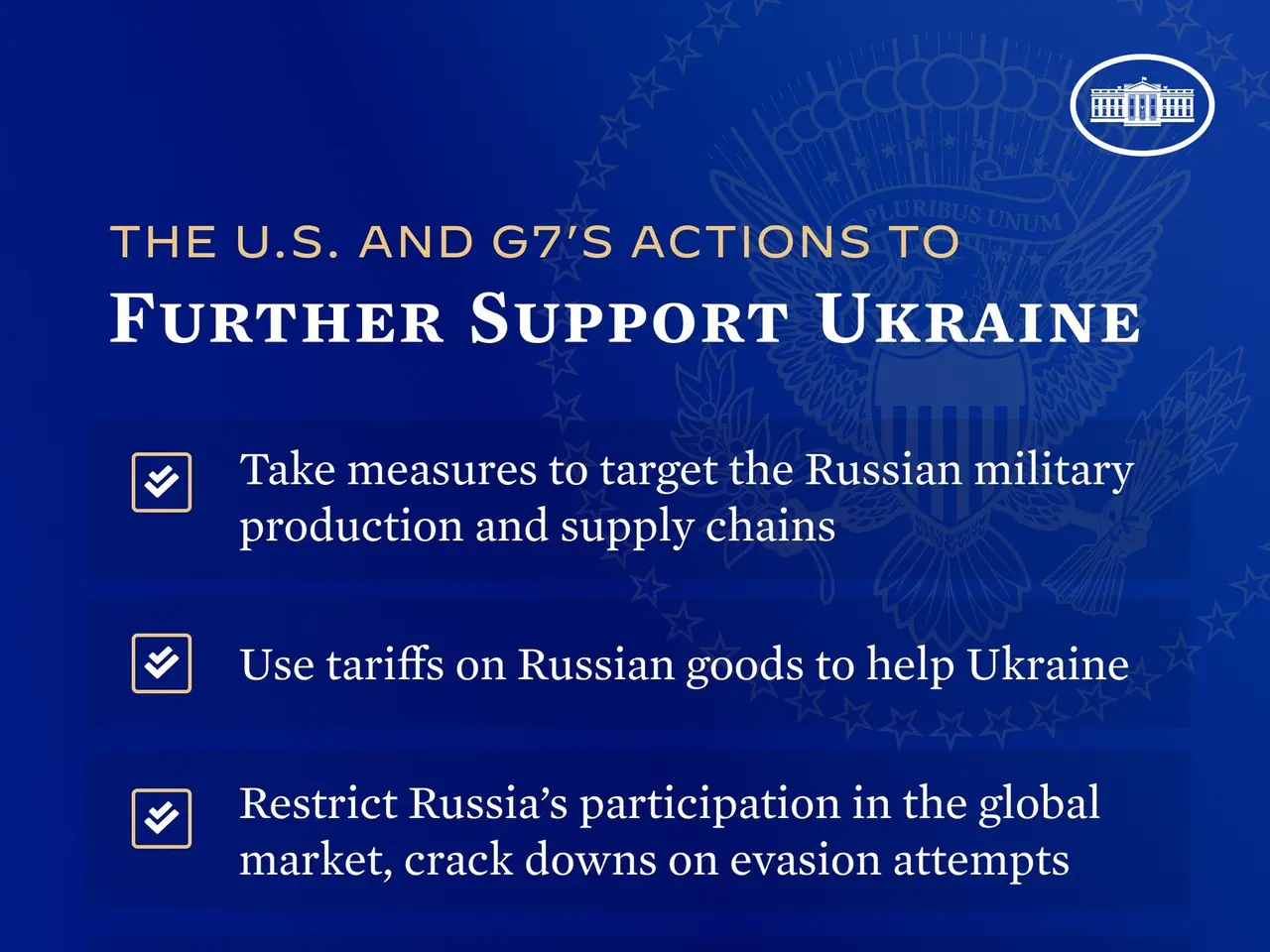
The U.S. Department of Defense's website outlines the motivation clearly: "The United States ensures that every dollar provided to support Ukraine serves a clear strategic purpose and advances America's national security interests. While we continue to work with our allies to strengthen Ukraine's sovereignty, Europe must take the lead on long-term security assistance."
In short: America first!
The capacity to enforce these interests exists—thanks to U.S. dominance on the one hand and Europe's military-political deficiencies on the other. As for the opportunity: American budget constraints, concerns over long-term U.S. creditworthiness, and the rise of China as a geopolitical and economic-military rival have driven U.S. aid to Ukraine down to zero while shifting Washington's focus away from Europe.
A comprehensive data source on Ukraine aid is the Ukraine Support Tracker by the Kiel Institute for the World Economy (IfW), which systematically records support since the war began. According to its findings, U.S. assistance dropped by 99 percent last year, while Europe significantly increased its contributions—nearly offsetting the near-total collapse of American aid. This shift was accompanied by a redistribution of financial and humanitarian support: direct aid from EU member states fell to 11 percent, while funding channeled through EU institutions rose to 89 percent. Strained national budgets and the need to bypass individual member states' resistance were key factors. Yet even the EU remains on a tight leash—its financing depends on unanimous contributions from member states under the Own Resources Decision (Article 311 TFEU).
To avoid friction, Brussels has opted for the path of least resistance: funding is raised through EU debt (Eurobonds), with repayment deferred to future years. This includes the Ukraine Facility (€50 billion), a macro-financial assistance loan (€18 billion), a planned Ukraine credit for 2026/27 (€90 billion), and a proposed Ukraine Reserve (€100 billion) from 2028 onward. The advantage? These debts do not count toward national deficit limits under EU fiscal rules. Opaque might be another word for it. And current governments won't feel the burden—they'll leave that to their successors.
Under EU treaties, military aid is permitted only under strict conditions (Articles 40 and 41(2) TEU), meaning member states have so far borne the responsibility. In 2025, Northern and Western Europe accounted for roughly 95 percent of European military assistance, with Scandinavia, Germany, and the United Kingdom providing nearly half. Meanwhile, contributions from Southern and Eastern Europe declined.
Facing shortages in national arms stockpiles and dwindling U.S. support, donor countries purchased $3.7 billion worth of American weapons for Ukraine under the NATO PURL initiative.
A rapidly growing share—now over 20 percent—comes from Ukrainian production, directly financed by donor nations (the Danish model). Since the war began in February 2022, Ukraine has received a total of €343 billion in support: €157 billion in financial aid, €24 billion in humanitarian assistance, and €162 billion in military aid.
The largest contributors were the United States (€115 billion), the EU (€84 billion), and individual EU member states (€88 billion). With Ukraine's pre-war GDP at around €170 billion, the country has received double its annual economic output in just four years of war. On top of that, an additional €540 billion in financial commitments has been pledged.
Germany's direct financial contributions to date amount to €25 billion. When combined with refugee-related costs of €48 billion, the total reaches 2.02% of German GDP. Yet if we factor in the economic fallout from sanctions on Russia—supply chain disruptions due to import restrictions, production losses from export bans, soaring energy prices triggered by the gas shortage, and the de facto expropriation of German firms in Russia (including Wintershall, Volkswagen, and Mercedes)—the true scale of the war's financial burden on Germany, beyond the fear of conflict itself, becomes starkly clear.
So far, rational action has been lacking.
The German Economic Institute (IW) estimates that the monetary cost of crises since 2020—from COVID-19 to the Ukraine war and rising trade protectionism—has reached €940 billion for Germany, equivalent to €11,300 per capita. Two-thirds of these costs have accrued since the outbreak of war.
While the United States manufactures weapons (creating domestic jobs), supplies them (maintaining military capabilities and dependencies), and charges a premium for doing so, European nations—following America's strategic retreat—have been left footing the bill. The alternative would be a peace plan tailored to the realities of the war, pursued in coordination with Ukraine.
But how can a cross-party generation of political leaders pivot without losing credibility with voters? Rational action in this predicament would, at minimum, require revisiting the goal of winning the war at seemingly any cost.