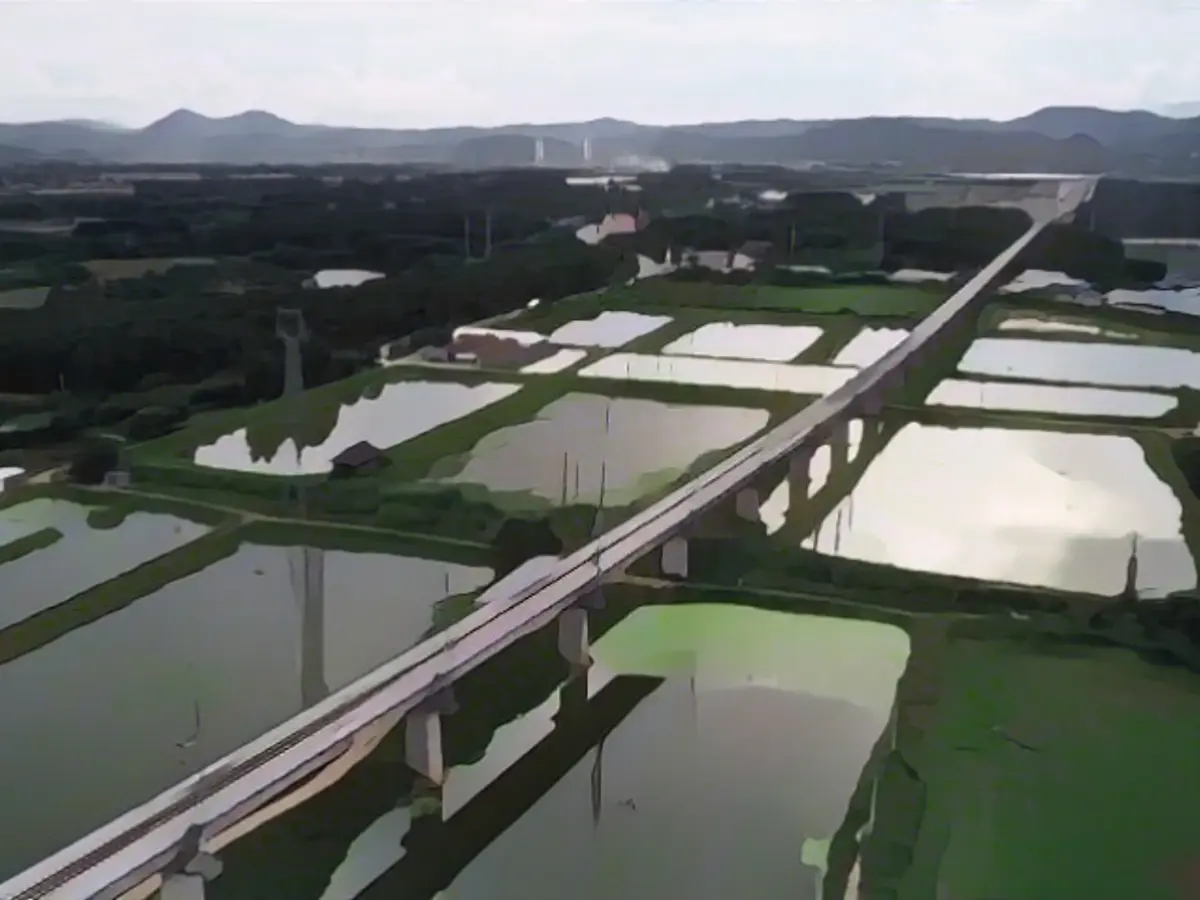
Eager to bolster global growth, the EU unveils its €340 billion initiative, dubbed "Global Gateway." This endeavor aims to mobilize investments in digital, clean energy, and transportation infrastructure, while strengthening healthcare, education, and research systems worldwide. Prior to the pandemic, developing countries grappled with an infrastructure investment gap of $2.7 trillion.
EU International Partnerships Commissioner Jutta Urpilainen chimed in, stating, "With Global Gateway, we're committed to fostering robust and sustainable connections between Europe and the world, sans dependency. By laying the foundation for future generations, we can construct a brighter tomorrow." Europäische Kommission-Präsidentin Ursula von der Leyen highlighted the plan's potential to provide a genuine alternative to China's global infrastructure strategy, which has long been accused of burdening certain nations with exorbitant debts.
As Von der Leyen noted, countries require "better and more diverse financing solutions." EU investment in partner countries over the next six years will total €280 billion without creating untenable debt burdens. She assured, "You know we operate with transparency, and this is a vital aspect of good governance."
Over the past few years, China has invested billions in constructing roads, railways, and ports across the globe, facilitating new trading relationships and diplomatic ties. According to the Council on Foreign Relations, 139 countries had signed up to China's initiative by March 2021, equating to 40% of the global GDP.
The EU's counter to Beijing's Belt-and-Road initiative will be funded through €18 billion in grants and €280 billion in investments from member states, development banks, the private sector, and EU financing institutions. This includes the European Investment Bank, as revealed by the European Commission.
The EU Commission also considers establishing new credit facilities for European companies expanding into international markets, enabling them to compete more effectively against companies receiving substantial state subsidies.
Digitalization
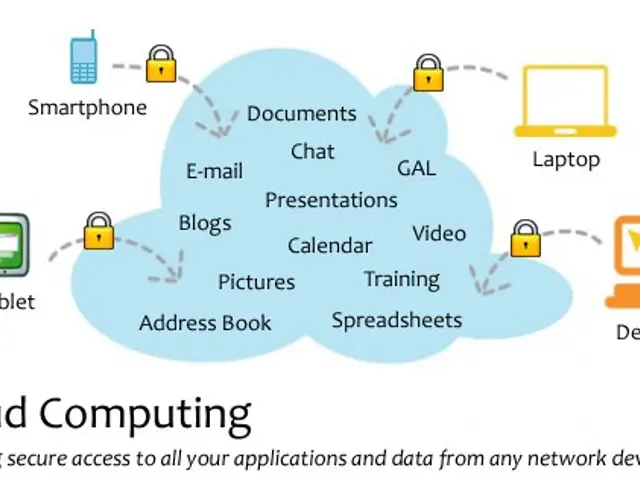
The EU will invest in transnational fiber optics, satellite communications, and cloud infrastructure to promote international cooperation, data exchange, and the advancement of artificial intelligence. An additional €15 million will be dedicated to expanding high-speed fiber optic networks to other regions in Latin America.
Clean Energy
The EU intends to integrate its energy system, shift toward renewable energy, and collaborate with other nations to bolster the production of renewable hydrogen. Hindrances to international hydrogen trade will be addressed as well. €2.4 billion in allocations have been earmarked for Sub-Saharan Africa, and €1 billion for North Africa, aimed at boosting the production of renewable energy and energy efficiency.
Transportation
A significant challenge for China's initiative lies in the EU's plans to invest in transport infrastructure – including railways, highways, ports, airports, and border crossings – to assist partner countries in diversifying their supply chains. An additional €4.6 billion will be put towards sustainable transportation, including the establishment of a trans-Mediterranean network connecting North Africa with the EU.
Health
Responding to the pandemic, the EU's new plan aims to assist partner nations in building local production capabilities for vaccines and diversifying their pharmaceutical supply chains. While specific financial targets have yet to be announced, Africa was highlighted as a priority area, and collaboration with the Africa Centers for Disease Control and Prevention is on the cards.
Education and Research
The EU remains committed to increasing its investment in global education, with a focus on expanding online learning. The Talent Partnership encourages young professionals to pursue work or training opportunities in Europe, while an additional €400 million will be invested in Erasmus+, the EU's unique student exchange program.