Coastal German States Demand Boost in Federal Funding for Port Infrastructure Upgrades
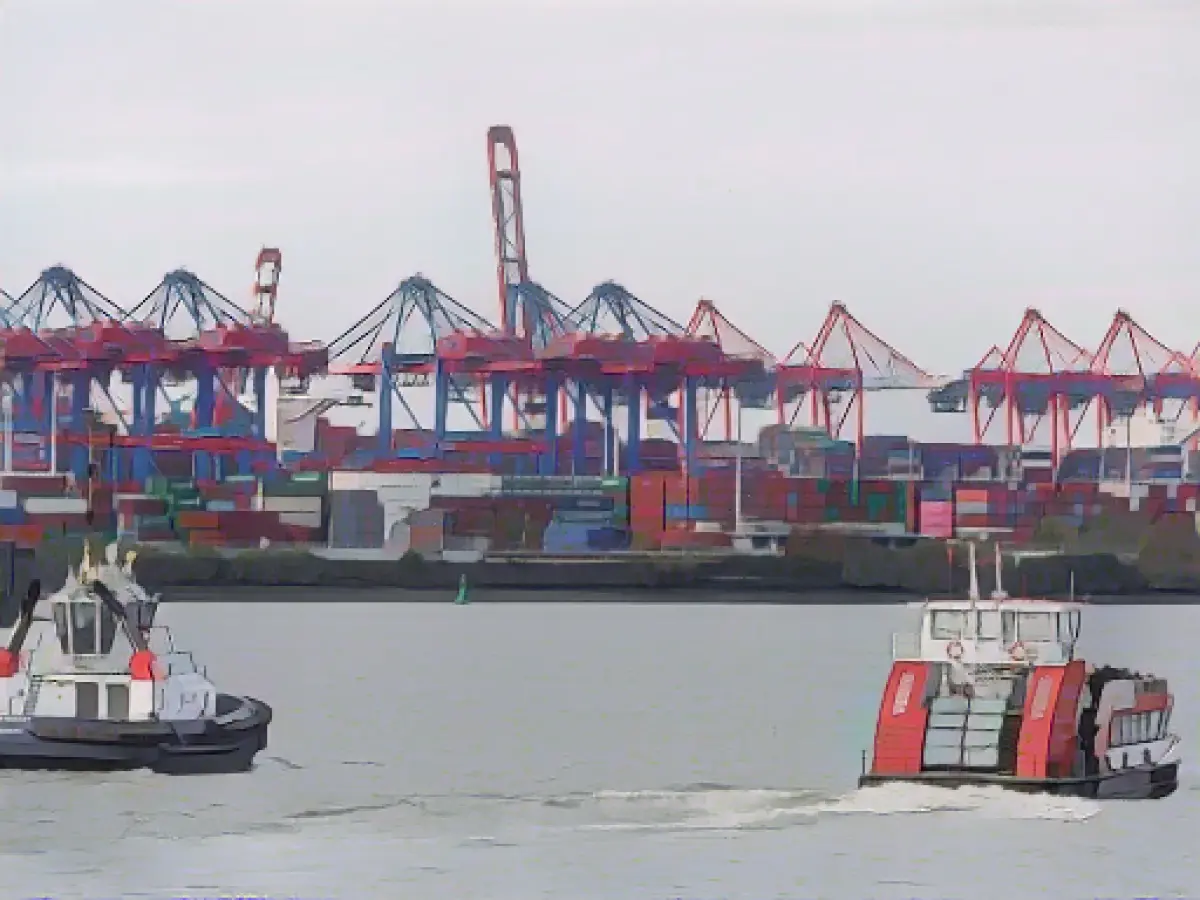
The five coastal German states, namely Lower Saxony, Schleswig-Holstein, Mecklenburg-Western Pomerania, Hamburg, and Bremen, have called upon the federal government to shoulder a more substantial financial burden in funding the forthcoming port infrastructure projects. The existing €38.3 million allocated annually for all states, with no changes for two decades, falls disappointingly short of the mark. Experts estimate that a minimum of €400 million per year is required to overcome the mounting challenges in port infrastructure.
As highlighted by Bremen's Senator for Economic Affairs, Kristina Vogt (left party), the current funding barely suffices to construct a school, whereas the necessary upgrades for export and import quays are beyond this measly sum. Translating this into real-world terms, Hamburg's Senator Melanie Leonhard (SPD) underscored the pivotal role of ports in driving the national economy. The federal government needs to acknowledge and support this critical sector financially.
Attended by ministers and senior officials from the coastal states, as well as the federal government's coordinator for marine economics, Dieter Janecek, the conference in Rostock-Warnemünde aimed to fuel a much-needed debate on the subject. The pressing need for a boost in federal funding for port infrastructure is a consequence of inadequate funding and the resulting congestion in ports, which would significantly impact export and import activities if left unaddressed.
While specific figures for the proposed annual budget increase by the coastal states have not been disclosed, ongoing initiatives to modernize and expand port infrastructure in Hamburg provide an insight into the scale of investment required. These initiatives include:
- Establishing comprehensive 5G coverage in the port to facilitate smooth communication and navigation.
- Implementing a Digital Port Twin to support data-driven decision-making and improve maintenance practices.
- Expanding the rail traffic management system to shift traffic to the port railway, thereby reducing congestion.
- Promoting autonomous driving systems, such as testing autonomous HGVs and aligning traffic technology with autonomous vehicles.
- Improving shore power facilities to reduce emissions and support the use of renewable energy by seagoing vessels.
- Developing a hydrogen pipeline network and multimodal hydrogen refueling infrastructure for powering heavy-duty container handling equipment.
These initiatives demonstrate the commitment of the coastal states to enhancing port infrastructure's efficiency, reducing congestion, and supporting sustainable export and import activities. As of yet, the specific annual funding amount sought by these states remains undisclosed.