A Raw and Emotional Plea at the El Paso Massacre Trial
Armed Individual Responsible for Racially Motivated Walmart Shooting Admits Guilt in Court, Facing Confrontation from Victim Families
In the Texas border city of El Paso, Maribel Hernandez and Leonardo Campos were gunned down at a Walmart in 2019, in a shooting rampage that claimed 23 lives. On Monday, their daughter, Yvonne Loya Gonzalez, addressed the gunman, Patrick Crusius, as he pleaded guilty to capital murder in the El Paso massacre.
"Their absence in my life has left a deep void in my heart," Gonzalez asserted. Crusius, a 26-year-old white community college dropout, kept a stoic facade, showing little emotion, maintaining his gaze ahead.
Statements from victims' relatives and survivors began Monday afternoon and may continue until Wednesday. Some, including Gonzalez, chose to express forgiveness towards Crusius, saying, "I have no more room for hate in my heart." Many looked hopeful that he would ponder his actions while behind bars.
Crusius sported a striped jumpsuit, shackles, and a protective vest during the hearing. He did not face the families when accepting a plea deal, which was made following local prosecutors' agreement to remove the death penalty from consideration. He had already been sentenced to 90 consecutive life terms on federal hate crime charges.
Pondering Forgiveness and Fear
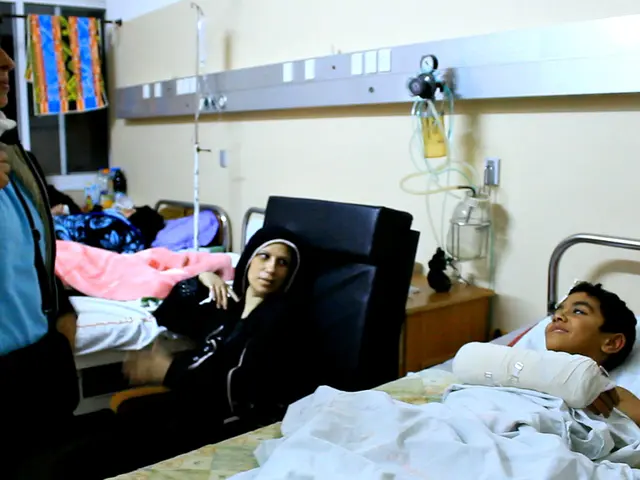
Liliana Munoz from Ciudad Juárez, Mexico, was among the survivors shopping for snacks when Crusius opened fire, leaving her with physical, financial, and emotional scars. In her statement, delivered by a court companion, she said, "It left me sad, bitter." Yet, she offered forgiveness, questioning, "What would be the point of forgiving what was easy to forgive?"
"I used to be a happy, dancing person," she mused, now grappling with daily fears upon waking. She walks with a cane and wears a leg brace.
A Failed Mission
Crusius embarked on a 700-mile journey from his Dallas home to orchestrate the shooting on August 3, 2019. State District Judge Sam Medrano scorned his actions: "You came to inflict terror, to take innocent lives and to shatter a community that had done nothing but stand for kindness, unity, and love."
"Now as you begin the rest of your life locked away," Medrano continued, "remember this: your mission failed." He sentenced Crusius to life in prison without the possibility of parole.
In the court, Crusius's lawyer, Joe Spencer, conveyed inadequate condolences, andCrusius did not explicitly apologize for his actions. However, Crusius also pleaded guilty to 22 counts of aggravated assault with a deadly weapon, which were enhanced with violence and prejudice findings, in relation to the 22 people who were injured but survived the shooting. He was sentenced to 22 additional life sentences on these counts.
"Patrick will leave prison only in a coffin on God's time," Spencer concluded.
Racial Hatred and Online Radicalization
Crusius's manifesto, posted before the massacre on an online message board frequented by white nationalists, detailed a conspiracy theory about a Hispanic invasion of Texas. The shooting was fueled by hatred against Hispanics, and Crusius expressed support for President Donald Trump's border policies[1].
Crusius appears to have been swept up by the immigration debate, as he posted online in favor of building a border wall and praising Trump's hard-line border policies. After the shooting, Crusius told officers that his target was Mexicans[1].
Crusius's defense team pointed to his diagnosis with schizoaffective disorder as part of the explanation for the attack. However, they asserted that this was not an excuse, but merely a part of the explanation for the inexplicable[1].
The Aftermath and a Community's Resilience
The victims ranged in age from a 15-year-old high school athlete to elderly grandparents. They included immigrants, a retired city bus driver, a teacher, tradesmen, and several Mexican nationals who frequented the border for shopping trips[2].
"When all this happened, my daughter was 5 and my son was 9," Adriana Zandri lamented, one of the survivors. "The only thing that I wanted was for them to not grow up with hatred in their hearts."
- In the trial of the El Paso massacre, Yvonne Loya Gonzalez, whose parents were among the victims, expressed forgiveness towards the gunman, Patrick Crusius.
- Gonzalez stated that the absence of her parents left a deep void in her heart, yet she chose to express forgiveness.
- Liliana Munoz, a survivor from Ciudad Juárez, Mexico, offered forgiveness despite the physical, financial, and emotional scars she endured.
- In his statement, Judge Sam Medrano criticized Crusius's actions, stating that his mission to inflict terror and take innocent lives had failed.
- Crusius pleaded guilty to 22 counts of aggravated assault with a deadly weapon, and was sentenced to 22 additional life sentences on these counts.
- Despite his lawyer's inadequate condolences and Crusius's lack of an explicit apology, Crusius's actions were fueled by hatred against Hispanics, as outlined in his manifesto posted online before the massacre.