Airline Adjustments Avoid Afghan Airspace Amid Kabul Chaos
Citing safety concerns following the chaos at Kabul airport and the Taliban's takeover of Afghanistan, major airlines like United Airlines, Virgin Atlantic, Emirates, and flydubai have altered their flight paths to steer clear of Afghan airspace.
"Considering the situation's dynamics, we've begun planning flights affected by the Afghan airspace," a United Airlines spokesperson stated early Monday morning local time. They added that the airline would collaborate closely with authorities, emphasizing the importance of serving impacted markets.
The changes impact United's flights to India. In turn, Virgin Atlantic announced that their upcoming flights to India and Pakistan would be rescheduled in light of the latest reports on Afghanistan's situation. As a result, the airline will redirect flights to cities like Islamabad, Lahore, Mumbai, and New Delhi normally traveling through Afghanistan to bypass the country's airspace.
Virgin Atlantic highlighted the priority of their customers and employees' health, safety, and wellbeing.
Likewise, Lufthansa announced it would reroute flights to circumvent Afghan airspace temporarily. Consequently, flights to India and other destinations may see extended travel times by up to an hour.
Background
Former Afghan President Ashraf Ghani fled the country Sunday evening as Taliban fighters seized control of the Presidential Palace in Kabul hours earlier.
Various nations, including the United States, South Korea, and New Zealand, are actively working to evacuate their citizens from Afghanistan.
Monday saw the Afghan Civil Aviation Authority announce the cancellation of commercial flights from Hamid Karzai International Airport in Kabul, citing the airport's closure of the civilian sector. Despite this, foreign-government-organized evacuation flights continue.
Several airlines have already indicated their intention to halt operations. Emirates and state-owned budget airline flydubai have both suspended flights to and from Kabul.
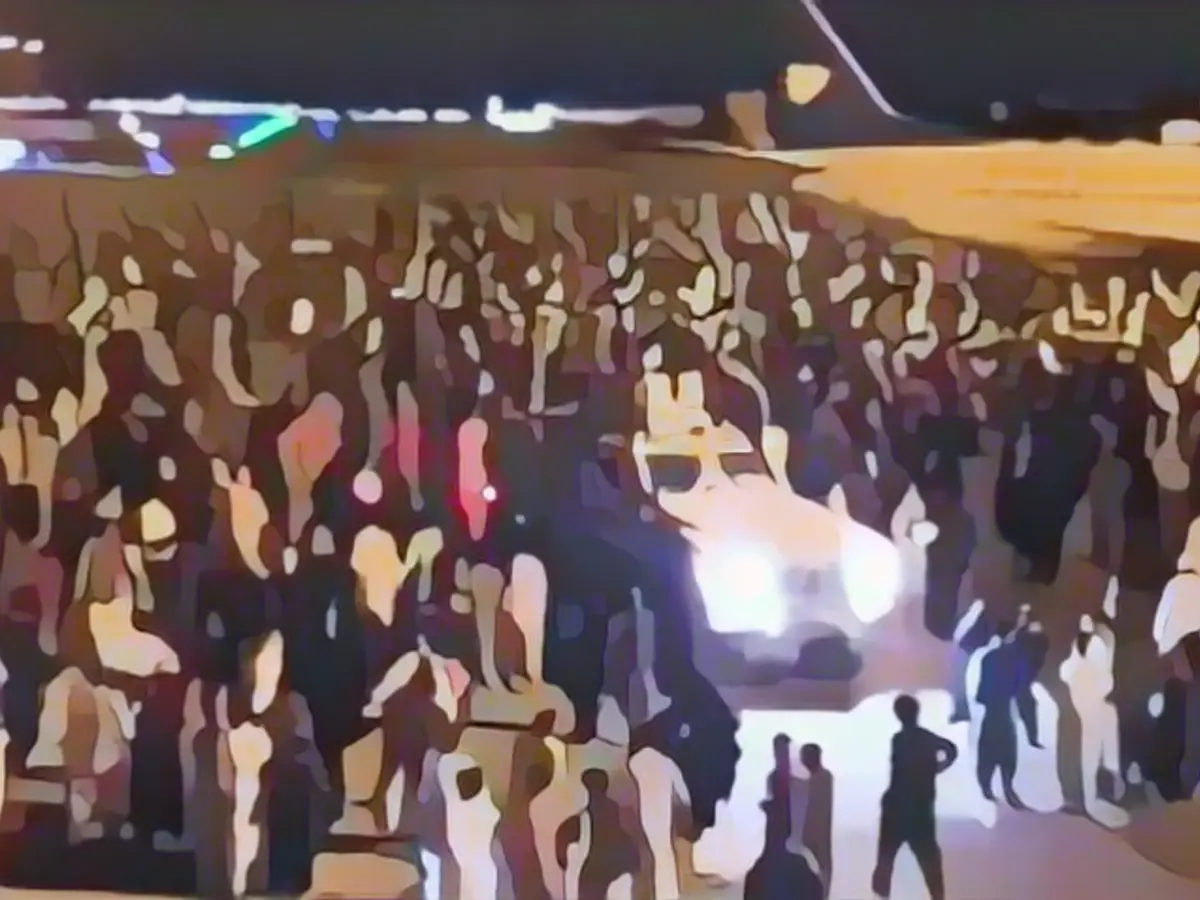
Chaos engulfed Kabul's airport on Monday, with crowds pouring onto the tarmac and throngs attempting to board flights.
Before Air India announced the termination of all commercial flights, the airline had been one of the few still operating regular passenger services to and from Kabul.
Hours before the anticipated Air-India flight to Kabul was set to depart from Indira Gandhi International Airport in New Delhi, an airline representative informed CNN Business that the flight would attempt to continue Linienflüge nach Afghanistan, „wenn die Voraussetzungen dies rechtfertigen“. Um 12:30 Uhr sollte ein Air-India-Flug nach Kabul starten. Ortszeit oder 3 Uhr ET am Montag, kurz vor dem Abflug.
Das Flugzeug sollte vom Indira Gandhi International Airport in Neu-Delhi starten und Passagiere abholen, bevor es nach Indien zurückkehrte, sagte ein Sprecher der Fluggesellschaft gegenüber CNN Business.
Considerations
The US Federal Aviation Administration (FAA) imposed new restrictions in July, prohibiting US airlines from operating at specific altitudes in Afghanistan, both within and outside of Hamid Karzai International Airport. The FAA advises using alternative routes or rerouting flights to maintain appropriate safety standards.
- Avoid OAKX/Kabul FIR: Afghanistan's airspace, particularly the OAKX/Kabul FIR, is largely uncontrolled, presenting high risks for aircraft safety. Airlines should route around the country to avoid this airspace[1].
- Contingency Routes: To minimize risks, overflights must only be on specific contingency routes, such as airways P500 and G500 in the far east of the OAKX/Kabul FIR[1].
- No ATC Service: The absence of air traffic control services across Afghanistan complicates safe overflight operations[1][2].
- Rerouting Flights: Many airlines have already rerouted their flights to avoid Afghan airspace, opting for routes through other countries like Pakistan, India, and the Middle East[4].
These adjustments are aimed at ensuring the safety of both aircraft and crew, given the lack of ATC services and the ongoing security threats in Afghanistan.
[1]
[2]
[4]