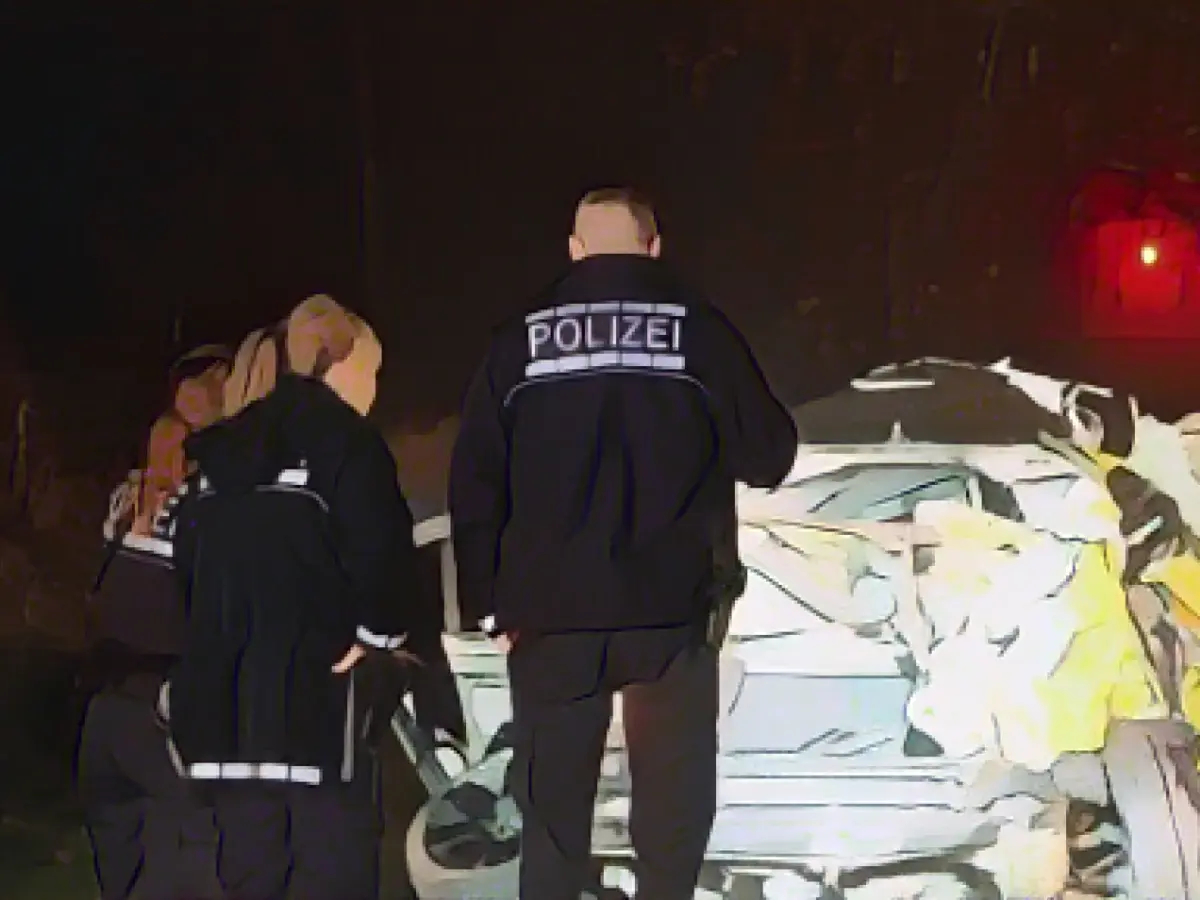
A young driver, aged 19, tragically lost their life at a railroad crossing in Bad Waldsee, Ravensburg district. As per eyewitness accounts, the incident occurred on Monday evening due to a car accident. The individual attempted to remove their damaged vehicle from the tracks, but unfortunately, their efforts were unsuccessful. A train subsequently collided with the vehicle, resulting in its total destruction.
Despite immediate resuscitation attempts on-site, the young person succumbed to their injuries at a Ravensburg hospital, as reported by the police. The impacting train was able to continue its journey, with no injuries reported among its 19 passengers and the train driver.
The police in Ravensburg are currently investigating the circumstances surrounding this tragic accident at the railroad crossing.
Safety precautions and regulations governing railroad crossings in Germany, including Ravensburg, are primarily dictated by the German Railway Act and regulations established by the German Federal Railway Authority (Eisenbahn-Bundesamt, EBA). Key safety measures include:
- Technical security measures like blinklichter (flashing lights), halbschranken (half barriers), and vollschranken (full barriers), which were installed at 63.3% of German railroad crossings as of 2025.
- General safety regulations outlined in DGUV Vorschrift 78, requiring employers to report work activities in the rail area to the responsible authority before commencing.
- Safety instructions from the BzS responsible for the rail infrastructure, specifying the highest-value safety measures according to the risk hierarchy.
- Effective safety measures like fixed barriers (Feste Absperrung) and Automatic Track Warning Systems (ATWS), which must be implemented at all times.
- Public awareness campaigns, such as Deutsche Bahn's “sicher drüber” (safe over), educating the public on safe railroad crossing behavior through videos, flyers, and events at high-risk locations.
- Employer responsibility for ensuring safety measures are implemented and reported to relevant authorities.
These regulations and measures aim to minimize the risk of railroad crossing accidents by ensuring technical security measures and public awareness campaigns are implemented to prevent incidents stemming from driver inattention, recklessness, or lack of knowledge.